A BOOK OF OLD BALLADS
古バラッド集
Selected and with an Introduction
選と序文
by
著
BEVERLEY NICHOLS
ビヴァリー・ニコルズ
CONTENTS
目次
EDWARD, EDWARD
KING LEIR AND HIS THREE DAUGHTERS
HYND HORN
JOHN BROWN'S BODY
TIPPERARY
THE BAILIFF'S DAUGHTER OF ISLINGTON
THE THREE RAVENS
THE GABERLUNZIE MAN
THE WIFE OF USHER'S WELL
THE LYE
THE BALLAD OF READING GAOL
The source of these ballads will be found in the Appendix
at the end
of this book.
エドワード、エドワード
リア王と三人の娘たち
ハインド・ホーン
ジョン・ブラウンの遺骸
ティペラリー
イズリントンの代官の娘
三羽のワタリガラス
ガバランジーの男
アッシャーズ・ウェルの妻
偽り
レディング監獄のバラッド
これらのバラッドの出典は、本書の巻末
の付録に記載されている。
LIST OF COLOUR PLATES
カラー図版一覧
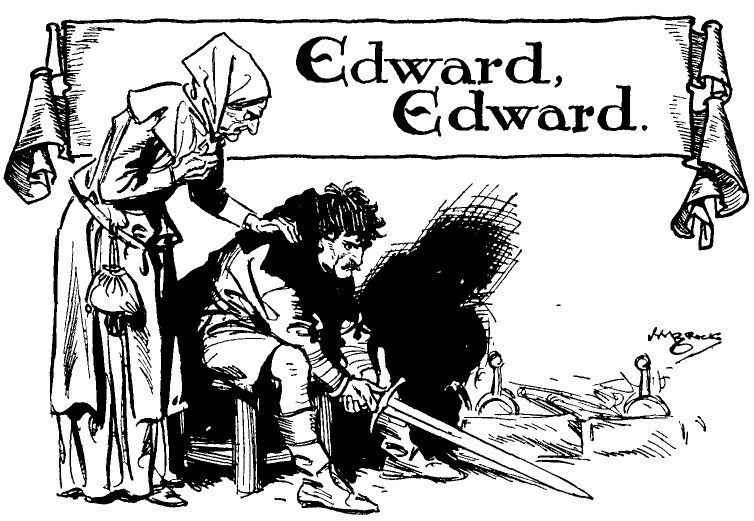
Quhy dois zour brand sae drop wi' bluid,
Edward, Edward?
Quhy dois zour brand sae drop wi' bluid?
And quhy sae sad gang zee, O?
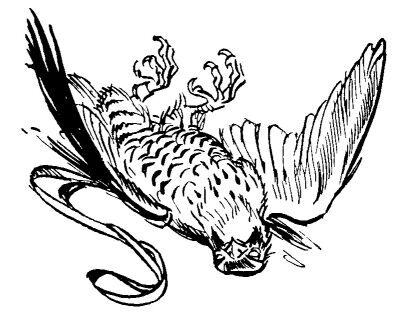
O, I hae killed my hauke sae guid,
Mither, mither:
O, I hae killed my hauke sae guid:
And I had nae mair bot hee, O.
なぜそなたの剣はかくも血を滴らせるのか、
エドワード、エドワードよ?
なぜそなたの剣はかくも血を滴らせるのか?
そしてなぜかくも悲しげに行くのか、おお?
おお、わが良き鷹を殺めました、
母上、母上よ。
おお、わが良き鷹を殺めました。
そして我には彼しかいなかったのです、おお。
Zour haukis bluid was nevir sae reid,
Edward, Edward.
Zour haukis bluid was nevir sae reid,
My deir son I tell thee, O.
O, I hae killed my reid-roan steid,
Mither, mither:
O, I hae killed my reid-roan steid,
That erst was sae fair and free, O.
汝の鷹の血は、かくも赤きことなし、
エドワードよ、エドワードよ。
汝の鷹の血は、かくも赤きことなし、
わが愛しき息子よ、汝に告げん、おお。
おお、我はわが赤毛の馬を殺しぬ、
母上よ、母上よ。
おお、我はわが赤毛の馬を殺しぬ、
かつてはかくも美しく自由なりしを、おお。
Zour steid was auld, and ze hae gat mair,
Edward, Edward;
Zour steid was auld, and ze hae gat mair,
Sum other dule ze drie, O.
O, I hae killed my fadir deir,
Mither, mither:
O, I hae killed my fadir deir,
Alas! and wae is mee, O!
汝の馬は老いし、されど汝はさらに得たり、
エドワードよ、エドワードよ。
汝の馬は老いし、されど汝はさらに得たり、
他の悲しみ汝は負うべし、おお。
おお、我はわが父上を殺しぬ、
母上よ、母上よ。
おお、我はわが父上を殺しぬ、
ああ!そして我は悲しきかな、おお!
And quhatten penance wul ze drie for that,
Edward, Edward?
And quhatten penance will ze drie for that?
My deir son, now tell mee, O.
He set my feit in zonder boat,
Mither, mither:
He set my feit in zonder boat,
And He fare ovir the sea, O.
そしてそのために汝はいかなる償いを負うべしや、
エドワードよ、エドワードよ。
そしてそのために汝はいかなる償いを負うべしや、
わが愛しき息子よ、今や我に告げよ、おお。
我はわが足をかの舟に乗せん、
母上よ、母上よ。
我はわが足をかの舟に乗せん、
そして我は海を渡りゆかん、おお。
And quhat wul ze doe wi' zour towirs and zour ha',
Edward, Edward?
And quhat wul ze doe wi' zour towirs and zour ha',
That were sae fair to see, O?
He let thame stand til they doun fa',
Mither, mither:
He let thame stand til they doun fa',
For here nevir mair maun I bee, O.
そして汝は汝の塔と汝の広間をいかにせん、
エドワードよ、エドワードよ。
そして汝は汝の塔と汝の広間をいかにせん、
かくも見るに美しきを、おお?
我はそれらを倒れ落ちるまで放置せん、
母上よ、母上よ。
我はそれらを倒れ落ちるまで放置せん、
なれば我はもはやここにはおらぬゆえ、おお。
And quhat wul ze leive to zour bairns and zour wife,
Edward, Edward?
And quhat wul ze leive to zour bairns and zour wife,
Quhan ze gang ovir the sea, O?
The warldis room, let thame beg throw life,
Mither, mither;
The warldis room, let thame beg throw life,
For thame nevir mair wul I see, O.
汝が子らと妻には何を残さんとするや、
エドワードよ、エドワードよ?
汝が子らと妻には何を残さんとするや、
汝が海を渡りゆく時、おお?
世の広き場所にて、彼らには生を乞わせん、
母上よ、母上よ。
世の広き場所にて、彼らには生を乞わせん、
彼らには二度と会うこと叶わじ、おお。
And quhat wul ze leive to zour ain mither deir,
Edward, Edward?
And quhat wul ze leive to zour ain mither deir?
My deir son, now tell me, O.
The curse of hell frae me sail ze beir,
Mither, mither:
The curse of hell frae me sail ze beir,
Sic counseils ze gave to me, O.
汝が愛しき母上には何を残さんとするや、
エドワードよ、エドワードよ?
汝が愛しき母上には何を残さんとするや?
我が愛しき息子よ、今こそ語れ、おお。
地獄の呪いを我より汝は負うべし、
母上よ、母上よ。
地獄の呪いを我より汝は負うべし、
かくのごとき忠告を汝は我に与えしゆえ、おお。
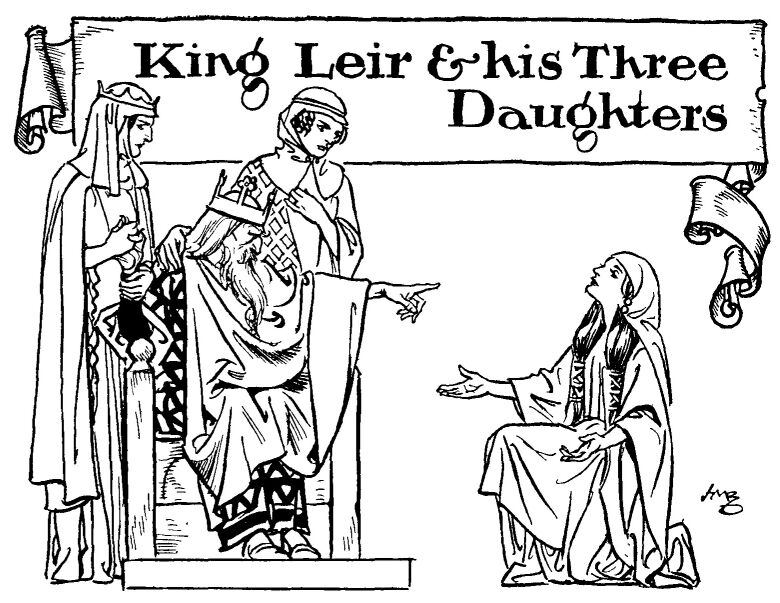
King Leir once ruled in this land
With princely power and peace;
And had all things with hearts content,
That might his joys increase.
Amongst those things that nature gave,
Three daughters fair had he,
So princely seeming beautiful,
As fairer could not be.
リア王、かつてこの地に君臨せり
王たる力と平和を以て。
心ゆくまで万事を享受し、
その喜びを増し奉るものなりき。
自然が与えしものの中に、
三人の麗しき娘を持てり、
王たるに相応しき美しさにて、
これに勝る美しさはあらざりき。
So on a time it pleas'd the king
A question thus to move,
Which of his daughters to his grace
Could shew the dearest love:
For to my age you bring content,
Quoth he, then let me hear,
Which of you three in plighted troth
The kindest will appear.
ある時、王は思し召し
かくのごとき問いを発せり、
娘たちのうち、誰が王の恩寵に対し
最も深き愛を示しうるか。
「我が老いし身に汝らは満足をもたらすゆえ、
聞かせよ」と王は宣い、
「汝ら三人のうち、誓いし誠実さにおいて
最も優しきは誰なるか。」
To whom the eldest thus began;
Dear father, mind, quoth she,
Before your face, to do you good,
My blood shall render'd be:
And for your sake my bleeding heart
Shall here be cut in twain,
Ere that I see your reverend age
The smallest grief sustain.
これに対し、長女はかく語り始めぬ。
「父上、心に留められよ」と彼女は言えり、
「御前において、父上のためならば、
我が血を捧げましょう。
そして父上のために、我が血潮流るる心は
ここで二つに引き裂かれましょう、
尊き御身が
いささかの悲しみをも負うを見るよりは。」
And so will I, the second said;
Dear father, for your sake,
The worst of all extremities
I'll gently undertake:
And serve your highness night and day
With diligence and love;
That sweet content and quietness
Discomforts may remove.
「私もまた然り」と、次女は申しました。
父上、あなた様のために、
いかなる苦難の極みも
謹んで引き受けましょう。
昼も夜も、あなた様にお仕えし、
勤勉と愛をもって、
甘美なる満足と安らぎが
不快を取り除くよう。
In doing so, you glad my soul,
The aged king reply'd;
But what sayst thou, my youngest girl,
How is thy love ally'd?
My love (quoth young Cordelia then)
Which to your grace I owe,
Shall be the duty of a child,
And that is all I'll show.
「そうすれば、わが魂は喜ぶであろう」と、
老王は答えました。
「しかし、末の娘よ、そなたは何を申すか、
そなたの愛はいかに結ばれておるか?」
「わが愛は(と、若きコーデリアは申しました)
あなた様の御恩に報いるもの、
それは子の務めであるべきです、
そして、それこそがわたくしが示す全てでございます。」
And wilt thou shew no more, quoth he,
Than doth thy duty bind?
I well perceive thy love is small,
When as no more I find.
Henceforth I banish thee my court,
Thou art no child of mine;
Nor any part of this my realm
By favour shall be thine.
「そして、そなたはそれ以上示さぬのか」と、彼は申しました、
そなたの務めが縛る以上に?
わがよく知る、そなたの愛は小さきもの、
これ以上見出せぬゆえに。
今より、そなたをわが宮廷より追放する、
そなたはわが子にあらず;
また、このわが領土のいかなる部分も
恩恵によりそなたのものとはならぬ。
Thy elder sisters loves are more
Then well I can demand,
To whom I equally bestow
My kingdome and my land,
My pompal state and all my goods,
That lovingly I may
With those thy sisters be maintain'd
Until my dying day.
そなたの姉たちの愛は、より深く、
わが求める以上にあり、
その者たちに、わが等しく与えん、
わが王国とわが領土を、
わが華麗なる地位と全ての財産を、
それは、わが愛をもって
そなたの姉たちと共に養われんため、
わが死ぬる日まで。
Thus flattering speeches won renown,
By these two sisters here;
The third had causeless banishment,
Yet was her love more dear:
For poor Cordelia patiently
Went wandring up and down,
Unhelp'd, unpity'd, gentle maid,
Through many an English town:
かくして、甘言は名声を得たり、
ここにいる二人の姉たちによりて;
三女は謂れなき追放を受けしが、
されど、彼女の愛はより尊かりき:
哀れなるコーデリアは、忍耐強く
さまよい歩き、
助けられず、憐れまれず、優しき乙女は、
多くのイングランドの町々を巡りし。
Untill at last in famous France
She gentler fortunes found;
Though poor and bare, yet she was deem'd
The fairest on the ground:
Where when the king her virtues heard,
And this fair lady seen,
With full consent of all his court
He made his wife and queen.
ついに、名高きフランスにて
彼女はより優しき運命を見出しぬ;
貧しく裸同然なれど、彼女はと見なされしは
この地で最も美しき者と:
そこにて、王が彼女の美徳を聞き、
この麗しき淑女を目にし、
その宮廷の全ての同意を得て
彼は彼女を妃とし、女王となしぬ。
Her father king Leir this while
With his two daughters staid:
Forgetful of their promis'd loves,
Full soon the same decay'd;
And living in queen Ragan's court,
The eldest of the twain,
She took from him his chiefest means,
And most of all his train.
その間、父なるリア王は
二人の娘と共に留まりしが、
誓いし愛を忘れしゆえ、
たちまちその愛は衰えたり。
そしてリーガン女王の宮廷に住まううち、
二人のうちの長女は、
王よりその主なる財産を奪い、
その従者の大半をも奪い去りぬ。
For whereas twenty men were wont
To wait with bended knee:
She gave allowance but to ten,
And after scarce to three;
Nay, one she thought too much for him;
So took she all away,
In hope that in her court, good king,
He would no longer stay.
かつて二十人の者が
膝を屈して仕えしに、
彼女は十人にのみ許しを与え、
その後はわずか三人にすら減らしぬ。
いや、一人すら王には多しと見なし、
かくして全てを取り去りぬ。
善良なる王が、もはや己の宮廷に
留まらぬことを望みてなり。
Am I rewarded thus, quoth he,
In giving all I have
Unto my children, and to beg
For what I lately gave?
I'll go unto my Gonorell:
My second child, I know,
Will be more kind and pitiful,
And will relieve my woe.
かくも報いられしや、と彼は言いたり、
我が持つ全てを
子らに与えしに、かつて与えしものを
乞うとは。
我はゴノレルへと赴かん。
我が二番目の子は、知るべし、
より優しく、哀れみ深きならん、
そして我が悲しみを和らげん。
Full fast he hies then to her court;
Where when she heard his moan
Return'd him answer, That she griev'd
That all his means were gone:
But no way could relieve his wants;
Yet if that he would stay
Within her kitchen, he should have
What scullions gave away.
彼は急ぎ彼女の宮廷へと向かえり。
そこで彼女が彼の嘆きを聞きし時、
彼の財産が全て失われしことを
悲しむと答えたるが、
彼の窮乏を救う術はなし。
されど、もし彼女の台所に
留まるならば、
下働きが与えしものを得べし、と。
When he had heard, with bitter tears,
He made his answer then;
In what I did let me be made
Example to all men.
I will return again, quoth he,
Unto my Ragan's court;
She will not use me thus, I hope,
But in a kinder sort.
彼は聞き終え、苦き涙と共に、
その時、彼は答えたる。
我が為せしこと、全ての人々の
鑑とならんことを。
我は再び、と彼は言いたり、
我がリーガンの宮廷へと戻らん。
彼女はかくも我を扱わぬと信ず、
より優しき様にて。
Where when he came, she gave command
To drive him thence away:
When he was well within her court
(She said) he would not stay.
Then back again to Gonorell
The woeful king did hie,
That in her kitchen he might have
What scullion boy set by.
彼がそこに着きし時、彼女は
彼をそこから追い払うよう命じたり。
彼が宮廷に留まることはないと
(彼女は言いたり)。
悲嘆に暮れし王は、再びゴノレルへと
急ぎぬ、
彼女の台所にて、下働きの子が
残ししものを得んがため。
But there of that he was deny'd,
Which she had promis'd late:
For once refusing, he should not
Come after to her gate.
Thus twixt his daughters, for relief
He wandred up and down;
Being glad to feed on beggars food,
That lately wore a crown.
されど、かの地にては、先に彼女が約束せしこと、
彼は拒まれぬ。
一度拒みしゆえ、彼は再び
その門を訪うこと叶わじ。
かくして、娘たちの間で、救いを求め
彼はさまよい歩きぬ。
かつては王冠を戴きし身なれど、
乞食の糧に飢えを満たすを喜ぶばかりなりき。
And calling to remembrance then
His youngest daughters words,
That said the duty of a child
Was all that love affords:
But doubting to repair to her,
Whom he had banish'd so,
Grew frantick mad; for in his mind
He bore the wounds of woe:
そして、その時、彼は思い出しぬ、
末娘の言葉を。
子の務めこそ、
愛が与えうる全てなりと、彼女は言いき。
されど、かくも追放せし彼女のもとへ
赴くをためらい、
彼は狂乱せし。彼の心には
悲嘆の傷を負いしゆえ。
Which made him rend his milk-white locks,
And tresses from his head,
And all with blood bestain his cheeks,
With age and honour spread.
To hills and woods and watry founts
He made his hourly moan,
Till hills and woods and sensless things,
Did seem to sigh and groan.
それにより、彼は乳白色の髪を引き裂き、
頭髪をむしり取り、
年齢と名誉に満ちし
その頬を血にて汚しぬ。
丘や森や泉に向かい、
彼は時々刻々嘆きしが、
ついに丘も森も、無情なるものどもも、
共にため息し、うめきしごとく見えし。
Even thus possest with discontents,
He passed o're to France,
In hopes from fair Cordelia there,
To find some gentler chance;
Most virtuous dame! which when she heard,
Of this her father's grief,
As duty bound, she quickly sent
Him comfort and relief:
かくも不満に満たされしまま、
彼はフランスへ渡りぬ。
かの地の美しきコーデリアより、
より穏やかな運命を見出さんとの望みにて。
いと高潔なる婦人よ!彼女は父のこの悲嘆を聞くや、
務めとして、速やかに彼に
慰めと救いを送りぬ。
And by a train of noble peers,
In brave and gallant sort,
She gave in charge he should be brought
To Aganippus' court;
Whose royal king, with noble mind
So freely gave consent,
To muster up his knights at arms,
To fame and courage bent.
そして、貴き貴族の一団により、
勇敢かつ華麗なる様にて、
彼女は彼をアガニッパスの宮廷へ
連れてくるよう命じぬ。
その王は、高潔なる心にて
快く同意し、
名声と勇気に傾倒せし
武装せる騎士たちを召集せし。
And so to England came with speed,
To repossesse king Leir
And drive his daughters from their thrones
By his Cordelia dear.
Where she, true-hearted noble queen,
Was in the battel slain;
Yet he, good king, in his old days,
Possest his crown again.
かくして、速やかにイングランドへ来たり、
レア王に王位を取り戻させ、
彼の愛しきコーデリアの力により、
娘たちをその玉座より追いやらんため。
かの地にて、彼女、真心なる高貴な女王は、
戦にて討たれしが、
されど彼、善良なる王は、老いし日々に、
再びその王冠を戴きし。
But when he heard Cordelia's death,
Who died indeed for love
Of her dear father, in whose cause
She did this battle move;
He swooning fell upon her breast,
From whence he never parted:
But on her bosom left his life,
That was so truly hearted.
されど彼がコーデリアの死を聞きし時、
まことに愛のために死せし
その愛しき父のために、その大義のために
彼女はこの戦いを起こせり;
彼は気絶して彼女の胸に倒れ伏し、
そこより二度と離れざりき:
ただ彼女の胸にその命を置き去りにせり、
まことに誠実なる心を持ちし者なれば。
The lords and nobles when they saw
The end of these events,
The other sisters unto death
They doomed by consents;
And being dead, their crowns they left
Unto the next of kin:
Thus have you seen the fall of pride,
And disobedient sin.
貴族たち、彼らがこれら出来事の
結末を見し時、
他の姉妹たちを死へと
彼らは合意により宣告せり;
そして死して後、彼らの冠を
次の血縁者に残せり:
かくして汝らは傲慢の没落を、
そして不従順なる罪を見たり。
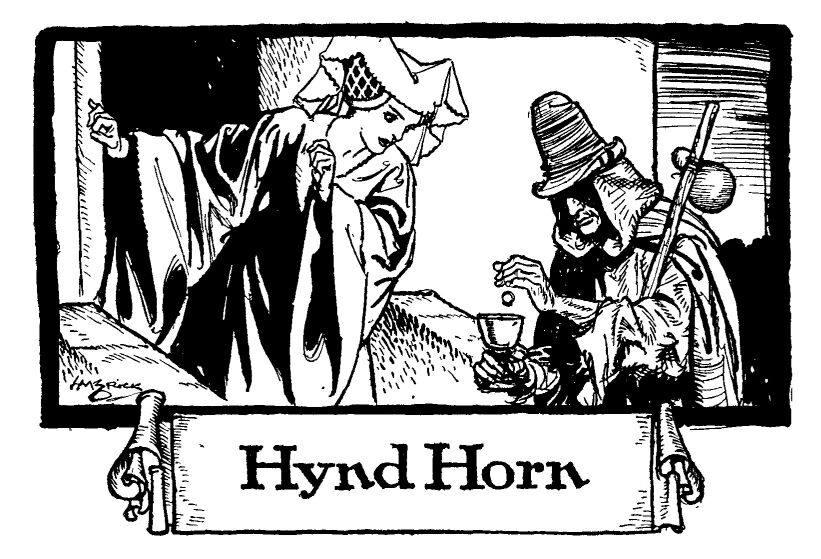
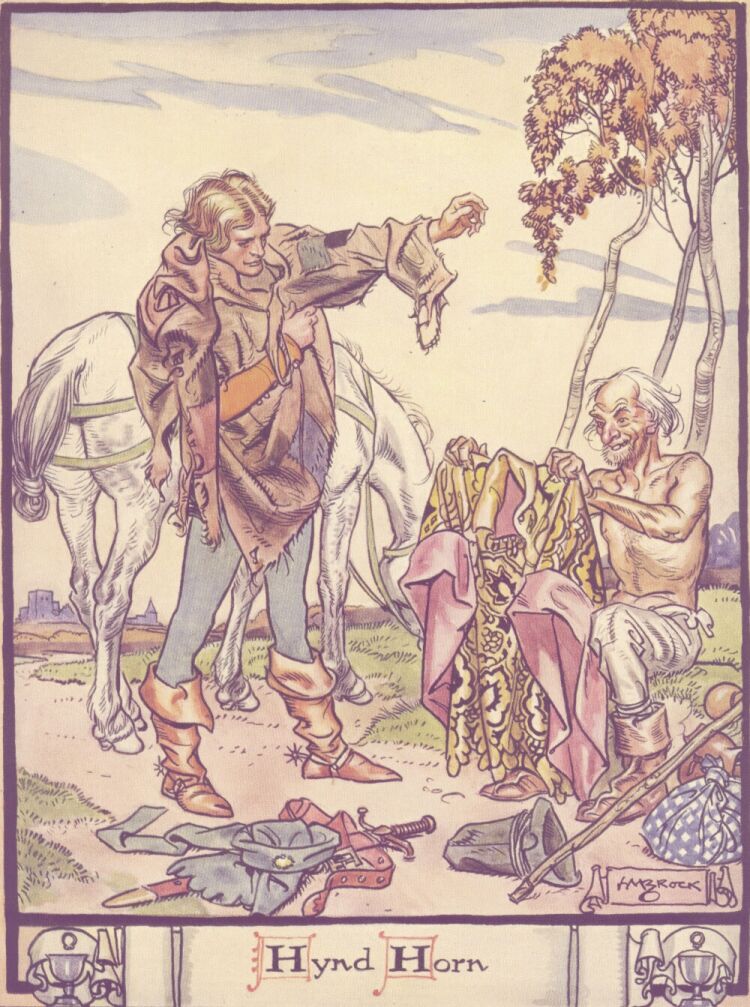
"Hynde Horn's bound, love, and Hynde Horn's free;
Whare was ye born? or frae what cuntrie?"
「ハインド・ホーンは縛られ、愛しき人よ、ハインド・ホーンは自由なり;
汝はどこに生まれしや? あるいはどの国より来たりしや?」
"In gude greenwud whare I was born,
And all my friends left me forlorn.
「良き緑の森にて我は生まれしが、
我が友は皆、我を見捨てし。」
"I gave my love a gay gowd wand,
That was to rule oure all Scotland.
「我は愛しき人に、華やかなる黄金の杖を与えし、
それはスコットランド全土を統べるためなりき。」
"My love gave me a silver ring,
That was to rule abune aw thing.
「我が愛しき人は我に銀の指輪を与えし、
それは万物を統べるためなりき。」
"Whan that ring keeps new in hue,
Ye may ken that your love loves you.
「その指輪の色が新しきを保つ時、
汝は愛しき人が汝を愛するを知るべし。」
"Whan that ring turns pale and wan,
Ye may ken that your love loves anither man."
「その指輪が青ざめ、色褪せる時、
汝は愛しき人が他の男を愛するを知るべし。」
He hoisted up his sails, and away sailed he
Till he cam to a foreign cuntree.
彼は帆を上げ、遠くへ船出しぬ
異国の地に着くまで。
Whan he lookit to his ring, it was turnd pale and wan;
Says, I wish I war at hame again.
彼が指輪を見し時、それは青ざめ、色褪せたり;
曰く、「再び故郷に帰りたし。」
He hoisted up his sails, and hame sailed he
Until he cam till his ain cuntree.
彼は帆を上げ、故郷へ船出しぬ
己が国に着くまで。
The first ane that he met with,
It was with a puir auld beggar-man.
彼が最初に出会ったのは、
貧しき老いたる乞食の男なりき。
"What news? what news, my puir auld man?
What news hae ye got to tell to me?"
「いかなる知らせか? いかなる知らせか、我が貧しき老いたる者よ?
我に語るべきいかなる知らせを持ちしや?」
"Na news, na news," the puir man did say,
"But this is our queen's wedding-day."
「知らせなし、知らせなし」と貧しき男は言いたり、
「されど、今日は我らが女王の婚礼の日なり。」
"Ye'll lend me your begging-weed,
And I'll lend you my riding-steed."
「汝の乞食の衣を我に貸すべし、
さすれば我は汝に我が乗馬を貸すべし。」
"My begging-weed is na for thee,
Your riding-steed is na for me."
「我が乞食の衣は汝には合わず、
汝の乗馬は我には合わず。」
He has changed wi the puir auld beggar-man.
彼は貧しき老いたる乞食の男と交換せり。
"What is the way that ye use to gae?
And what are the words that ye beg wi?"
「汝は如何なる道を行くを常とせしや?
そして汝は如何なる言葉にて乞うを常とせしや?」
"Whan ye come to yon high hill,
Ye'll draw your bent bow nigh until.
「汝がかの高き丘に至る時、
汝は曲がれる弓を近くまで引くべし。」
"Whan ye come to yon town-end,
Ye'll lat your bent bow low fall doun.
「かの町の果てに着かば、
汝の曲がれる弓を低く垂れさせよ。」
"Ye'll seek meat for St Peter, ask for St Paul,
And seek for the sake of your Hynde Horn all.
「聖ペテロのために糧を求め、聖パウロを尋ね、
そして汝のハインド・ホーンのために全てを求めよ。」
"But tak ye frae nane o them aw
Till ye get frae the bonnie bride hersel O."
「されど、彼らより何一つ受け取るなかれ、
かの麗しき花嫁自身より得るまでは。」
Whan he cam to yon high hill,
He drew his bent bow nigh until.
彼、かの高き丘に着きし時、
彼の曲がれる弓を近くまで引き寄せたり。
And when he cam to yon toun-end,
He loot his bent bow low fall doun.
彼、かの町の果てに着きし時、
彼の曲がれる弓を低く垂れさせたり。
He sought for St Peter, he askd for St Paul,
And he sought for the sake of his Hynde Horn all.
彼、聖ペテロを求め、聖パウロを尋ね、
そして彼のハインド・ホーンのために全てを求めたり。
But he took na frae ane o them aw
Till he got frae the bonnie bride hersel O.
されど、彼らより何一つ受け取らず、
かの麗しき花嫁自身より得るまでは。
The bride cam tripping doun the stair,
Wi the scales o red gowd on her hair.
花嫁は階段を軽やかに下り来たり、
その髪には赤き黄金の鱗を飾りて。
Wi a glass o red wine in her hand,
To gie to the puir beggar-man.
その手には赤き葡萄酒の杯を携え、
貧しき乞食の男に与えんと。
Out he drank his glass o wine,
Into it he dropt the ring.
彼、その葡萄酒の杯を飲み干し、
その中に指輪を落とし入れたり。
"Got ye't by sea, or got ye't by land,
Or got ye't aff a drownd man's hand?"
「汝はそれを海にて得たるか、陸にて得たるか、
それとも溺れし男の手より得たるか?」
"I got na't by sea, I got na't by land,
Nor gat I it aff a drownd man's hand;
「我はそれを海にて得ず、陸にて得ず、
また溺れし男の手より得たるにあらず。」
"But I got it at my wooing,
And I'll gie it to your wedding."
「されど我はそれを求婚の折に得たり、
そして汝の婚礼に与えん。」
"I'll tak the scales o gowd frae my head,
I'll follow you, and beg my bread.
「我は頭より黄金の鱗を取り去り、
汝に従い、糧を乞わん。」
"I'll tak the scales o gowd frae my hair,
I'll follow you for evermair."
「我は髪より黄金の鱗を取り去り、
汝に永遠に従わん。」
She has tane the scales o gowd frae her head,
She's followed him, to beg her bread.
彼女は頭より黄金の鱗を取り去り、
彼に従い、糧を乞いたり。
She has tane the scales o gowd frae her hair,
And she has followd him evermair.
彼女は髪より黄金の鱗を取り去り、
そして彼に永遠に従いたり。
Atween the kitchen and the ha,
There he loot his cloutie cloak fa.
台所と広間の間にて、
彼、そのぼろ布の外套を落としぬ。
The red gowd shined oure them aw,
And the bride frae the bridegroom was stown awa.
赤き黄金は彼ら全ての上に輝き、
花嫁は花婿より奪い去られぬ。
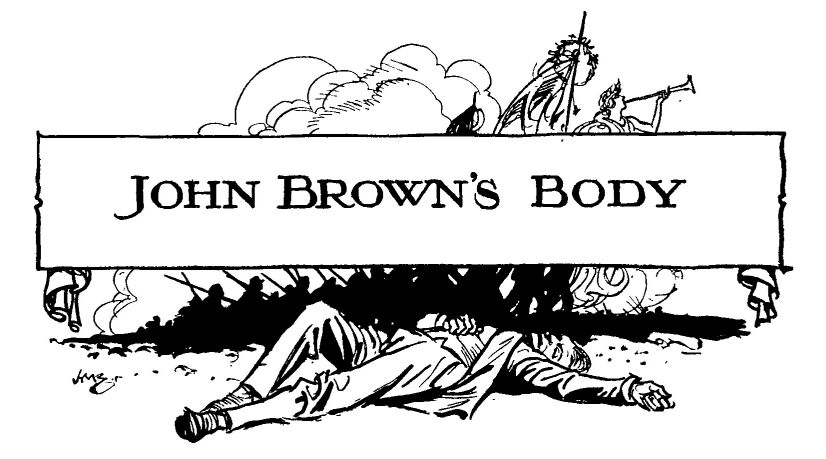
Old John Brown's body lies a mould'ring in the grave,
Because he fought for Freedom and the stricken Negro slave;
Old John Brown's body lies a mould'ring in the grave,
But his soul is marching on.
老いたるジョン・ブラウンの遺骸は墓に朽ち果て、
自由と苦しめる黒人奴隷のために戦いしゆえに;
老いたるジョン・ブラウンの遺骸は墓に朽ち果て、
されど彼の魂は進軍し続ける。
Chorus
合唱
Glory, glory, Hallelujah!
Glory, glory, Hallelujah!
Glory, glory, Hallelujah!
His soul is marching on.
栄光あれ、栄光あれ、ハレルヤ!
栄光あれ、栄光あれ、ハレルヤ!
栄光あれ、栄光あれ、ハレルヤ!
彼の魂は進軍し続ける。
He was a noble martyr, was Old John Brown the true;
His little patriot band into a noble army grew;
He was a noble martyr, was Old John Brown the true,
And his soul is marching on.
彼は尊き殉教者、真なるジョン・ブラウン翁なりき;
その小さき愛国者の隊は、尊き軍勢へと成長せり;
彼は尊き殉教者、真なるジョン・ブラウン翁なりき,
そしてその魂は進みゆく。
'Twas not till John Brown lost his life, arose in all its
might,
The army of the Union men that won the fearful fight;
But tho' the glad event, oh! it never met his sight,
Still his soul is marching on.
ジョン・ブラウンが命を失いし時まで、その全力を以て立ち上がりしは
恐ろしき戦いに勝利せし連合軍の兵士たちなりき;
されど、その喜ばしき出来事は、ああ!彼の目に触れることなかりき,
それでもその魂は進みゆく。
John Brown is now a soldier in that heavenly land above,
Where live the happy spirits in their harmony and love,
John Brown is now a soldier in that heavenly land above,
And his soul is marching on.
ジョン・ブラウンは今や、天上の地にて兵士なり,
そこには幸福なる魂たちが、調和と愛のうちに生きる,
ジョン・ブラウンは今や、天上の地にて兵士なり,
そしてその魂は進みゆく。
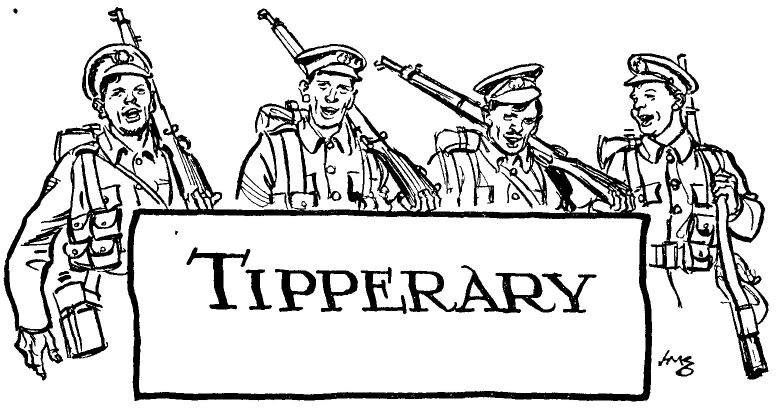
Up to mighty London came an Irishman one day,
As the streets are paved with gold, sure everyone was gay;
Singing songs of Piccadilly, Strand and Leicester Square,
Till Paddy got excited, then he shouted to them there:--
ある日、偉大なるロンドンへと一人のアイルランド人が来たりしに,
道は黄金で敷き詰められしが故、皆陽気なりき;
ピカデリー、ストランド、レスター・スクエアの歌を歌いしが,
パディは興奮し、彼らに叫びしは:--
Chorus
合唱
"It's a long way to Tipperary,
It's a long way to go;
It's a long way to Tipperary,
To the sweetest girl I know!
Good-bye Piccadilly,
Farewell, Leicester Square,
It's a long, long way to Tipperary,
But my heart's right there!"
「ティペラリーまでは遥かなる道,
行くべき道は長し;
ティペラリーまでは遥かなる道,
我が知る最も愛しき乙女の許へ!
さらばピカデリー,
さらば、レスター・スクエア,
ティペラリーまでは遥か、遥かなる道なれど,
されど我が心はそこにあり!」
Paddy wrote a letter to his Irish Molly O',
Saying, "Should you not receive it, write and let me know!
"If I make mistakes in 'spelling,' Molly dear,' said he,
"Remember it's the pen that's bad, don't lay the blame on
me."
パディはアイルランドのモリー・オーへと手紙を書きしに,
「もし届かざれば、書きて我に知らせよ!」とありき。
「もし綴りに誤りあらば、愛しきモリーよ、」と彼は言いし,
「それは筆が悪しき故、我を責むるなかれ。」
Molly wrote a neat reply to Irish Paddy O',
Saying, "Mike Maloney wants to marry me, and so
Leave the Strand and Piccadilly, or you'll be to blame,
For love has fairly drove me silly--hoping you're the
same!"
モリーはアイルランドのパディ・オーへと丁寧なる返事を書きしに,
「マイク・マロニーが我と結婚を望む故
ストランドとピカデリーを去るか、さもなくば汝が咎められん,
恋は我をすっかり愚かにせり――汝も同じならんことを願う!」」
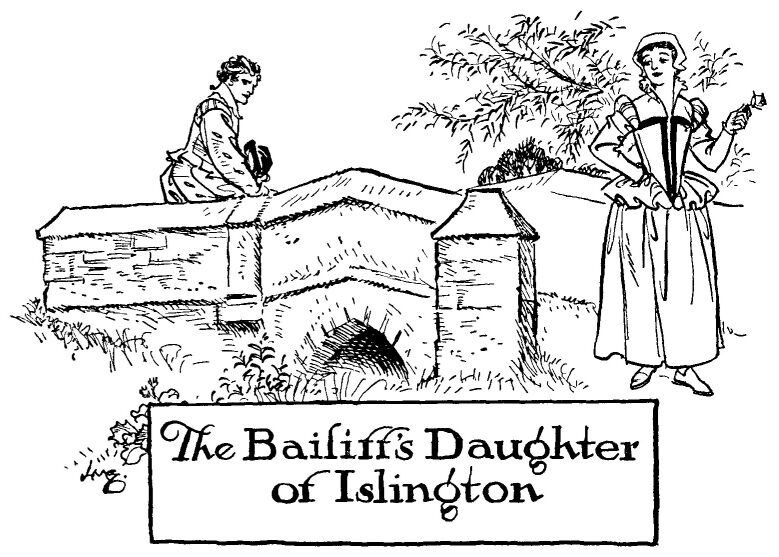
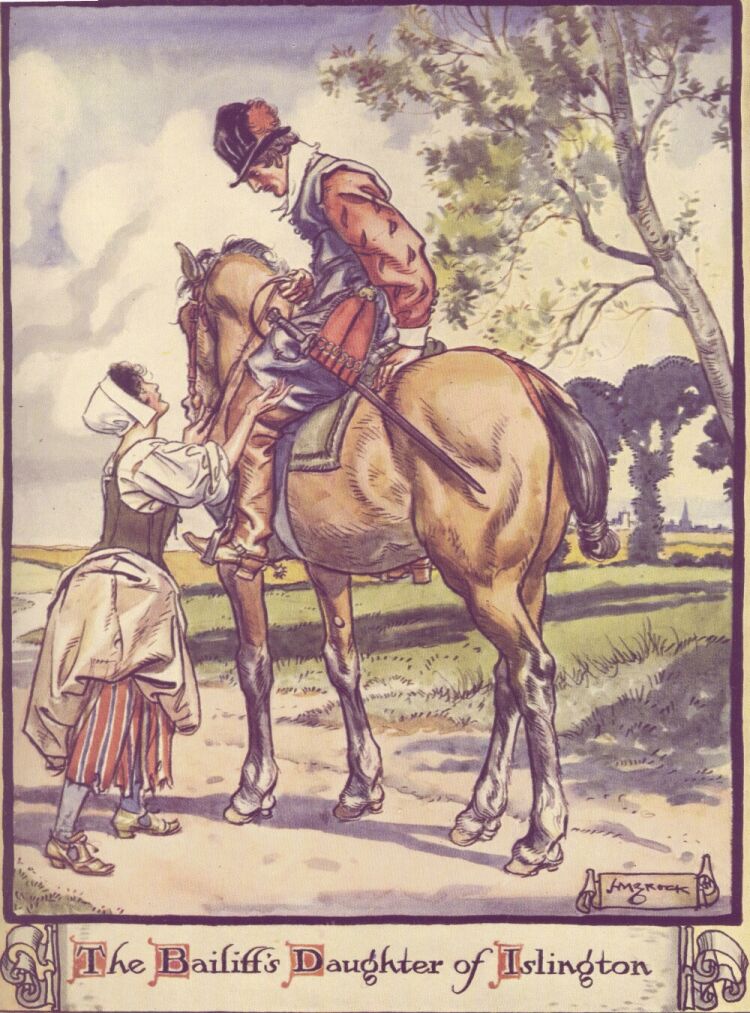
There was a youthe, and a well-beloved youthe,
And he was a squires son:
He loved the bayliffes daughter deare,
That lived in Islington.
一人の若者ありき、皆に愛されし若者なりき,
彼は郷士の息子なりき:
彼は代官の愛しき娘を恋い慕いし,
イズリントンに住みし娘を。
Yet she was coye, and would not believe
That he did love her soe,
Noe nor at any time would she
Any countenance to him showe.
されど彼女は恥じらい、信じようとはしなかった
彼がかくも彼女を愛していることを、
否、いかなる時も彼女は
彼に顔を見せようとはしなかった。
But when his friendes did understand
His fond and foolish minde,
They sent him up to faire London
An apprentice for to binde.
されど彼の友ら、
彼の愚かなる心を悟りし時、
彼を美しきロンドンへと送り出し、
徒弟として縛りつけたり。
And when he had been seven long yeares,
And never his love could see:
Many a teare have I shed for her sake,
When she little thought of mee.
かくて七年の長き歳月が過ぎ、
彼の愛する人を見ることもなく:
彼女のために幾多の涙を流しぬ、
彼女が我を少しも思わぬ時も。
Then all the maids of Islington
Went forth to sport and playe,
All but the bayliffes daughter deare;
She secretly stole awaye.
その時、イズリントンの乙女らは皆
遊び戯れに出でたり、
されど代官の愛娘のみは異なり;
彼女は密かに立ち去りぬ。
She pulled off her gowne of greene,
And put on ragged attire,
And to faire London she would goe
Her true love to enquire.
彼女は緑の衣を脱ぎ捨て、
ぼろをまといて、
美しきロンドンへと赴き、
真実の愛を探し求めんとした。
And as she went along the high road,
The weather being hot and drye,
She sat her downe upon a green bank,
And her true love came riding bye.
彼女が街道を行くうち、
暑く乾いた日和なれば、
緑の土手に腰を下ろしたり、
すると彼女の真実の愛が馬に乗り通りかかりぬ。
She started up, with a colour soe redd,
Catching hold of his bridle-reine;
One penny, one penny, kind Sir, she sayd,
Will ease me of much paine.
彼女は顔を赤らめ立ち上がり、
彼の手綱を掴みたり;
「一ペニー、一ペニー、親切な殿方よ」と彼女は言いたり、
「それがわたくしの多くの苦しみを和らげましょう。」
Before I give you one penny, sweet-heart,
Praye tell me where you were borne:
At Islington, kind Sir, sayd shee,
Where I have had many a scorne.
「一ペニーを差し上げる前に、愛しき人よ、
どうか、どこで生まれたか教えてくだされ:」
「イズリントンにて、親切な殿方よ」と彼女は言いたり、
「そこでわたくしは多くの侮辱を受けました。」
I prythee, sweet-heart, then tell to mee,
O tell me, whether you knowe
The bayliffes daughter of Islington:
She is dead, Sir, long agoe.
「頼む、愛しき人よ、ならば我に告げよ、
おお、告げよ、汝は知るや否や
イズリントンの代官の娘を:」
「彼女は亡くなりました、殿方よ、ずっと昔に。」
If she be dead, then take my horse,
My saddle and bridle also;
For I will into some far countrye,
Where noe man shall me knowe.
「もし彼女が亡き者ならば、我が馬を取れ、
鞍も手綱もまた然り;
我は遠き国へと赴かん、
誰も我を知らぬ地へと。」
O staye, O staye, thou goodlye youthe,
She standeth by thy side;
She is here alive, she is not dead,
And readye to be thy bride.
「おお、とどまれ、おお、とどまれ、麗しき若者よ、
彼女は汝の傍らに立ちて;
彼女はここに生きており、死んではおらぬ、
汝の花嫁となる用意あり。」
O farewell griefe, and welcome joye,
Ten thousand times therefore;
For nowe I have founde mine owne true love,
Whom I thought I should never see more.
「おお、悲しみよさらば、喜びよ来たれ、
ゆえに幾万回も;
今や我は己の真実の愛を見つけたり、
二度と会えぬとぞ思いたる人を。」

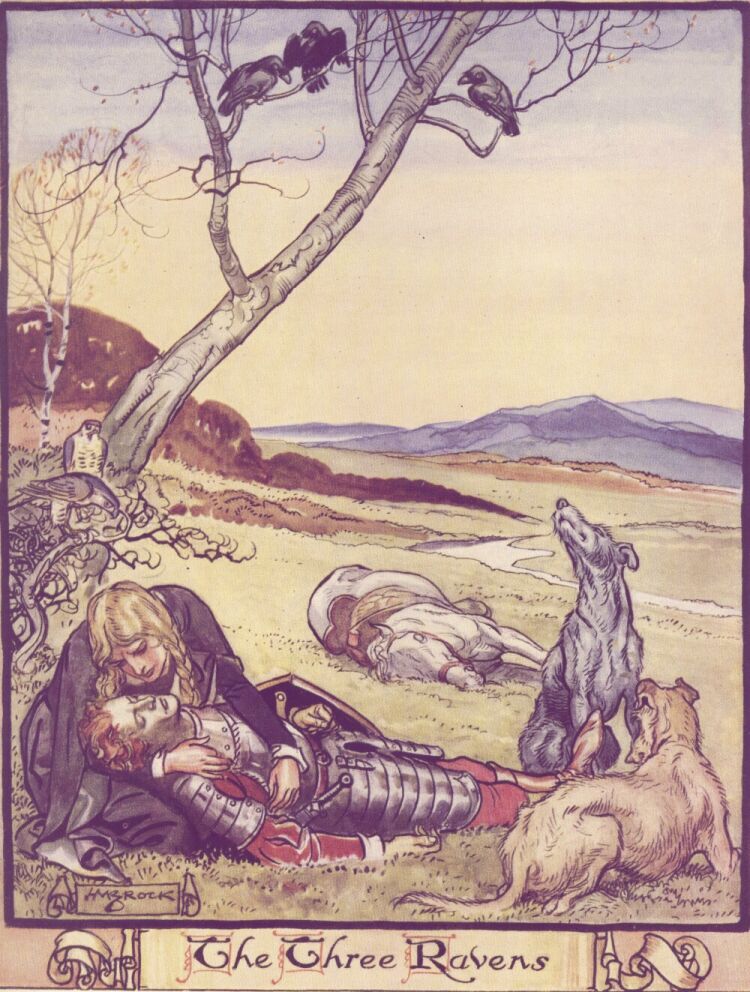
There were three rauens sat on a tree,
Downe a downe, hay down, hay downe
There were three rauens sat on a tree,
With a downe
There were three rauens sat on a tree,
They were as blacke as they might be
With a downe derrie, derrie, derrie, downe, downe
三羽の鴉、木に座りてありき、
ダウン ア ダウン、ヘイ ダウン、ヘイ ダウン
三羽の鴉、木に座りてありき、
ダウンと共に
三羽の鴉、木に座りてありき、
彼らは限りなく黒かりき
ダウン デリー、デリー、デリー、ダウン、ダウンと共に
The one of them said to his mate,
"Where shall we our breakefast take?"
そのうちの一羽、連れに言いき、
「我らは何処にて朝餉を摂るべきか?」
"Downe in yonder greene field,
There lies a knight slain vnder his shield.
「かの緑の野の奥深く、
盾の下に、討たれし騎士が横たわる。」
"His hounds they lie downe at his feete,
So well they can their master keepe.
「その猟犬どもは、彼の足元に伏し、
かくもよく、主を守りてあり。」
"His haukes they flie so eagerly,
There's no fowle dare him come nie."
「その鷹どもは、かくも熱心に飛び交い、
いかなる鳥も、彼に近づくこと能わず。」
Downe there comes a fallow doe,
As great with yong as she might goe.
そこに一頭の淡黄色の雌鹿、現れき、
身重にて、歩むもままならぬほどに。
She lift up his bloudy hed,
And kist his wounds that were so red.
彼女は彼の血塗られし頭を抱き上げ、
赤き傷口に口付けたり。
She got him up upon her backe,
And carried him to earthen lake.
彼女は彼を背に乗せ、
土の湖へと運び去りぬ。
She buried him before the prime,
She was dead herselfe ere even-song time.
彼女は彼を、第一時課の前に埋葬し、
彼女自身は、晩課の時を待たずして息絶えたり。
God send every gentleman,
Such haukes, such hounds, and such a leman.
神よ、全ての紳士に与え給え、
かかる鷹、かかる猟犬、そしてかかる愛人を。
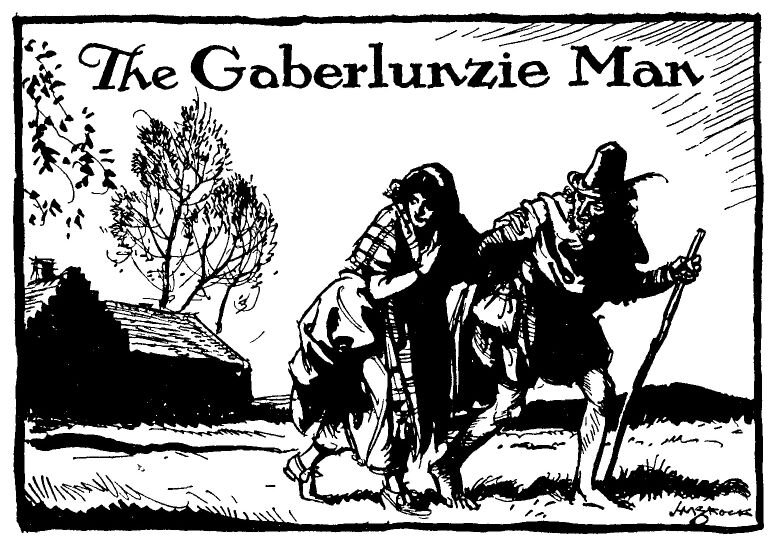
The pauky auld Carle come ovir the lee
Wi' mony good-eens and days to mee,
Saying, Good wife, for zour courtesie,
Will ze lodge a silly poor man?
The night was cauld, the carle was wat,
And down azont the ingle he sat;
My dochtors shoulders he gan to clap,
And cadgily ranted and sang.
ずる賢き老いたる男、牧草地を越えて来たり、
我に幾度も「良き夕べを」「良き日を」と挨拶しつつ、
曰く、「奥方よ、貴女の慈悲によりて、
この愚かなる貧しき男を泊めてはくれまいか?」と。
夜は冷え、男は濡れており、
炉端の奥に座りたり。
我が娘の肩を叩き始め、
陽気に騒ぎ、歌いし。」
O wow! quo he, were I as free,
As first when I saw this countrie,
How blyth and merry wad I bee!
And I wad nevir think lang.
He grew canty, and she grew fain;
But little did her auld minny ken
What thir slee twa togither were say'n,
When wooing they were sa thrang.
「おお、驚きよ!」と彼が言いき、「もし我、自由なる身ならば、
初めてこの国を見た時と同じく、
いかに陽気に、いかに楽しくあらん!
そして決して退屈せざらん。」
彼は陽気になり、彼女は喜びに満ちたり;
されど、その老いたる母は知る由もなし、
このずる賢き二人が共に何を語りしを、
彼らがかくも熱心に求愛し合いし時を。」
And O! quo he, ann ze were as black,
As evir the crown of your dadyes hat,
Tis I wad lay thee by my backe,
And awa wi' me thou sould gang.
And O! quoth she, ann I were as white,
As evir the snaw lay on the dike,
Ild dead me braw, and lady-like,
And awa with thee Ild gang.
「おお!」と彼が言いき、「もし汝が、かくも黒きならば、
汝の父の帽子の頂のごとく、
我は汝を背に乗せ、
我と共に去らん。」
「おお!」と彼女が言いき、「もし我、かくも白きならば、
土手に積もりし雪のごとく、
我は身を飾り、淑女のごとく装い、
汝と共に去らん。」
Between them twa was made a plot;
They raise a wee before the cock,
And wyliely they shot the lock,
And fast to the bent are they gane.
Up the morn the auld wife raise,
And at her leisure put on her claiths,
Syne to the servants bed she gaes
To speir for the silly poor man.
二人の間に企みがなされ、
鶏が鳴く少し前に彼らは起き出し、
狡猾にも錠を外し、
急ぎ草むらへと去りぬ。
翌朝、老いたる妻は起き上がり、
ゆったりと衣を身につけ、
その後、召使いの寝床へと向かい、
愚かなる貧しき男の行方を尋ねたり。
She gaed to the bed, whair the beggar lay,
The strae was cauld, he was away,
She clapt her hands, cryd, Dulefu' day!
For some of our geir will be gane.
Some ran to coffer, and some to kist,
But nought was stown that could be mist.
She dancid her lane, cryd, Praise be blest,
I have lodgd a leal poor man.
彼女は物乞いが横たわりし寝床へと赴き、
藁は冷たく、男は既に去りぬ。
彼女は手を打ち鳴らし、叫びぬ、「悲しき日よ!」
「我らの財の一部が失われしや。」
ある者は長持へ、ある者は櫃へと走りしが、
失われたと気づくべき盗品は何もなし。
彼女は一人踊り、叫びぬ、「祝福あれ!」
「我は誠実なる貧しき男を泊めしなり。」
Since naithings awa, as we can learn,
The kirns to kirn, and milk to earn,
Gae butt the house, lass, and waken my bairn,
And bid her come quickly ben.
The servant gaed where the dochter lay,
The sheets was cauld, she was away,
And fast to her goodwife can say,
Shes aff with the gaberlunzie-man.
何も失われぬと知れたる今、
攪乳器を回し、乳を稼ぐべし。
娘よ、家の奥へ行き、我が子を起こし、
速やかにこちらへ来るよう伝えよ。
召使いは娘が横たわりし場所へと赴き、
シーツは冷たく、娘は既に去りぬ。
そして急ぎ女主人に告げたり、
「彼女は物乞い男と共に行きしなり。」
O fy gar ride, and fy gar rin,
And haste ze, find these traitors agen;
For shees be burnt, and hees be slein,
The wearyfou gaberlunzie-man.
Some rade upo horse, some ran a fit
The wife was wood, and out o' her wit;
She could na gang, nor yet could sit,
But ay did curse and did ban.
おお、馬を走らせ、駆け巡れ、
急ぎて、再びこの裏切り者どもを見つけ出せ。
彼女は焼かれ、彼は殺されん、
あの忌まわしき物乞い男も。
ある者は馬に乗り、ある者は徒歩で走りしが、
妻は狂乱し、正気を失いし。
彼女は歩くことも、座ることもできず、
ただひたすらに呪詛を吐き、罵りたり。
Mean time far hind out owre the lee,
For snug in a glen, where nane could see,
The twa, with kindlie sport and glee
Cut frae a new cheese a whang.
The priving was gude, it pleas'd them baith,
To lo'e her for ay, he gae her his aith.
Quo she, to leave thee, I will laith,
My winsome gaberlunzie-man.
その間、遥か彼方の牧草地の向こう、
誰にも見えぬ谷間にひっそりと、
二人は優しき戯れと喜びと共に、
新しきチーズより一切れを切り取りぬ。
その味は良く、二人を共に喜ばせたり。
永遠に彼女を愛さんと、彼は誓いを立てたり。
彼女は言いたり、「汝を去るは、我には厭わしきこと、
我が愛しき物乞い男よ。」
O kend my minny I were wi' zou,
Illfardly wad she crook her mou,
Sic a poor man sheld nevir trow,
Aftir the gaberlunzie-mon.
My dear, quo he, zee're zet owre zonge;
And hae na learnt the beggars tonge,
To follow me frae toun to toun,
And carrie the gaberlunzie on.
ああ、もし母が私があなたといると知ったら、
彼女は不機嫌に口を曲げるだろう、
そのような貧しい男を彼女は決して信じないだろう、
旅の物乞いの後を追うなど。
「わが愛しき人よ」と彼は言った、「お前はあまりにも若すぎる、
そして物乞いの言葉も学んでおらぬ、
町から町へと私について回り、
物乞いの暮らしを続けるには。」
Wi' kauk and keel, Ill win zour bread,
And spindles and whorles for them wha need,
Whilk is a gentil trade indeed
The gaberlunzie to carrie--o.
Ill bow my leg and crook my knee,
And draw a black clout owre my ee,
A criple or blind they will cau me:
While we sail sing and be merrie--o.
チョークとキールで、私はお前の糧を得よう、
そして必要な者には紡錘と糸巻きを、
それはまことに高貴な商売、
旅の物乞いを続けるには。
私は足を曲げ、膝をかがめ、
目に黒い布を当てよう、
彼らは私を足萎えか盲人と呼ぶだろう:
その間、我らは歌い、陽気に過ごそう。
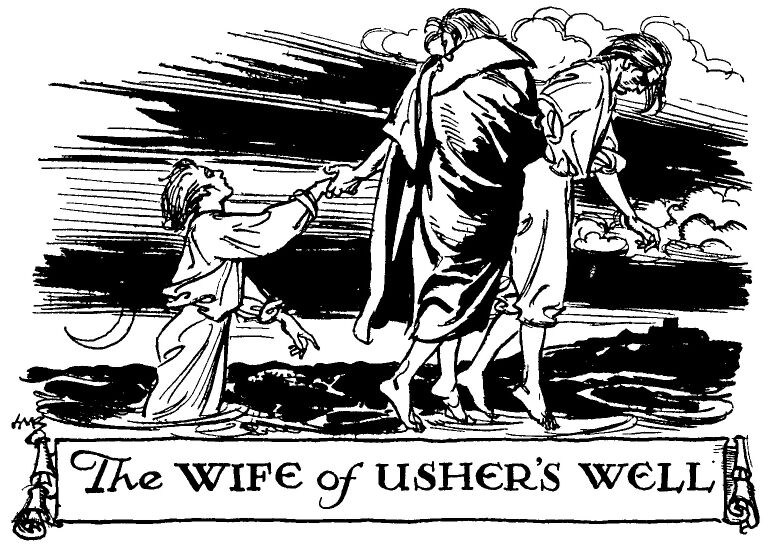
There lived a wife at Usher's Well,
And a wealthy wife was she;
She had three stout and stalwart sons,
And sent them oer the sea.
アッシャーの泉に一人の妻が住んでいた、
彼女は裕福な妻であった;
彼女には三人の頑健でたくましい息子がおり、
彼らを海へと送り出した。
They hadna been a week from her,
A week but barely ane,
Whan word came to the carline wife
That her three sons were gane.
彼らが彼女のもとを離れて一週間も経たぬうちに、
わずか一週間ばかりで、
その老いた妻のもとに知らせが届いた、
彼女の三人の息子たちが逝ってしまったと。
They hadna been a week from her,
A week but barely three,
Whan word came to the carlin wife
That her sons she'd never see.
彼らが彼女のもとを離れて一週間も経たぬうちに、
わずか三週間ばかりで、
その老いた妻のもとに知らせが届いた、
彼女はもう二度と息子たちに会えぬだろうと。
"I wish the wind may never cease,
Nor fashes in the flood,
Till my three sons come hame to me,
In earthly flesh and blood."
「「風が止むことなく、
洪水が荒れ狂うことなく、
私の三人の息子たちが私のもとへ帰ってくるまで、
この世の肉と血をもって。」」
It fell about the Martinmass,
When nights are lang and mirk,
The carlin wife's three sons came hame,
And their hats were o the birk.
それは聖マルティンの祝日頃のことであった、
夜は長く、暗い頃、
その老いた妻の三人の息子たちが家へ帰ってきた、
そして彼らの帽子は白樺でできていた。
It neither grew in syke nor ditch,
Nor yet in ony sheugh;
But at the gates o Paradise,
That birk grew fair eneugh.
それは溝にも堀にも生えず、
またいかなる窪地にも生えなかった;
しかし楽園の門のそばで、
その白樺は十分に美しく育っていた。
* * * * *
* * * * *
"Blow up the fire, my maidens,
Bring water from the well;
For a' my house shall feast this night,
Since my three sons are well."
「「火を焚きなさい、娘たちよ、
井戸から水を汲んで来なさい;
今宵、私の家は皆で祝宴を開くのだ、
私の三人の息子たちが無事なのだから。」」
And she has made to them a bed,
She's made it large and wide,
And she's taen her mantle her about,
Sat down at the bed-side.
そして彼女は彼らのために寝台を整えた、
それは大きく、広々としたものであった、
そして彼女はマントを身にまとい、
寝台のそばに座った。
* * * * *
* * * * *
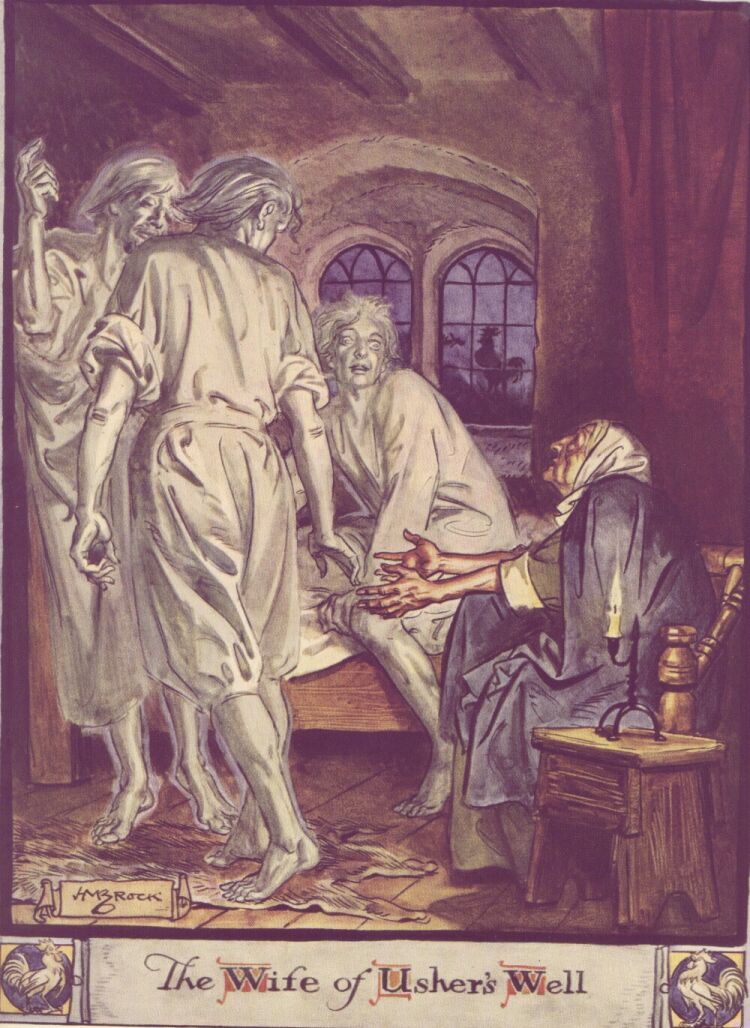
Up then crew the red, red cock,
And up and crew the gray;
The eldest to the youngest said,
'Tis time we were away.
赤き、赤き雄鶏は鳴きし、
そして灰色もまた鳴きし;
長兄は末弟に告げし、
「我ら立ち去る時ぞ。」
The cock he hadna crawd but once,
And clappd his wings at a',
When the youngest to the eldest said,
Brother, we must awa.
雄鶏は一度鳴きしばかり、
そして翼を打ち鳴らしし時、
末弟は長兄に告げし、
「兄上、我らは去らねばならぬ。」
"The cock doth craw, the day doth daw,
The channerin worm doth chide;
Gin we be mist out o our place,
A sair pain we maun bide.
「雄鶏は鳴き、日は明け、
蠢く虫は咎める;
もし我らがその場を失わば、
辛き苦痛を耐えねばならぬ。」
"Fare ye weel, my mother dear!
Fareweel to barn and byre!
And fare ye weel, the bonny lass
That kindles my mother's fire!"
「さらば、我が愛しき母上!
さらば、納屋と牛舎よ!
そしてさらば、美しき乙女よ、
我が母の火を熾す者よ!」
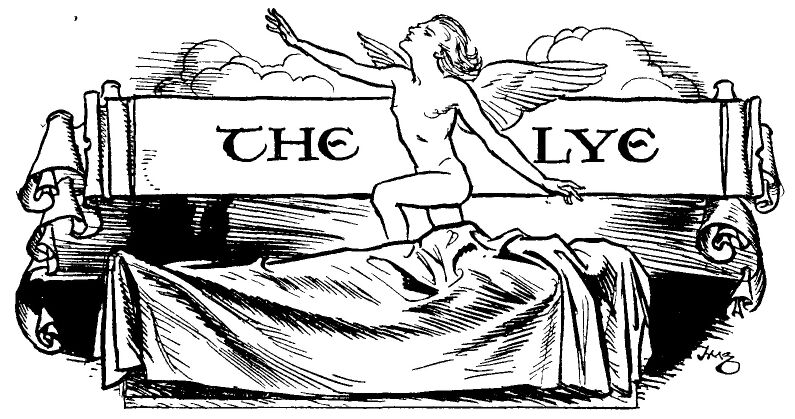
Goe, soule, the bodies guest,
Upon a thanklesse arrant;
Feare not to touche the best,
The truth shall be thy warrant:
Goe, since I needs must dye,
And give the world the lye.
行け、魂よ、肉体の客よ、
報われぬ使命を帯びて;
最良の者に触れるを恐るるなかれ、
真実こそ汝の保証とならん:
行け、我は死なねばならぬゆえ、
そして世に偽りを告げよ。
Goe tell the court, it glowes
And shines like rotten wood;
Goe tell the church it showes
What's good, and doth no good:
If church and court reply,
Then give them both the lye.
宮廷に告げよ、それは輝き、
腐りし木のごとく光ると;
教会に告げよ、それは示すと、
善きものを示しつつ、善をなさぬと:
もし教会と宮廷が答えるならば、
両者に偽りを告げよ。
Tell potentates they live
Acting by others actions;
Not lov'd unlesse they give,
Not strong but by their factions;
If potentates reply,
Give potentates the lye.
権力者らに告げよ、彼らは生きると、
他者の行いによりて;
与えねば愛されず、
派閥によらねば強からずと;
もし権力者らが答えるならば、
権力者らに偽りを告げよ。
Tell men of high condition,
That rule affairs of state,
Their purpose is ambition,
Their practise onely hate;
And if they once reply,
Then give them all the lye.
高位の者ら、
国事を司る者らに告げよ、
彼らの目的は野心なり、
彼らの行いはただ憎悪なりと;
そしてもし彼らが一度でも答えるならば、
彼ら全てに偽りを告げよ。
Tell them that brave it most,
They beg for more by spending,
Who in their greatest cost
Seek nothing but commending;
And if they make reply,
Spare not to give the lye.
最も勇敢を装う者らに告げよ、
彼らは費やすことで更なるものを乞い、
最大の出費において
称賛のみを求めると;
そしてもし彼らが答えるならば、
偽りを告げるを惜しむなかれ。
Tell zeale, it lacks devotion;
Tell love, it is but lust;
Tell time, it is but motion;
Tell flesh, it is but dust;
And wish them not reply,
For thou must give the lye.
熱意に告げよ、献身を欠くと;
愛に告げよ、それはただの情欲なりと;
時に告げよ、それはただの動きなりと;
肉体に告げよ、それはただの塵なりと;
そして彼らが答えぬことを願え、
汝は偽りを告げねばならぬゆえ。
Tell age, it daily wasteth;
Tell honour, how it alters:
Tell beauty, how she blasteth;
Tell favour, how she falters;
And as they shall reply,
Give each of them the lye.
老いには告げよ、日々衰えゆくと;
名誉には告げよ、いかに移ろうかと:
美には告げよ、いかに枯れゆくかと;
恩寵には告げよ、いかに揺らぐかと;
そして彼らが答えるならば、
彼ら一人一人に嘘を告げよ。
Tell wit, how much it wrangles
In tickle points of nicenesse;
Tell wisedome, she entangles
Herselfe in over-wisenesse;
And if they do reply,
Straight give them both the lye.
機知には告げよ、いかに多く争うかと
繊細なる点の些事にて;
知恵には告げよ、彼女はいかに絡まるかと
過剰なる賢さの中に;
そして彼らが答えるならば、
直ちに彼ら双方に嘘を告げよ。
Tell physicke of her boldnesse;
Tell skill, it is pretension;
Tell charity of coldness;
Tell law, it is contention;
And as they yield reply,
So give them still the lye.
医術には告げよ、その大胆さを;
技量には告げよ、それは見せかけなりと;
慈悲には告げよ、その冷たさを;
法には告げよ、それは争いなりと;
そして彼らが答えるならば、
かくして彼らに常に嘘を告げよ。
Tell fortune of her blindnesse;
Tell nature of decay;
Tell friendship of unkindnesse;
Tell justice of delay:
And if they dare reply,
Then give them all the lye.
運命には告げよ、その盲目さを;
自然には告げよ、その衰えを;
友情には告げよ、その不親切さを;
正義には告げよ、その遅延を:
そして彼らが敢えて答えるならば、
その時、彼ら全てに嘘を告げよ。
Tell arts, they have no soundnesse,
But vary by esteeming;
Tell schooles, they want profoundnesse;
And stand too much on seeming:
If arts and schooles reply.
Give arts and schooles the lye.
芸術には告げよ、それらに健全さなしと、
ただ評価によりて移ろうのみと;
学問には告げよ、それらは深遠さを欠くと;
そして見せかけに重きを置きすぎると:
もし芸術と学問が答えるならば、
芸術と学問に嘘を告げよ。
Tell faith, it's fled the citie;
Tell how the countrey erreth;
Tell, manhood shakes off pitie;
Tell, vertue least preferreth:
And, if they doe reply,
Spare not to give the lye.
信仰には告げよ、それは都を逃れしと;
国がいかに過ちを犯すかを告げよ;
男らしさには告げよ、憐れみを振り払うと;
美徳には告げよ、最も軽んじられると:
そして、もし彼らが答えるならば、
嘘を告げることを惜しむなかれ。
So, when thou hast, as I
Commanded thee, done blabbing,
Although to give the lye
Deserves no less than stabbing,
Yet stab at thee who will,
No stab the soule can kill.
されば、汝が、我
命じしごとく、告げ口を終えし時、
たとえ嘘を告げることが
刺殺に劣らぬ報いを受けるとも、
汝を刺す者あらば刺すがよい、
いかなる刺傷も魂を殺すことはできぬ。
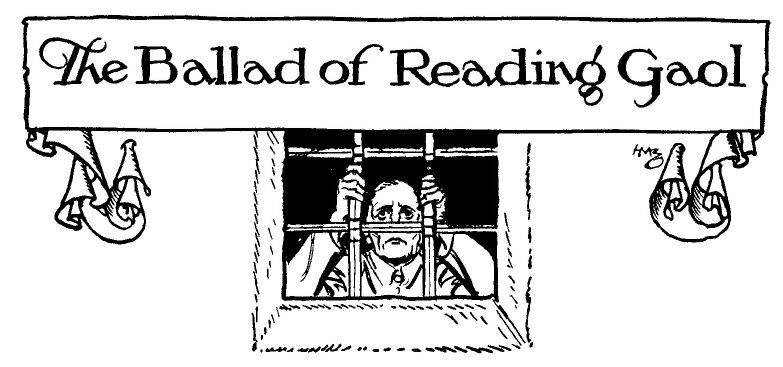
I.
一
He did not wear his scarlet coat,
For blood and wine are red,
And blood and wine were on his hands
When they found him with the dead,
The poor dead woman whom he loved,
And murdered in her bed.
彼は緋色の外套を纏わず、
血と葡萄酒は赤きゆえ、
そして血と葡萄酒は彼の手にありき
彼らが死者と共に彼を見つけし時、
彼が愛し、
そして寝台にて殺めし哀れな死せる女と共に。
He walked amongst the Trial Men
In a suit of shabby grey;
A cricket cap was on his head,
And his step seemed light and gay;
But I never saw a man who looked
So wistfully at the day.
彼は囚人たちの間を歩みし
粗末なる灰色の衣を纏いて
頭にはクリケット帽を被り
その足取りは軽やかにて陽気に見えし
されど、かくも物憂げに一日を眺めし男を
我はかつて見しことなし。
I never saw a man who looked
With such a wistful eye
Upon that little tent of blue
Which prisoners call the sky,
And at every drifting cloud that went
With sails of silver by.
我はかつて見しことなし
かくも物憂げなる瞳もて
囚人たちが空と呼ぶ
かの小さき青き天幕を
そして銀の帆を掲げ
過ぎゆく漂う雲々を眺めし男を。
I walked, with other souls in pain,
Within another ring,
And was wondering if the man had done
A great or little thing,
When a voice behind me whispered low,
"That fellow's got to swing."
我は他の苦しむ魂たちと共に歩みし
別の囲いの中にて
かの男が大いなることか
小さきことか、いずれを為せしやと訝りし時
背後より低き声が囁きし
「あの男は吊るされる運命にある。」
Dear Christ! the very prison walls
Suddenly seemed to reel,
And the sky above my head became
Like a casque of scorching steel;
And, though I was a soul in pain,
My pain I could not feel.
おお、主よ! 牢獄の壁そのものが
突如として揺らめくように見えし
我が頭上の空は
灼熱の鋼の兜と化し
我は苦しむ魂なれど
我が苦痛を感じ得ざりき。
I only knew what hunted thought
Quickened his step, and why
He looked upon the garish day
With such a wistful eye;
The man had killed the thing he loved,
And so he had to die.
我はただ、いかなる追われる思いが
彼の足取りを速めしや、そして何故に
彼がかくも物憂げなる瞳もて
けばけばしき一日を眺めしやを知りしのみ
かの男は愛するものを殺ししゆえ
死なねばならぬ運命にありき。
* * * * *
* * * * *
Yet each man kills the thing he loves,
By each let this be heard,
Some do it with a bitter look,
Some with a flattering word.
The coward does it with a kiss,
The brave man with a sword!
されど、人は皆、愛するものを殺す
皆、これを聞くべし
ある者は苦々しき眼差しもてそれを為し
ある者は媚びへつらう言葉もて
臆病者は口づけもてそれを為し
勇者は剣もて!
Some kill their love when they are young,
And some when they are old;
Some strangle with the hands of Lust,
Some with the hands of Gold:
The kindest use a knife, because
The dead so soon grow cold.
ある者は若き時に愛を殺し
ある者は老いし時に
ある者は欲望の手もて絞め殺し
ある者は金銭の手もて
最も優しき者はナイフを使う、何となれば
死者はかくも早く冷たくなるゆえ。
Some love too little, some too long,
Some sell, and others buy;
Some do the deed with many tears,
And some without a sigh:
For each man kills the thing he loves,
Yet each man does not die.
ある者は愛しすぎぬ、ある者は愛しすぎる
ある者は売り、ある者は買う
ある者は多くの涙もてその行いを為し
ある者は溜息一つなく
何となれば、人は皆、愛するものを殺すなれど
されど人は皆、死なず。
He does not die a death of shame
On a day of dark disgrace,
Nor have a noose about his neck,
Nor a cloth upon his face,
Nor drop feet foremost through the floor
Into an empty space.
彼は恥辱の死を遂げず
暗き不名誉の日に
首に縄をかけられず
顔に布を覆われず
足から床を抜け落ちて
空虚な空間へと落ちることもない。
He does not sit with silent men
Who watch him night and day;
Who watch him when he tries to weep,
And when he tries to pray;
Who watch him lest himself should rob
The prison of its prey.
彼は黙した男たちと共に座らず
昼夜彼を見張る者たちと
彼が涙しようとするとき
彼が祈ろうとするときも
彼が自ら監獄から
その獲物を奪わぬよう見張る者たちと。
He does not wake at dawn to see
Dread figures throng his room,
The shivering Chaplain robed in white,
The Sheriff stern with gloom,
And the Governor all in shiny black,
With the yellow face of Doom.
彼は夜明けに目覚めて
恐ろしき姿が部屋に群がるのを見ず
震える白衣の司祭
陰鬱に厳しき保安官
そして光沢ある黒衣の総督
破滅の黄なる顔を携えし者たちを。
He does not rise in piteous haste
To put on convict-clothes,
While some coarse-mouthed Doctor gloats, and notes
Each new and nerve-twitched pose,
Fingering a watch whose little ticks
Are like horrible hammer-blows.
彼は哀れなる急ぎ足で立ち上がらず
囚人服を身につけることもない
ある口汚き医師が嘲り、書き留める間
新たな神経の痙攣する姿勢を一つ一つ
小さな時を刻む音が
恐ろしき槌の打撃の如き時計を弄びながら。
He does not feel that sickening thirst
That sands one's throat, before
The hangman with his gardener's gloves
Comes through the padded door,
And binds one with three leathern thongs,
That the throat may thirst no more.
彼はその忌まわしき渇きを感じず
喉を砂で満たすような渇きを
庭師の手袋をはめた絞首刑執行人が
詰め物された扉を通り抜けてくる前に
そして三本の革紐で縛りつけ
喉がもはや渇かぬように。
He does not bend his head to hear
The Burial Office read,
Nor, while the anguish of his soul
Tells him he is not dead,
Cross his own coffin, as he moves
Into the hideous shed.
彼は頭を垂れて
埋葬の儀式が読まれるのを聞かず
魂の苦悶が
彼に死んでいないと告げる間も
自らの棺を横切り
忌まわしき小屋へと進むこともない。
He does not stare upon the air
Through a little roof of glass:
He does not pray with lips of clay
For his agony to pass;
Nor feel upon his shuddering cheek
The kiss of Caiaphas.
彼は小さなガラスの屋根を通して
空を見つめることもなく
土の唇で祈ることもない
その苦悶が過ぎ去ることを
また、震える頬に
カイアファスの接吻を感じることもない。
II
二
Six weeks the guardsman walked the yard
In the suit of shabby grey:
His cricket cap was on his head,
And his step seemed light and gay,
But I never saw a man who looked
So wistfully at the day.
六週間、衛兵は庭を歩みし
みすぼらしき灰色の服にて
彼のクリケット帽は頭にあり
その足取りは軽やかで陽気に見えしが
これほどまでに
物憂げに一日を見つめる男を私は見たことなし。
I never saw a man who looked
With such a wistful eye
Upon that little tent of blue
Which prisoners call the sky,
And at every wandering cloud that trailed
Its ravelled fleeces by.
我はかつて見しことなし
かくも物憂げなる眼差しにて
囚人らが空と呼ぶ
かの小さき青き天幕を
見上げし男を、
また、ほつれし羊毛を
引きずるごとく過ぎゆく
さまよえる雲を
見つめし男を。
He did not wring his hands, as do
Those witless men who dare
To try to rear the changeling
In the cave of black Despair:
He only looked upon the sun,
And drank the morning air.
彼は手を揉みしことなし、
黒き絶望の洞窟にて
取り替え子を育てんと
あえて試みる愚かなる者どものごとくには。
彼はただ太陽を見上げ、
朝の空気を飲みしのみ。
He did not wring his hands nor weep,
Nor did he peek or pine,
But he drank the air as though it held
Some healthful anodyne;
With open mouth he drank the sun
As though it had been wine!
彼は手を揉みもせず、泣きもせず、
また、覗き見もせず、思い悩むこともなし。
されど彼は空気を飲みし、
あたかも癒しの鎮痛剤を宿すがごとく。
口を開きて彼は太陽を飲みし、
あたかもそれが葡萄酒なりしがごとく!
And I and all the souls in pain,
Who tramped the other ring,
Forgot if we ourselves had done
A great or little thing,
And watched with gaze of dull amaze
The man who had to swing.
そして我と、苦痛に喘ぐ全ての魂は、
別の輪を巡りし者どもは、
我ら自身が大いなることか、
小さきことか、いずれを為ししかを忘れ、
鈍き驚きの眼差しにて見つめし、
吊るされねばならぬ男を。
For strange it was to see him pass
With a step so light and gay,
And strange it was to see him look
So wistfully at the day,
And strange it was to think that he
Had such a debt to pay.
彼がかくも軽やかで陽気な足取りにて
過ぎゆくを見るは奇妙なりき、
また、彼がかくも物憂げに
一日を見つめるを見るは奇妙なりき、
そして彼がかくも大いなる代償を
払わねばならぬと考えるは奇妙なりき。
* * * * *
* * * * *
For oak and elm have pleasant leaves
That in the spring-time shoot:
But grim to see is the gallows-tree,
With its adder-bitten root,
And, green or dry, a man must die
Before it bears its fruit!
樫と楡は心地よき葉を持ち、
春には芽吹きし。
されど見るも恐ろしきは絞首台の木、
毒蛇に噛まれし根を持ち、
青かろうと枯れていようと、
人が死なねばならぬ、その実を結ぶ前に!
The loftiest place is that seat of grace
For which all worldlings try:
But who would stand in hempen band
Upon a scaffold high,
And through a murderer's collar take
His last look at the sky?
最も高き場所は、世俗の者どもが皆求めし、
かの恩寵の座なり。
されど誰が、麻の縄に縛られ、
高き足場の上に立つであろうか、
そして殺人者の首輪を通して、
空に最後の眼差しを送るであろうか?
It is sweet to dance to violins
When Love and Life are fair:
To dance to flutes, to dance to lutes
Is delicate and rare:
But it is not sweet with nimble feet
To dance upon the air!
愛と人生が麗しき時、
ヴァイオリンに合わせて踊るは甘美なり。
フルートに合わせ、リュートに合わせ踊るは
優美にして稀なること。
されど軽やかな足取りにて、
空中で踊るは甘美ならず!
So with curious eyes and sick surmise
We watched him day by day,
And wondered if each one of us
Would end the self-same way,
For none can tell to what red Hell
His sightless soul may stray.
されば、好奇の眼差しと病める推測を以て
我らは彼を日々見守り、
我ら一人一人もまた
同じ末路を辿るや否やと訝しむ。
何となれば、誰にも知る由なし、
彼の盲目の魂が、いかなる赤き地獄へと迷い行くかを。
At last the dead man walked no more
Amongst the Trial Men,
And I knew that he was standing up
In the black dock's dreadful pen,
And that never would I see his face
For weal or woe again.
遂には、死せる男はもはや歩まず
囚人たちの間を。
我は知る、彼が立ちておりしを
黒き被告席の恐ろしき囲いの中に。
そして、二度と彼の顔を見ることはあるまいと
幸不幸にかかわらず、再び。
Like two doomed ships that pass in storm
We had crossed each other's way:
But we made no sign, we said no word,
We had no word to say;
For we did not meet in the holy night,
But in the shameful day.
嵐の中すれ違う二艘の運命の船の如く
我らは互いの道を交差させたり。
されど、合図もせず、言葉も交わさず、
語るべき言葉もなかりき。
何となれば、我らは聖なる夜に出会わず、
恥ずべき昼に出会いたりし故に。
A prison wall was round us both,
Two outcast men we were:
The world had thrust us from its heart,
And God from out His care:
And the iron gin that waits for Sin
Had caught us in its snare.
牢獄の壁は我ら二人を囲み、
我らは二人の追放されし者。
世は我らをその心より突き放し、
神もまたその慈悲より。
そして、罪を待ち受ける鉄の罠は
我らをその網に捕らえたり。
III.
三.
In Debtors' Yard the stones are hard,
And the dripping wall is high,
So it was there he took the air
Beneath the leaden sky,
And by each side a Warder walked,
For fear the man might die.
債務者監房の庭の石は硬く、
滴る壁は高くそびえたり。
されば、彼はかの地にて外の空気を吸いし
鉛色の空の下に。
そして、両脇には看守が歩みし、
かの男が死すことを恐れて。
Or else he sat with those who watched
His anguish night and day;
Who watched him when he rose to weep,
And when he crouched to pray;
Who watched him lest himself should rob
Their scaffold of its prey.
あるいは、彼は昼夜を問わず
彼の苦悶を見守る者たちと共に座りし。
彼が立ち上がりて涙し、
かがみ込みて祈りし時も、彼ら見守りし。
彼自身が彼らの絞首台から
その獲物を奪わぬよう、彼ら見守りし。
The Governor was strong upon
The Regulations Act:
The Doctor said that Death was but
A scientific fact:
And twice a day the Chaplain called,
And left a little tract.
監獄長は規則法に
厳格なりき。
医師は死はただの
科学的事実なりと語りき。
そして、一日二度、牧師は訪れ、
小さな小冊子を残したり。
And twice a day he smoked his pipe,
And drank his quart of beer:
His soul was resolute, and held
No hiding-place for fear;
He often said that he was glad
The hangman's day was near.
そして、一日二度、彼は煙管を喫し、
一クォートのビールを飲み干しき。
彼の魂は断固としており、
恐れを隠す場所はなかりき。
彼はしばしば語りき、
絞首刑の日が近いことを喜ぶと。
But why he said so strange a thing
No warder dared to ask:
For he to whom a watcher's doom
Is given as his task,
Must set a lock upon his lips
And make his face a mask.
しかし、彼がかくも奇妙なことを言ったのは
いかなる看守も問う勇気なし。
見張りの運命をその務めとして与えられし者は
その唇に鍵をかけ
その顔を仮面とせねばならぬ。
Or else he might be moved, and try
To comfort or console:
And what should Human Pity do
Pent up in Murderer's Hole?
What word of grace in such a place
Could help a brother's soul?
さもなくば、彼は心を動かされ、
慰めようと試みるかもしれぬ。
殺人者の穴に閉じ込められし
人の情けは、いかになすべきか?
かかる場所にて、いかなる慈悲の言葉が
兄弟の魂を救い得ようか?
With slouch and swing around the ring
We trod the Fools' Parade!
We did not care: we knew we were
The Devil's Own Brigade:
And shaven head and feet of lead
Make a merry masquerade.
輪の周りをだらりと揺れながら
我らは愚者の行進を踏みしめた!
我らは気にせず:我らが
悪魔自身の旅団であることを知っていた。
剃られた頭と鉛の足は
陽気な仮面舞踏会をなす。
We tore the tarry rope to shreds
With blunt and bleeding nails;
We rubbed the doors, and scrubbed the floors,
And cleaned the shining rails:
And, rank by rank, we soaped the plank,
And clattered with the pails.
我らは鈍く血を流す爪にて
タールまみれの縄をずたずたに引き裂き;
扉を磨き、床をこすり、
輝く手すりを清めた。
そして、列をなして板に石鹸を塗り、
桶をがたがた鳴らした。
We sewed the sacks, we broke the stones,
We turned the dusty drill:
We banged the tins, and bawled the hymns,
And sweated on the mill:
But in the heart of every man
Terror was lying still.
我らは袋を縫い、石を砕き、
埃まみれのドリルを回した。
缶を叩き、賛美歌を叫び、
水車で汗を流した。
しかし、全ての男の心には
恐怖が静かに横たわっていた。
So still it lay that every day
Crawled like a weed-clogged wave:
And we forgot the bitter lot
That waits for fool and knave,
Till once, as we tramped in from work,
We passed an open grave.
それはあまりに静かに横たわり、日々は
藻に絡まる波のように這い進んだ。
そして我らは、愚者と悪漢を待つ
苦き運命を忘れ去った。
ある時、仕事から足を引きずって戻る途中、
開かれた墓の傍らを通り過ぎるまでは。
With yawning mouth the yellow hole
Gaped for a living thing;
The very mud cried out for blood
To the thirsty asphalte ring:
And we knew that ere one dawn grew fair
Some prisoner had to swing.
あくびする口を開け、黄色の穴は
生けるものを待ち構え;
泥そのものが血を求め、
渇いたアスファルトの輪へと叫び;
そして我らは知っていた、夜明けが来る前に
いずれかの囚人が吊るされるであろうことを。
Right in we went, with soul intent
On Death and Dread and Doom:
The hangman, with his little bag,
Went shuffling through the gloom:
And I trembled as I groped my way
Into my numbered tomb.
我らは死と恐怖と運命に心を定め、
まっすぐ進み入った。
絞首刑執行人は、小さな袋を携え、
闇の中を足を引きずりながら進み;
そして我は、己が番号付けられし墓へと
手探りで進むうち、身震いした。
* * * * *
* * * * *
That night the empty corridors
Were full of forms of Fear,
And up and down the iron town
Stole feet we could not hear,
And through the bars that hide the stars
White faces seemed to peer.
その夜、空ろなる廊下には
恐ろしき姿が満ちたりて、
鉄の街を上り下り、
聞こえぬ足音が忍び寄り、
星を隠す格子越しには
白き顔が覗き見しように見えたり。
He lay as one who lies and dreams
In a pleasant meadow-land,
The watchers watched him as he slept,
And could not understand
How one could sleep so sweet a sleep
With a hangman close at hand.
彼、横たわりて夢見るが如し、
麗しき牧草の地にて。
見張りの者ども、彼の眠る様を見守りて、
理解し得ざりき、
いかにして斯くも甘き眠りにつけるやを、
絞首吏が間近に控えるというに。
But there is no sleep when men must weep
Who never yet have wept:
So we--the fool, the fraud, the knave--
That endless vigil kept,
And through each brain on hands of pain
Another's terror crept.
されど、泣くべき者、
未だ泣かざる者には眠りなし。
故に我ら――愚者、詐欺師、悪党ども――
終わりなき夜警を続けたり、
苦痛の手によりて、各々の脳裏には
他者の恐怖が忍び入りたり。
Alas! it is a fearful thing
To feel another's guilt!
For, right, within, the Sword of Sin
Pierced to its poisoned hilt,
And as molten lead were the tears we shed
For the blood we had not spilt.
ああ!恐ろしきことかな、
他者の罪を感じるとは!
罪の剣は、まさに内なる深きところまで
その毒された柄まで突き刺さり、
我らが流せし涙は、溶けた鉛の如く、
我らが流さざりし血のために。
The warders with their shoes of felt
Crept by each padlocked door,
And peeped and saw, with eyes of awe,
Grey figures on the floor,
And wondered why men knelt to pray
Who never prayed before.
フェルトの靴を履きし看守ども、
各々の錠前かかりし扉の傍らを忍び寄り、
畏敬の眼差しにて覗き見れば、
床には灰色の人影あり、
彼ら、いかにして男どもが跪き祈るやと怪しむ、
かつて祈りしことなき者どもが。
All through the night we knelt and prayed,
Mad mourners of a corse!
The troubled plumes of midnight shook
The plumes upon a hearse:
And bitter wine upon a sponge
Was the savour of Remorse.
夜通し我ら、跪き祈りたり、
屍を悼む狂える者どもよ!
乱れし真夜中の羽飾りは、
霊柩車の羽飾りを揺らし、
そして海綿に染みし苦き葡萄酒こそ、
悔恨の味なりき。
* * * * *
* * * * *
The grey cock crew, the red cock crew,
But never came the day:
And crooked shapes of Terror crouched,
In the corners where we lay:
And each evil sprite that walks by night
Before us seemed to play.
灰色の雄鶏鳴き、赤き雄鶏鳴けども、
日は決して来たらず。
歪みし恐怖の姿は、
我らが横たわる隅にうずくまり、
夜に歩みし悪しき精霊は皆、
我らの前で戯れるように見えたり。
They glided past, they glided fast,
Like travellers through a mist:
They mocked the moon in a rigadoon
Of delicate turn and twist,
And with formal pace and loathsome grace
The phantoms kept their tryst.
彼ら、滑るように過ぎ去り、速やかに滑り去り、
霧の中を行く旅人の如く。
彼ら、優雅なる回転とひねりをもって、
リガドンの舞にて月を嘲り、
形式ばりし足取りと忌まわしき優雅さにて、
幻影どもは約束を果たしたり。
With mop and mow, we saw them go,
Slim shadows hand in hand:
About, about, in ghostly rout
They trod a saraband:
And the damned grotesques made arabesques,
Like the wind upon the sand!
奇妙な身振りにて、彼らの行くを見たり、
細き影、手を取りて:
あたりを、あたりを、幻の行列にて
彼らはサラバンドを踊りし:
そして呪われし異形はアラベスクを織りなし、
砂上の風の如く!
With the pirouettes of marionettes,
They tripped on pointed tread:
But with flutes of Fear they filled the ear,
As their grisly masque they led,
And loud they sang, and long they sang,
For they sang to wake the dead.
操り人形の回転にて、
彼らはつま先立ちで軽やかに:
されど恐怖の笛にて耳を満たし、
恐ろしき仮面舞踏を導きし時、
声高く歌い、長く歌いし、
死者を呼び覚ますため歌いしなり。
"Oho!" they cried, "The world is wide,
But fettered limbs go lame!
And once, or twice, to throw the dice
Is a gentlemanly game,
But he does not win who plays with Sin
In the secret House of Shame."
「おお!」彼らは叫びし、「世は広し、
されど縛られし手足は萎えゆく!
一度、あるいは二度、賽を投ぐるは
紳士の遊びなれど、
罪と戯るる者は勝たず
秘められし恥辱の館にて。」
No things of air these antics were,
That frolicked with such glee:
To men whose lives were held in gyves,
And whose feet might not go free,
Ah! wounds of Christ! they were living things,
Most terrible to see.
これらの狂態は空虚なものではなく、
かくも歓喜して戯れし:
枷に囚われし生を送る者たち、
その足、自由ならざる者たちには、
ああ!キリストの御傷よ!それらは生けるものなり、
見るも恐ろしきものなり。
Around, around, they waltzed and wound;
Some wheeled in smirking pairs;
With the mincing step of a demirep
Some sidled up the stairs:
And with subtle sneer, and fawning leer,
Each helped us at our prayers.
ぐるぐると、彼らはワルツを踊り、絡みつき;
にやつきながら二人組で旋回し;
軽薄な女の気取った足取りにて
階段を横歩きで上りし者もあり:
そして微妙な嘲笑と、へつらいの目つきにて、
各々、我らの祈りを助けしなり。
The morning wind began to moan,
But still the night went on:
Through its giant loom the web of gloom
Crept till each thread was spun:
And, as we prayed, we grew afraid
Of the Justice of the Sun.
朝の風は呻き始めしが、
されど夜は続きし:
その巨大な織機を通じ、陰鬱の織物は
一筋一筋紡がれるまで這い寄りし:
そして、我らが祈るほどに、恐れを抱きしは
太陽の裁きなり。
The moaning wind went wandering round
The weeping prison-wall:
Till like a wheel of turning steel
We felt the minutes crawl:
O moaning wind! what had we done
To have such a seneschal?
呻く風はさまよい巡りし
涙する牢獄の壁を:
鋼鉄の車輪の如く回りて
時の歩みは這うが如く感じられしまで:
おお、呻く風よ!我ら何をしでかしたるか
かかる執事を持ちしとは?
At last I saw the shadowed bars,
Like a lattice wrought in lead,
Move right across the whitewashed wall
That faced my three-plank bed,
And I knew that somewhere in the world
God's dreadful dawn was red.
ついに我は影の格子を見たり、
鉛にて作られし格子窓の如く、
我が三枚板の寝台に向かいし
白塗りの壁を横切りて動くを、
そして我は知れり、世界のどこかに
神の恐ろしき夜明けが赤く染まりしを。
At six o'clock we cleaned our cells,
At seven all was still,
But the sough and swing of a mighty wing
The prison seemed to fill,
For the Lord of Death with icy breath
Had entered in to kill.
六時に我らは独房を清め、
七時には全てが静まり返りしが、
巨大なる翼のざわめきと羽ばたきが
牢獄を満たすかのよう、
氷の息吹を吐く死の主が
殺戮のために入り来たりしゆえ。
He did not pass in purple pomp,
Nor ride a moon-white steed.
Three yards of cord and a sliding board
Are all the gallows' need:
So with rope of shame the Herald came
To do the secret deed.
彼は紫の威厳を纏いて過ぎ去らず、
月白き駿馬に跨りもせず。
三ヤードの縄と滑り板こそ
絞首台が要する全てなれば、
されば恥辱の縄を携え、使者は来たりて
密かなる業を成し遂げん。
We were as men who through a fen
Of filthy darkness grope:
We did not dare to breathe a prayer,
Or to give our anguish scope:
Something was dead in each of us,
And what was dead was Hope.
我らは沼地を彷徨う者の如く、
穢れたる闇の中を手探りし。
祈りを捧ぐる勇気もなく、
苦悩を解き放つことも叶わず。
我ら各々の内に何かが死に絶え、
死に絶えしものこそ希望なりき。
For Man's grim Justice goes its way,
And will not swerve aside:
It slays the weak, it slays the strong,
It has a deadly stride:
With iron heel it slays the strong,
The monstrous parricide!
人の厳しき正義は己が道を往き、
脇道に逸れることなし。
弱きを殺し、強きを殺し、
恐ろしき足取りにて進む。
鉄の踵にて強きを殺す、
この恐るべき親殺しよ!
We waited for the stroke of eight:
Each tongue was thick with thirst:
For the stroke of eight is the stroke of Fate
That makes a man accursed,
And Fate will use a running noose
For the best man and the worst.
我らは八時の鐘を待ちわびし、
各々の舌は渇きに厚く。
八時の鐘は運命の鐘なれば、
人を呪われし者となす。
運命は滑る縄を用いん、
最良の者にも最悪の者にも。
We had no other thing to do,
Save to wait for the sign to come:
So, like things of stone in a valley lone,
Quiet we sat and dumb:
But each man's heart beat thick and quick,
Like a madman on a drum!
我らに為すべきこと他になく、
来たるべき合図を待つのみ。
されば、孤なる谷の石の如く、
静かに座し、口を閉ざし。
されど各々の心臓は厚く速く打ち鳴り、
狂人が太鼓を叩くが如く!
With sudden shock the prison-clock
Smote on the shivering air,
And from all the gaol rose up a wail
Of impotent despair,
Like the sound that frightened marches hear
From some leper in his lair.
突然の衝撃と共に牢獄の時計が
震える空気に打ち鳴らされ、
牢獄の全てより嘆きの声が上がりしは
無力なる絶望の。
恐れおののく旅人が聞く音の如く、
隠れ家なる癩病者より発せられし。
And as one sees most fearful things
In the crystal of a dream,
We saw the greasy hempen rope
Hooked to the blackened beam,
And heard the prayer the hangman's snare
Strangled into a scream.
夢の水晶に最も恐ろしきものを見るが如く、
我らは脂ぎりし麻縄を見たり、
黒ずみし梁に掛けられしを。
そして絞首人の罠が祈りを
叫びへと絞め殺す音を聞きし。
And all the woe that moved him so
That he gave that bitter cry,
And the wild regrets, and the bloody sweats,
None knew so well as I:
For he who lives more lives than one
More deaths than one must die.
彼をかくも動かしし全ての悲しみ、
彼がかの苦き叫びをあげしこと、
そして荒ぶる後悔と、血の汗と、
我ほどよく知る者なし。
幾つもの生を生きる者は
幾つもの死を死なねばならぬゆえ。
IV
四
There is no chapel on the day
On which they hang a man:
The Chaplain's heart is far too sick,
Or his face is far too wan,
Or there is that written in his eyes
Which none should look upon.
人を吊るすその日には
礼拝堂は開かれず。
司祭の心は病みすぎ、
その顔はあまりに青ざめ、
あるいはその瞳には
誰も見るべからざるものが記されしゆえ。
So they kept us close till nigh on noon,
And then they rang the bell,
And the warders with their jingling keys
Opened each listening cell,
And down the iron stair we tramped,
Each from his separate Hell.
かくして我らは正午近くまで閉じ込められ、
やがて鐘は鳴り響き、
鍵をじゃらつかせし看守らは
耳を澄ます独房を一つ一つ開け放ち、
我らは鉄の階段を下りて踏みしめゆき、
各々が己が別々の地獄より出でし。
Out into God's sweet air we went,
But not in wonted way,
For this man's face was white with fear,
And that man's face was grey,
And I never saw sad men who looked
So wistfully at the day.
神の甘き大気の中へ我らは出でしが、
常の如くにはあらず。
この男の顔は恐怖に白く、
かの男の顔は灰色なり。
かくも物憂げに一日を眺めし
悲しき人々を我はかつて見ず。
I never saw sad men who looked
With such a wistful eye
Upon that little tent of blue
We prisoners called the sky,
And at every happy cloud that passed
In such strange freedom by.
我はかつて見ず、かくも物憂げな瞳にて
かの小さき青き天幕を眺めし悲しき人々を、
我ら囚人らが空と呼びしものを、
そして、かくも奇妙な自由さにて
通り過ぎゆく全ての楽しげな雲を。
But there were those amongst us all
Who walked with downcast head,
And knew that, had each got his due,
They should have died instead:
He had but killed a thing that lived,
Whilst they had killed the dead.
されど我らの中には、
うつむきて歩みし者どもあり。
各々が然るべき報いを受けしならば、
彼らこそ死すべきであったと知りて。
彼はただ生けるものを殺せしのみ、
彼らは死せるものを殺せしに。
For he who sins a second time
Wakes a dead soul to pain,
And draws it from its spotted shroud,
And makes it bleed again,
And makes it bleed great gouts of blood,
And makes it bleed in vain!
二度罪を犯す者は
死せる魂を苦痛へと目覚めさせ、
その汚れたる屍衣より引き出し、
再び血を流させ、
大いなる血の塊を流させ、
徒に血を流させるなり!
* * * * *
* * * * *
Like ape or clown, in monstrous garb
With crooked arrows starred,
Silently we went round and round
The slippery asphalte yard;
Silently we went round and round,
And no man spoke a word.
猿か道化の如く、異形の衣を纏い
曲がれる矢にて飾られし、
我らは黙してぐるぐると巡りし、
滑らかなるアスファルトの庭を。
我らは黙してぐるぐると巡りし、
そして誰も一言も語らず。
Silently we went round and round,
And through each hollow mind
The Memory of dreadful things
Rushed like a dreadful wind,
And Horror stalked before each man,
And Terror crept behind.
静かに我らは巡り巡り、
そして虚ろなる心々を貫き
恐ろしき事どもの記憶は
恐ろしき風の如く吹き荒れ、
恐怖は各人の前に忍び寄り、
戦慄は背後に這い寄る。
* * * * *
* * * * *
The warders strutted up and down,
And watched their herd of brutes,
Their uniforms were spick and span,
And they wore their Sunday suits,
But we knew the work they had been at,
By the quicklime on their boots.
監視兵らは闊歩し、
獣の群れを見張る。
彼らの制服は清潔にして整い、
日曜の晴れ着を纏えど、
我らは彼らの為したる業を知りぬ、
その靴に付着せし生石灰によりて。
For where a grave had opened wide,
There was no grave at all:
Only a stretch of mud and sand
By the hideous prison-wall,
And a little heap of burning lime,
That the man should have his pall.
墓穴が大きく開かれし処に、
墓など一片もなし。
ただ泥と砂の広がりあるのみ、
忌まわしき牢獄の壁の傍らに、
そして燃え盛る石灰の小山、
それこそが男の棺覆いとなるべし。
For he has a pall, this wretched man,
Such as few men can claim:
Deep down below a prison-yard,
Naked for greater shame,
He lies, with fetters on each foot,
Wrapt in a sheet of flame!
この哀れなる男には棺覆いあり、
稀なる者のみが主張し得るもの。
牢獄の庭の深き底に、
更なる恥辱のために裸にて、
両足に足枷を嵌められ横たわり、
炎の衣に包まれり!
And all the while the burning lime
Eats flesh and bone away,
It eats the brittle bone by night,
And the soft flesh by day,
It eats the flesh and bone by turns,
But it eats the heart alway.
そしてその間ずっと燃え盛る石灰は
肉と骨を蝕み尽くす、
夜には脆き骨を食らい、
昼には柔らかき肉を食らう、
肉と骨を交互に食らうが、
しかし常に心臓を食らう。
* * * *
* * * *
For three long years they will not sow
Or root or seedling there:
For three long years the unblessed spot
Will sterile be and bare,
And look upon the wondering sky
With unreproachful stare.
三年の長きにわたり、彼らは種を蒔かず、
根も苗もそこに植えぬ。
三年の長きにわたり、その呪われし地は
不毛にして荒れ果て、
驚き見つめる空を仰ぎ、
咎めなき眼差しを向けるであろう。
They think a murderer's heart would taint
Each simple seed they sow.
It is not true! God's kindly earth
Is kindlier than men know,
And the red rose would but blow more red,
The white rose whiter blow.
彼らは殺人者の心が汚すであろうと考える
彼らが蒔く一つ一つの素朴な種を。
それは真ならず!神の慈悲深き大地は
人の知るよりも慈悲深く、
赤き薔薇はただ一層赤く咲き、
白き薔薇は一層白く咲くであろう。
Out of his mouth a red, red rose!
Out of his heart a white!
For who can say by what strange way,
Christ brings His will to light,
Since the barren staff the pilgrim bore
Bloomed in the great Pope's sight?
彼の口よりは赤き、赤き薔薇!
彼の心よりは白き薔薇!
いかなる奇妙なる道によりてか、誰が言えよう、
キリストがその御心を顕現させ給うかを、
巡礼者が携えし不毛なる杖が
偉大なる教皇の御前で花開きてよりは。
But neither milk-white rose nor red
May bloom in prison-air;
The shard, the pebble, and the flint,
Are what they give us there:
For flowers have been known to heal
A common man's despair.
されど乳色の薔薇も紅き薔薇も
牢獄の空には咲くまじ。
陶片、小石、そして火打石こそ、
彼らが我らに与えしもの。
花は人の絶望を癒すものと
知られしゆえに。
So never will wine-red rose or white,
Petal by petal, fall
On that stretch of mud and sand that lies
By the hideous prison-wall,
To tell the men who tramp the yard
That God's Son died for all.
ゆえに葡萄酒色の薔薇も白き薔薇も、
花びら一枚一枚、落ちることはあるまじ
あの忌まわしき牢獄の壁の傍らに
横たわる泥と砂の広がりには。
庭を歩む男たちに告げるため、
神の子が皆のために死せしことを。
Yet though the hideous prison-wall
Still hems him round and round,
And a spirit may not walk by night
That is with fetters bound,
And a spirit may but weep that lies
In such unholy ground.
されど忌まわしき牢獄の壁は
なお彼をぐるりと囲み、
足枷に縛られし魂は
夜には歩むこと能わず、
かかる不浄の地に横たわる魂は
ただ涙するのみ。
He is at peace-this wretched man--
At peace, or will be soon:
There is no thing to make him mad,
Nor does Terror walk at noon,
For the lampless Earth in which he lies
Has neither Sun nor Moon.
彼は安らぎにあり――この哀れな男は――
安らぎに、あるいは間もなくそうなるであろう。
彼を狂わせるものは何もなく、
恐怖も真昼には歩まぬ。
彼が横たわる灯なき大地には
太陽も月もなきゆえに。
They hanged him as a beast is hanged:
They did not even toll
A requiem that might have brought
Rest to his startled soul,
But hurriedly they took him out,
And hid him in a hole.
彼らは獣を吊るすがごとく彼を吊るし、
彼の驚きし魂に安らぎをもたらすであろう
鎮魂の鐘すら鳴らさず、
急ぎ彼を運び出し、
穴に隠しぬ。
The warders stripped him of his clothes,
And gave him to the flies:
They mocked the swollen purple throat,
And the stark and staring eyes:
And with laughter loud they heaped the shroud
In which the convict lies.
看守たちは彼の衣を剥ぎ取り、
蠅に与えぬ。
彼らは腫れ上がった紫の喉を嘲り、
見開かれし虚ろな目を嘲りぬ。
そして大声で笑いながら、囚人が横たわる
屍衣を積み重ねぬ。
The Chaplain would not kneel to pray
By his dishonoured grave:
Nor mark it with that blessed Cross
That Christ for sinners gave,
Because the man was one of those
Whom Christ came down to save.
司祭は彼の汚されし墓の傍らに
跪き祈ることもせず、
罪人のためにキリストが与えし
聖なる十字架で印すこともせず。
なぜならば、その男はキリストが
救うために降り来たりし者の一人であったゆえに。
Yet all is well; he has but passed
To Life's appointed bourne:
And alien tears will fill for him
Pity's long-broken urn,
For his mourners will be outcast men,
And outcasts always mourn.
されど全てはよし。彼はただ
生が定めし終焉へと過ぎ去りしのみ。
そして異邦の涙が彼のために
憐れみの久しく砕けし骨壺を満たすであろう。
彼の弔う者は追放されし者たちであり、
追放されし者は常に嘆き悲しむゆえに。
V
五
I know not whether Laws be right,
Or whether Laws be wrong;
All that we know who lie in gaol
Is that the wall is strong;
And that each day is like a year,
A year whose days are long.
法が正しきか、
あるいは誤りか、我は知らず。
牢獄に臥す我らが知るは、
ただ壁の堅固なるのみ。
そして、日々は年月の如く、
その日々の長きことよ。
But this I know, that every Law
That men have made for Man,
Since first Man took his brother's life,
And the sad world began,
But straws the wheat and saves the chaff
With a most evil fan.
されど、これぞ知る、人、
人のために定めし全ての法は、
人が初めて兄弟の命を奪い、
悲しき世が始まりしより、
悪しき扇にて麦を散らし、
籾殻のみを留めるものなり。
This too I know--and wise it were
If each could know the same--
That every prison that men build
Is built with bricks of shame,
And bound with bars lest Christ should see
How men their brothers maim.
これもまた知る――もし皆が
同じく知らば、賢明なるべし――
人が築く全ての牢獄は、
恥辱の煉瓦にて造られ、
キリストが人の兄弟を傷つける様を
見ぬよう、鉄格子にて閉ざされしを。
With bars they blur the gracious moon,
And blind the goodly sun:
And they do well to hide their Hell,
For in it things are done
That Son of God nor son of Man
Ever should look upon!
鉄格子は優しき月を曇らせ、
麗しき日を盲目となす。
彼らが地獄を隠すは宜なるかな、
その内にて行わるる事どもは、
神の子も人の子も、
決して見るべからざるものなれば!
* * * * *
* * * * *
The vilest deeds like poison weeds,
Bloom well in prison-air;
It is only what is good in Man
That wastes and withers there:
Pale Anguish keeps the heavy gate,
And the Warder is Despair.
最も忌まわしき行いは、毒草の如く、
牢獄の空気に咲き誇る。
人の善なるもののみが、
かの地にて朽ち果て、萎えゆく。
青ざめた苦悶が重き門を守り、
看守は絶望なり。
For they starve the little frightened child
Till it weeps both night and day:
And they scourge the weak, and flog the fool,
And gibe the old and grey,
And some grow mad, and all grow bad,
And none a word may say.
彼らは怯えし幼子を飢えさせ、
昼夜を問わず泣かしむ。
弱き者を鞭打ち、愚か者を打ち据え、
老いし白髪の者を嘲る。
ある者は狂い、皆が悪しき者となり、
誰一人として言葉を発すること能わず。
Each narrow cell in which we dwell
Is a foul and dark latrine,
And the fetid breath of living Death
Chokes up each grated screen,
And all, but Lust, is turned to dust
In humanity's machine.
我らが住まう狭き独房は、
穢れた暗き便所なり。
生ける死の悪臭は、
格子戸の全てを塞ぎ、
欲望を除き、全ては塵と化す、
人の機械の中で。
The brackish water that we drink
Creeps with a loathsome slime,
And the bitter bread they weigh in scales
Is full of chalk and lime,
And Sleep will not lie down, but walks
Wild-eyed, and cries to Time.
我らが飲む塩辛き水は、
忌まわしき粘液を這わせ、
彼らが秤にかける苦きパンは、
白墨と石灰に満ち、
眠りは横たわらず、狂える眼差しで歩き回り、
時に向かい叫ぶ。
* * * * *
* * * * *
But though lean Hunger and green Thirst
Like asp with adder fight,
We have little care of prison fare,
For what chills and kills outright
Is that every stone one lifts by day
Becomes one's heart by night.
されど、痩せたる飢えと青き渇きが
毒蛇と蝮のごとく争えど、
我らは牢獄の糧を顧みず、
身を凍らせ、命を奪うものは
日ごとに持ち上げし石の一つ一つが
夜には己が心となることなれば。
With midnight always in one's heart,
And twilight in one's cell,
We turn the crank, or tear the rope,
Each in his separate Hell,
And the silence is more awful far
Than the sound of a brazen bell.
常に心に真夜を抱き、
独房には黄昏を宿し、
我らは手回し機を回し、あるいは縄を引き裂く、
各々が己が別々の地獄にて、
そして沈黙は、遥かに恐ろしきもの、
真鍮の鐘の音よりも。
And never a human voice comes near
To speak a gentle word:
And the eye that watches through the door
Is pitiless and hard:
And by all forgot, we rot and rot,
With soul and body marred.
人の声は決して近づかず
優しき言葉を語ることもなし。
扉越しに見張る眼差しは
無慈悲にして厳しきもの。
皆に忘れられ、我らは朽ち果て、
魂も肉体も傷つきしままに。
And thus we rust Life's iron chain
Degraded and alone:
And some men curse and some men weep,
And some men make no moan:
But God's eternal Laws are kind
And break the heart of stone.
かくして我らは人生の鉄鎖を錆びさせ、
堕落し、孤独なり。
ある者は呪い、ある者は涙し、
ある者は嘆きもせぬ。
されど神の永遠の法は慈悲深く、
石の心をも打ち砕く。
And every human heart that breaks,
In prison-cell or yard,
Is as that broken box that gave
Its treasure to the Lord,
And filled the unclean leper's house
With the scent of costliest nard.
そして、牢獄の独房にて、あるいは庭にて
打ち砕かれし人の心は皆、
主へとその宝を捧げし
砕かれし箱のごとく、
穢れたるらい病患者の家を
最も高価なるナルドの香りで満たしき。
Ah! happy they whose hearts can break
And peace of pardon win!
How else man may make straight his plan
And cleanse his soul from Sin?
How else but through a broken heart
May Lord Christ enter in?
ああ!心砕かれ、
赦しの平安を得る者たちは幸いなり!
いかにして人はその道を正し、
魂を罪より清め得ん?
砕かれし心を通さずして、
いかにして主キリストは入り給わん?
* * * * *
* * * * *
And he of the swollen purple throat,
And the stark and staring eyes,
Waits for the holy hands that took
The Thief to Paradise;
And a broken and a contrite heart
The Lord will not despise.
そして、腫れ上がりし紫の喉と、
硬く見開かれし眼を持つ彼は、
盗人を楽園へと導きし
聖なる御手を待ち望む。
砕かれ、悔い改めし心は
主は決して蔑み給わぬ。
The man in red who reads the Law
Gave him three weeks of life,
Three little weeks in which to heal
His soul of his soul's strife,
And cleanse from every blot of blood
The hand that held the knife.
法を読み聞かせし赤き衣の男は
彼に三週間の命を与えき。
その魂の葛藤より癒え、
魂を清めるための三週間、
そして、ナイフを握りし手を
あらゆる血の染みより清めるための。
And with tears of blood he cleansed the hand,
The hand that held the steel:
For only blood can wipe out blood,
And only tears can heal:
And the crimson stain that was of Cain
Became Christ's snow-white seal.
血の涙もて彼はその手を清めぬ、
鋼を握りしその手を。
血のみぞ血を拭い去り、
涙のみぞ癒し得るなれば。
カインの紅き染みは
キリストの雪白き印となりぬ。
VI
六
In Reading gaol by Reading town
There is a pit of shame,
And in it lies a wretched man
Eaten by teeth of flame,
In a burning winding-sheet he lies,
And his grave has got no name.
レディングの町なるレディング監獄には
恥辱の穴あり、
その中に横たわるは哀れな男、
炎の歯に食い荒らされ、
燃え盛る経帷子に包まれ横たわり、
その墓には名もなし。
And there, till Christ call forth the dead,
In silence let him lie:
No need to waste the foolish tear,
Or heave the windy sigh:
The man had killed the thing he loved,
And so he had to die.
そしてそこにて、キリストが死者を呼び出すまで、
彼を静かに横たえさせよ。
愚かな涙を無駄にする必要もなく、
空虚なため息をつく必要もなし。
男は愛するものを殺し、
故に死なねばならぬ。
And all men kill the thing they love,
By all let this be heard,
Some do it with a bitter look,
Some with a flattering word,
The coward does it with a kiss,
The brave man with a sword!
そして人は皆、愛するものを殺す、
このこと皆に聞かせよ、
ある者は苦い眼差しで、
ある者は甘言で、
臆病者は口づけで、
勇者は剣で!
APPENDIX
付録
From "Percy's Reliques"--Volume I.
「パーシーの遺物集」より――第一巻。
THE FROLICKSOME DUKE
陽気な公爵
Printed from a black-letter copy in the Pepys Collection.
ペピス・コレクション所蔵のゴシック体写本より印刷。
KING ESTMERE
エストメア王
This ballad is given from two versions, one in the Percy
folio
manuscript, and of considerable antiquity. The original version
was
probably written at the end of the fifteenth century.
このバラッドは二つの版から採られたもので、一つはパーシー・フォリオ写本に収められ、かなりの古さを持つ。原版はおそらく十五世紀末に書かれたものであろう。
ROBIN HOOD AND GUY OF GISBORNE
ロビン・フッドとギズボーンのガイ
One of the earliest known ballads about Robin Hood--from the
Percy folio
manuscript.
ロビン・フッドに関する最も初期のバラッドの一つ――パーシー・フォリオ写本より。
KING COPHETUA AND THE BEGGAR MAID
コフェチュア王と乞食の乙女
This ballad is printed from Richard Johnson's Crown Garland
of
Goulden Roses, 1612.
このバラッドは、リチャード・ジョンソンの『黄金の薔薇の冠の飾り』(1612年)より印刷された。
THE FRIAR OF ORDERS GRAY
灰色の修道服の修道士
This ballad is composed of innumerable small fragments of
ancient
ballads found throughout the plays of Shakespeare, which Thomas
Percy
formed into one.
このバラッドは、シェイクスピアの戯曲全体に見られる無数の古代バラッドの小片から構成されており、トマス・パーシーが一つにまとめたものである。
SIR ALDINGAR
サー・アルディンガー
Given from the Percy folio manuscript, with some additional
stanzas
added by Thomas Percy to complete the story.
パーシー・フォリオ写本より与えられ、物語を完結させるためにトマス・パーシーによっていくつかの追加のスタンザが加えられた。
EDOM O'GORDON
エドム・オ・ゴードン
A Scottish ballad--this version was printed at Glasgow in 1755
by Robert
and Andrew Foulis. It has been enlarged with several stanzas,
recovered
from a fragment of the same ballad, from the Percy folio
manuscript.
スコットランドのバラッド――この版は、1755年にグラスゴーにてロバート
アンドリュー・フーリスにより印刷されしものなり。同じバラッドの断片より、パーシー・フォリオ
写本より見出されし幾つかの詩節を以て増補されしものなり。
From the Percy folio manuscript, amended by two or three
others printed
in black-letter. Written about the time of Elizabeth.
パーシー・フォリオ写本より、ブラックレターにて印刷されし二、三の他本により訂正されしものなり。
エリザベス女王の御代に書かれしものと推測せらる。
SIR LANCELOT DU LAKE
サー・ランスロット・デュ・レイク
Given from a printed copy, corrected in part by an extract
from the
Percy folio manuscript.
印刷されし写本より与えられしもの、
パーシー・フォリオ写本よりの抜粋により一部訂正されしものなり。
THE CHILD OF ELLE
エルの子
Partly from the Percy folio manuscript, with several
additional stanzas
by Percy as the original copy was defective and mutilated.
一部はパーシー・フォリオ写本より、元の写本が不完全にして破損せし故に、幾つかの
詩節はパーシーにより追加されしものなり。
KING EDWARD IV AND THE TANNER OF TAM WORTH
エドワード四世とタムワースの革なめし職人
The text in this ballad is selected from two copies in
black-letter. One
in the Bodleian Library, printed at London by John Danter in
1596. The
other copy, without date, is from the Pepys Collection.
このバラッドの本文は、ブラックレターにて書かれし二つの写本より選ばれしものなり。一つは
ボドリアン図書館に蔵せられ、1596年にロンドンにてジョン・ダンターにより印刷されしもの。
他の一本は、日付なきものにして、ペピス・コレクションよりのものなり。
SIR PATRICK SPENS
サー・パトリック・スペンス
Printed from two manuscript copies transmitted from Scotland.
It is
possible that this ballad is founded on historical fact.
スコットランドより伝えられし二つの手書き写本より印刷されしものなり。
このバラッドは史実に基づきしものなるやも知れぬ。
EDWARD, EDWARD
エドワード、エドワード
An old Scottish ballad--from a manuscript copy transmitted
from
Scotland.
古きスコットランドのバラッド――スコットランドより伝えられし手書き写本より。
KING LEIR AND HIS THREE DAUGHTERS
リア王と三人の娘たち
Version from an old copy in the Golden Garland,
black-letter,
entitled A lamentable Song of the Death of King Lear and his
Three
Daughters.
『黄金の花環』に収められし古きブラックレター版よりの写し、
『リア王と三人の娘たちの死を悼む歌』と題されしものなり。
THE GABERLUNZIE MAN
ガバーランジー・マン
This ballad is said to have been written by King James V of Scotland.
このバラッドは、スコットランドのジェームズ五世により書かれしものと伝えらる。
From "Percy's Reliques"--Volume II.
『パーシー遺稿集』より――第二巻。
THE KNIGHT AND SHEPHERD'S DAUGHTER
騎士と羊飼いの娘
Printed from an old black-letter copy, with some corrections.
古きブラックレター版の写本より印刷されしもの、幾つかの
訂正を加えられしものなり。
KING JOHN AND THE ABBOT OF CANTERBURY
ジョン王とカンタベリーの修道院長
This ballad was abridged and modernized in the time of James I
from one
much older, entitled King John and the Bishop of
Canterbury. The
version given here is from an ancient black-letter copy.
このバラッドは、ジェームズ一世の御代に、より古きものより短縮され、現代風に改められしものなり。
『ジョン王とカンタベリーの司教』と題されしものなり。
ここに示されし版は、古きブラックレター版の写本よりのものなり。
BARBARA ALLEN'S CRUELTY
バーバラ・アレンの残酷
Given, with some corrections, from an old black-letter copy,
entitled
Barbara Alien's Cruelty, or the Young Man's Tragedy.
幾つかの訂正を加えられ、古きブラックレター版の写本より与えられしもの、
『バーバラ・アレンの残酷、あるいは若者の悲劇』と題されしものなり。
FAIR ROSAMOND
美しきロザモンド
The version of this ballad given here is from four ancient
copies in
black-letter: two of them in the Pepys' Library. It is by Thomas
Delone.
First printed in 1612.
ここに示されたこのバラッドの版は、四つの古き
ブラックレター版の写本より採られたものなり。そのうち二つはペピーズ図書館に所蔵されしものなり。トーマス・デローンによるものなり。
初版は1612年に印刷されし。
THE BOY AND THE MANTLE
少年とマント
This is a revised and modernized version of a very old ballad.
これは、古きバラッドを改訂し、現代風に仕立て直した版なり。
THE HEIR OF LINNE
リンの相続人
Given from the Percy folio manuscript, with several additional
stanzas
supplied by Thomas Percy.
パーシー・フォリオ写本より採られ、トーマス・パーシーにより幾つかの追加の
詩節が補われし。
SIR ANDREW BARTON
アンドリュー・バートン卿
This ballad is from the Percy folio manuscript with additions
and
amendments from an ancient black-letter copy in the Pepys'
Collection.
It was written probably at the end of the sixteenth century.
このバラッドはパーシー・フォリオ写本より採られ、ペピーズ・コレクションに所蔵されし古きブラックレター版の写本よりの追加と
修正が加えられしものなり。
おそらく十六世紀の終わりに書かれしものと推測される。
THE BEGGAR'S DAUGHTER OF BEDNALL GREEN
ベドナル・グリーンの乞食の娘
Given from the Percy folio manuscript, with a few additions
and
alterations from two ancient printed copies.
パーシー・フォリオ写本より採られ、二つの古き印刷された写本よりの幾つかの追加と
変更が加えられし。
BRAVE LORD WILLOUGHBEY
勇敢なるウィロビー卿
Given from an old black-letter copy.
古きブラックレター版の写本より採られし。
THE SPANISH LADY'S LOVE
スペインの貴婦人の恋
The version of an ancient black-letter copy, edited in part
from the
Percy folio manuscript.
古きブラックレター版の写本の版にして、一部は
パーシー・フォリオ写本より編集されし。
GIL MORRICE
ギル・モーリス
The version of this ballad given here was printed at Glasgow
in 1755.
Since this date sixteen additional verses have been discovered
and added
to the original ballad.
ここに示されしこのバラッドの版は、1755年にグラスゴーにて印刷されし。
この日付以降、十六の追加の詩節が発見され、
元のバラッドに加えられし。
CHILD WATERS
チャイルド・ウォーターズ
From the Percy folio manuscript, with corrections.
パーシー・フォリオ写本より、訂正を加えられし。
THE BAILIFF'S DAUGHTER OF ISLINGTON
イズリントンの代官の娘
From an ancient black-letter copy in the Pepys' Collection.
ペピーズ・コレクションに所蔵されし古きブラックレター版の写本より。
THE LYE
嘘
By Sir Walter Raleigh. This poem is from a scarce miscellany
entitled
Davison's Poems, or a poeticall Rapsodie divided into sixe
books ...
the 4th impression newly corrected and augmented and put into a
forme
more pleasing to the reader. Lond. 1621.
ウォルター・ローリー卿による。この詩は、
『デイヴィソンの詩、あるいは六巻に分かたれし詩的狂詩曲...
第四版、新たに訂正増補され、読者により喜ばるる形式に整えられし。』と題されし稀なる詩集より採られし。ロンドン、1621年。
From "English and Scottish Ballads."
『イングランドとスコットランドのバラッド』より。
MAY COLLIN
メイ・コリン
From a manuscript at Abbotsford in the Sir Walter Scott
Collection,
Scotch Ballads, Materials for Border Minstrelsy.
アボッツフォードに所蔵されしウォルター・スコット卿コレクションの写本より、
『スコットランドのバラッド、国境吟遊詩のための資料』。
THOMAS THE RHYMER
詩人トーマス
Scotch Ballads, Materials for Border Minstrelsy, No.
97,
Abbotsford. From the Sir Walter Scott Collection. Communicated to
Sir
Walter by Mrs. Christiana Greenwood, London, May 27th, 1806.
『スコットランドのバラッド、国境吟遊詩のための資料』、九十七番、
アボッツフォード。ウォルター・スコット卿コレクションより。1806年5月27日、ロンドンのクリスティアナ・グリーンウッド夫人によりウォルター卿に伝えられし。
YOUNG BEICHAN
若きベイチャン
Taken from the Jamieson-Brown manuscript, 1783.
ジェイミソン=ブラウン手稿より、1783年。
CLERK COLVILL
クラーク・コルヴィル
From a transcript of No. 13 of William Tytler's Brown manuscript.
ウィリアム・タイトラーのブラウン手稿第13番の写しより。
THE EARL OF MAR'S DAUGHTER
マール伯爵の娘
From Buchan's Ballads of the North of Scotland, 1828.
ブキャンのスコットランド北部民謡集より、1828年。
HYND HORN
ハインド・ホーン
From Motherwell's manuscript, 1825 and after.
マザーウェルの手稿より、1825年以降。
THE THREE RAVENS
三羽のワタリガラス
Melismate. Musicall Phansies. Fitting the Court, Cittie and
Country
Humours. London, 1611. (T. Ravenscroft.)
メリスマテ。音楽的幻想。宮廷、都市、田舎の
気質に合うもの。ロンドン、1611年。(T. レイヴンズクロフト)
THE WIFE OF USHER'S WELL
アッシャーの泉の妻
Printed from Ministrelsy of the Scottish Border, 1802.
スコットランド国境の吟遊詩集より印刷、1802年。
* * * * *
* * * * *
MANDALAY
マンダレー
By Rudyard Kipling.
ラドヤード・キプリング作。
JOHN BROWN'S BODY
ジョン・ブラウンの遺体
IT'S A LONG WAY TO TIPPERARY
ティペラリーまで長い道のり
By Jack Judge and Harry Williams.
ジャック・ジャッジとハリー・ウィリアムズ作。
THE BALLAD OF READING GAOL
リーディング監獄のバラッド
By Oscar Wilde.
オスカー・ワイルド作。