Transcriber's Note
転記者覚書
The front cover has been created by the transcriber for the convenience of the reader. The front cover is released into the public domain.
表紙は読者の便宜のため、転記者により作成されしものなり。この表紙は公有に帰せられん。
For ease of searching, names with a syllabic accent mark have been included initially without that accent, and all ligatures have been expanded (e.g. æ has become ae). Further, proper nouns in the main body of the text (but not in the quoted material) have been made consistent where there was either a definite typographic error or there was a clear prevalence of one form over another. A list of these changes may be found at the end of the text.
検索の便をはかり、音節のアクセント記号を付されし名は、当初そのアクセントなしに含められ、また、全ての合字(例:æはaeとなりし如く)は展開されし。さらに、本文中の固有名詞(引用文中のものにあらず)は、明らかな誤植ありし場合、あるいは一方の形式が他方よりも明らかに優勢なりし場合において、一貫性を持たせられし。これらの変更の一覧は、本文の末尾に記されん。
There were some instances of valid variable spellings which have been preserved as printed in each case. These include: Adrastaea, Adrasteia; Dionysus, Dionysius; Galatea, Galataea; Nemean, Nemaean; Perithous, Pirithous. The book also uses some archaic spelling, and this is also preserved as printed.
有効なる異綴りの例もいくつかあり、これらは各々印刷されたるままに保持されし。これらには以下が含まれん:アドラスタイア、アドラステイア;ディオニュソス、ディオニュシオス;ガラテイア、ガラタエア;ネメア、ネマエア;ペリトオス、ピリトオス。本書には古風なる綴りも用いられており、これもまた印刷されたるままに保持されし。

1000
Mythological Characters
Briefly Described
千
神話の登場人物
簡潔なる記述
ADAPTED TO
PRIVATE SCHOOLS, HIGH SCHOOLS
AND ACADEMIES
向け
私立学校、高等学校
及び専門学校
EDITED WITH INTRODUCTION BY
EDWARD S. ELLIS, M.A.
Author of “The Young People’s Standard History of the
United States” and “Common Errors in Writing
and Speaking.”
序文を付し編集せし者
エドワード・S・エリス、文学修士
『若人向け米国標準史』及び『書くことと話すことにおける一般的な誤り』の著者
————
COPYRIGHT, 1895, BY THE WOOLFALL COMPANY
COPYRIGHT, 1899, BY HINDS & NOBLE
————
————
著作権、千八百九十五年、ウールフォール社
著作権、千八百九十九年、ハインズ&ノーブル社
————
HINDS, HAYDEN & ELDREDGE, Inc.
NEW YORK PHILADELPHIA CHICAGO
ハインズ、ヘイデン&エルドリッジ社
ニューヨーク フィラデルフィア シカゴ
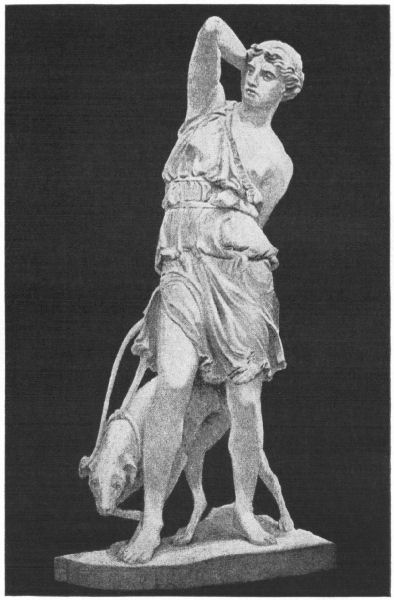
Diana
Diana
Diana
INTRODUCTION.
四十六頁を視よ
There are many expressions which, though simple in themselves, must forever remain beyond the grasp of human comprehension. Eternity, that which has neither end nor beginning, baffles the most profound human thought. It is impossible to think of a point beyond which there is absolutely nothing, or to imagine the passing of a million years without bringing us one day or one minute nearer to their close. Suppose that one could fix upon the terminal point, we would still fancy something beyond that, and then some period still more remote would present itself, and so on ad infinitum.
ディアナ
The same insurmountable difficulty confronts us when we seek to imagine a First Cause. God was the beginning, and yet it seems to our finite minds, that something [Pg 4] must have brought Him into existence, and we conclude that back again of that creating Power must have been another originating cause, and perhaps still another, and so on without limitation.
And yet we know that there must have been a period when everything was void, or, in other words, when there was nothing. In the awful grandeur of that loneliness, desolation, and chaos, God we know, however, existed and called the universe into being. All that we, in our present finite condition, can ever comprehend of that stupendous birth is contained in the opening of the first chapter of Genesis.
That is the story of the creation as told by God Himself to His chosen people, the Hebrews, they alone being selected from the nations then existing upon the earth to receive the wonderful revelation.
序文。
Every people, no matter how degraded and sunken in barbarism, has some perception, some explanation of, and a more or less well-grounded belief in, a First Cause. Far back among the mists of antiquity, at the [Pg 5] remotest beginnings of the shadowy centuries, sits enthroned a Being, who in His infinite might and power brought mankind, the universe, and all animate and inanimate things into existence, and who rewards those of His children who do His will, and punishes those who disobey His commands. That will, as interpreted by believers, is as various in its application to the conduct of man as are the standards of right and wrong among the civilized and even among the barbarous nations of to-day. What is virtue with one is vice with the other, as beauty and ugliness of form or feature, being relative terms, are opposites with many different peoples.
多くの表現ありて、それ自体は簡素なれど、人の理解の及ばぬところに永遠に留まるべし。 永遠とは、終も始も持たぬものにして、最も深き人の思索をも惑わすなり。 絶無の彼方なる一点を想い描くこと能わず、また百万年の時が流れゆくとも、その終わりに一日、一分たりとも近づかぬ様を想像すること叶わぬなり。 仮に終点なるものを定め得たとしても、その彼方になお何かを夢想し、さらに遠き時が自ずと現れ出でて、かくして無限に続くべし。
Since the Greeks and Romans were not among those who received the divine story of creation, they were forced to devise a theory to explain their own existence and account for the origin of all things. The foundation of this theory lay in the marvelous phenomena of nature around them. The growth of the mighty tree from the tiny seed, the bursting bud and blossom, the [Pg 6] changing hues and the fragrance of flowers, the alternation of day and night, the flash of the rock-rending lightning, the rage of the tempest, the flow of the rivers; the towering mountains, the lovely valleys; dew, rain, the clouds, and the ever-shifting panorama on every hand; the majestic sweep of the blazing worlds through space—all these pointed unerringly to a First Cause, which originally launched them into being, and maintains the constant order of things and the miraculous procession of the planets and the orderly succession of the seasons in obedience to laws that know no change.
同じく乗り越え難き困難は、我らが第一原因を想い描かんとするときに立ち塞がる。 神は始まりなりしが、有限なる我らの心には、何か別のものが神を存在せしめたるかの如く思われ、 [頁 4] かの創造の力の背後には、また別の根源たる原因あり、あるいはさらに別のものありて、限りなく続くものと結論するなり。
To the Greeks and Romans, there was a time more remote than history gives us any account of, when there was neither land nor water, and when the earth and all things within and upon it were “without form and void.” Over that misty, nebulous mixing and mingling brooded the god Chaos, who shared his throne with Nox, the goddess of night. From this union the innumerable myths gradually sprang up and developed, which in their own imaginative though [Pg 7] often grotesque way explained the various phases of creation. These finally became crystallized into a literature, or mythology, which has since been the inspiration alike of romancers and poets.
されど、万物空無なりし時、言い換えれば、何物も存在せざりし時ありしことを、我らは知る。 かの孤独、荒廃、混沌の畏るべき壮麗さの中に、神は存在し、宇宙を呼び出したもうたことを、我らは知る。 有限なる我らが現世において、かの途方もなき誕生を理解し得る全ては、創世記第一章の冒頭に記されしものに尽きるなり。
The most learned of mythologists differ in their analysis of the multitude of myths that have descended to us. Their varying analyses, however, may be separated into two distinct classes or divisions, each of which has its own adherents and supporters.
これこそは、神御自身がその選ばれし民、ヘブライ人らに語り給いし 天地創造の物語なり。彼らのみが、当時地上に存在せし 諸国より選ばれ、かの驚くべき啓示を受けしなり。
The first school is that of the philologists, and the second that of the anthropologists, or comparative mythologists.
いかなる民も、いかに堕落し 野蛮に沈みし者と雖も、ある種の認識、 ある種の解釈、そして多かれ少なかれ 確固たる第一原因への信仰を抱く。遠く 古代の霧の中、影深き世紀の最も遠き始まりに、 [Pg 5] 一つの存在が玉座に座し給う。その無限の 力と権能により、人類、 宇宙、そして全ての有生物と無生物を 存在せしめ給いし者、その御心に従う 子らを報い、その命令に背く者らを罰し給う。 その御心は、信者らによって解釈されるところ、 人の行いへの適用において、今日の 文明国において、また野蛮な国々においてさえ、 善悪の基準が様々なるが如く、様々なり。ある者にとっての美徳は、 他の者にとっては悪徳なり。形や容貌の美醜が、相対的なる が故に、多くの異なる民の間で対立するが如く。
Philology relates to the study of language, especially when treated in a philosophical manner. This school maintains that the myths had their origin in a “disease of the language, as the pearl is a result of a disease of the oyster.” The key, therefore, to all mythologies, they say, is found in language. The names originally applied to the gods generally referred to the phenomena of the clouds, winds, rain, sunshine, etc. Latin, Greek, and Sanskrit, the great languages of [Pg 8] antiquity, they demonstrate, had their foundation in a single source which is still older. As further proof of their position, they point to the similarity in the most ordinary words in the various languages of the same family, and show that they have undergone few or very trifling changes.
ギリシャ人やローマ人は、創造の神聖なる物語を受けし者らの中にはおらざりし故、 彼ら自身の存在を説明し、万物の起源を解き明かすための理論を考案せざるを得なかった。 この理論の基盤は、彼らを取り巻く驚くべき自然現象の中にあった。 小さな種子から巨大な樹木が育ち、 芽吹き、花開く様、 [Pg 6] 花々の移り変わる色合いと香り、 昼と夜の交代、 岩を砕く稲妻の閃光、 嵐の猛威、 川の流れ; そびえ立つ山々、 美しい谷々; 露、雨、 雲、そしてあらゆる場所で絶えず移り変わる景観; 宇宙を荘厳に巡る輝く星々――これら全ては、 間違いなく第一原因を指し示していた。 それは、それらを最初に存在せしめ、 万物の不変の秩序を保ち、 惑星の奇跡的な運行と 季節の整然たる移り変わりを、 決して変わることのない法則に従って維持しているのである。
The greatest authority among the philologists claims that during the “first period” there was a tribe in Central Asia, whose language consisted of one-syllable words, which contained the germs of the Turanian, Aryan, and Semitic tongues. This age is termed the Rhematic period, and was succeeded by the Nomadic or Agglutinative age, during which the language gradually “received, once for all, that peculiar impress of their formative system which we still find in all the dialects and national idioms comprised under the name of Aryan or Semitic,” which includes over three thousand dialects.
ギリシャ人やローマ人にとって、歴史が伝えるいかなる記述よりも遥か昔の時代があった。 その頃は陸も水も存在せず、 地上とその内にある全てのものは「形なく、空虚」であった。 その霧深く、曖昧な混じり合いの上に、神カオスが君臨し、 夜の女神ノックスと玉座を分かち合っていた。 この結合から、無数の神話が次第に生まれ、発展していった。 それらは、想像力豊かでありながらもしばしば異様な方法で、 [Pg 7] 創造の様々な段階を説明した。 これらは最終的に文学、すなわち神話として結晶化し、 それ以来、物語作家や詩人たちの等しくインスピレーションの源となってきたのである。
The same authority follows the Agglutinative period with one “represented everywhere by the same characteristic features, called the Mythological, or Mythopoeic age.”
最も博識な神話学者たちは、 我々に伝わる無数の神話の分析において意見を異にする。 しかしながら、彼らの様々な分析は、二つの異なる分類または区分に分けられ、 それぞれが独自の支持者と信奉者を持つのである。
[Pg 9] As the name implies, this last-mentioned period saw the evolution and development of mythic lore. As do the American Indians of to-day, so primitive man, in his crude way, explained the operation of physical laws by giving to inanimate objects like passions and sentiments with himself. When the tempest rages, and the crashing lightning splinters the mountain oak, the Indian says that the Great Spirit is angry. When nature becomes serene and calm, the Great Spirit is pleased. The malign forces around him, which work ill to the warrior, are, they say, the direct doings of an evil spirit. Even the heavenly bodies are personified, and “poetry has so far kept alive in our minds the old animative theory of nature, that it is no great effort in us to fancy the waterspout a huge giant or sea-monster, and to depict, in what we call appropriate metaphor, its march across the field of ocean.”
第一の学派は文献学者のそれであり、第二の学派は人類学者、あるいは比較神話学者のそれである。
Since the names of the Greek heroes and gods show a general correspondence with the Sanskrit appellations of physical things, it is comparatively easy to understand many of [Pg 10] the first fancies and reflections of the earliest men who ever lived. It is the argument of the philologists that these fancies and reflections settled into definite shape in that far-away period when most of the nations, now spread to the remotest corners of the earth, dwelt together and used a common language. Following the gradual scattering of this single, unified people, the language became sensitive to the change, many words not only losing their original meaning, but, in some instances, acquiring an opposite significance. Other words, again, in the course of time were utterly lost. “As long as such personified beings as the Heaven or the Sun are consciously talked of in mythic language, the meaning of their legends is open to no question, and the action ascribed to them will, as a rule, be natural and appropriate.” The time came, however, when these names were considered simply as applying to heroes or deities, and amid the jumble and confusion of the succeeding ages it became well-nigh impossible to trace the myths back to their original source and meaning. Such is [Pg 11] a brief outline of the myth interpretations, as made by the philologists.
文献学は言語の研究に関わるものであり、特に哲学的な手法で扱われる場合にそうである。この学派は、神話の起源は「言語の病」にあり、あたかも真珠が「牡蠣の病」の結果であるかのようであると主張する。ゆえに、あらゆる神話の鍵は言語の中に見出されると彼らは言う。神々に当初与えられた名は、概して雲、風、雨、日差しなどの現象を指し示した。彼らが示すところによれば、古代の偉大な言語であるラテン語、ギリシャ語、サンスクリット語は、さらに古き単一の源にその基礎を持っていた。彼らの立場をさらに裏付ける証拠として、彼らは同じ語族に属する様々な言語における最も日常的な単語の類似性を指摘し、それらがほとんど、あるいはごくわずかな変化しか経ていないことを示す。
Anthropology may be defined as the study of man, considered in his entire nature. In explaining mythology, the anthropologists say that “it is man, it is human thought and human language combined, which naturally and necessarily produced the strange conglomerate of ancient fable.” Instead, therefore, of seeking the source of myths in language, the second class find it in the “condition of thought through which all races have passed.”
文献学者の中で最も権威ある者は、「第一期」において中央アジアに、一音節語からなる言語を持つ部族が存在し、その言語がツラニア語、アーリア語、セム語の萌芽を含んでいたと主張する。この時代は「語根期」と呼ばれ、その後に「遊牧期」あるいは「膠着期」が続いた。この期間に言語は徐々に「一度限り、その形成体系の特異な刻印を受け入れ、それは今なおアーリア語またはセム語の名の下に包含されるあらゆる方言や国民的慣用句に見出される」ものであり、これには三千を超える方言が含まれる。
The argument of the anthropologists is that while all nations have come from one parent-stock, as is claimed also by the philologists, yet the various peoples, in their primitive or savage state, have passed through a like low intellectual condition and growth. The folk-lore of all countries shows that the savages consider themselves of the same nature as beasts, and regard “even plants, inanimate objects, and the most abstract phenomena as persons with human parts and passions.” Every religion antedating [Pg 12] Christianity has inculcated the worship of idols, which usually take the form of beasts, and it will be noted in the study of myths that the gods often assume the forms of birds and animals. If it were in our power mentally to become savages for a time, so as to look upon nature and our surroundings as do the Blackfeet Indians, or the Patagonians, or the South Africans, it would be a long step toward making clear this particular phase of the question.
同じ権威は、膠着期の後に「あらゆる場所で同じ特徴的な様相によって表される、神話期、あるいは神話創造期と呼ばれる」時代が続くと述べる。
From what has been stated, however, the young student will gain an idea of the meaning of the word “myth,” which may be termed a story whose origin can never be known with certainty. To most people it has the same significance as a fable, legendary tale, or fanciful falsehood. A collection of myths belonging to a particular age or people is “a mythology,” and the branch of inquiry which classifies and interprets them bears the same name.
[Pg 9]その名の示す通り、この最後に述べられし時代は、神話伝承の進化と発展を目の当たりにした。今日の米国の先住民がそうであるように、原始の人もまた、その素朴なる方法にて、無生物に己と同じ情熱や感情を付与することで、物理法則の働きを説明せし。嵐が荒れ狂い、轟く稲妻が山の樫を砕くとき、先住民は、大いなる精霊が怒りたもうと語る。自然が穏やかで静謐となるとき、大いなる精霊は喜ばしき御心となる。彼を取り巻く悪しき力、すなわち戦士に災いをもたらすものは、悪しき精霊の直接の仕業であると、彼らは言う。天体すらも擬人化され、そして「詩歌は、古き自然の生命化理論を我らの心に今なお生かし続けており、それゆえ、我らが水竜巻を巨大なる巨人や海の怪物と想像し、また、我らが適切なる比喩と呼ぶものにて、それが大海原を横断する行進を描写することは、さして大いなる労苦にあらず。」
E. S. E.
ギリシャの英雄や神々の名が、サンスクリット語の物理的な事物の呼称と概ね一致することから、かつて生きた最も初期の人々の最初の空想や思索の多くを理解することは、比較的容易である。 [頁 10] 言語学者たちの主張するところによれば、これらの空想や思索は、今や地の果てまで広がる多くの民族が、共に住み、共通の言語を用いていた遠い昔の時代に、明確な形を成したという。 この単一で統一された人々の漸進的な分散に伴い、言語は変化に敏感になり、多くの言葉が元の意味を失うだけでなく、場合によっては反対の意味を獲得するに至った。 また、他の言葉は、時が経つにつれて完全に失われた。「天や太陽といった擬人化された存在が、神話的な言葉で意識的に語られる限り、それらの伝説の意味に疑問の余地はなく、それらに帰せられる行動は、概ね自然で適切であろう。」 しかしながら、これらの名が単に英雄や神々に適用されるものと見なされる時代が到来し、後続の時代の混乱と混迷の中で、神話をその本来の源と意味に遡ることはほとんど不可能になった。 [頁 11] これが、言語学者たちによってなされた神話解釈の簡潔な概要である。
November 1st, 1895.
人類学とは、人間をその全本性において考察する学問と定義されよう。 神話を説明するにあたり、人類学者たちは「それは人間であり、人間の思考と人間の言語が結合して、古代の寓話の奇妙な集合体を自然かつ必然的に生み出したのである」と述べる。 それゆえ、神話の源を言語に求める代わりに、第二の学派は、それを「全ての民族が経てきた思考の状態」に見出すのである。
人類学者たちの主張するところは、 全ての民族は、言語学者たちもまた主張するように、一つの祖先から派生したものでありながら、 様々な民族は、その原始的あるいは野蛮な状態において、 同様に低い知的状態と成長の段階を経験してきた、ということである。 あらゆる国の民間伝承は、野蛮な人々が自らを獣と同じ性質であると考えていることを示しており、 「植物、無生物、そして最も抽象的な現象でさえも、人間の部位と感情を持つ人格として」見なしている。 [頁 12] キリスト教以前のあらゆる宗教は、偶像崇拝を教え込んできたが、それらの偶像は通常、獣の形をとるものであり、 神話の研究においては、神々がしばしば鳥や動物の姿をとることが注目されるであろう。 もし我々が一時的に精神的に野蛮な者となり、 ブラックフィート族のインディアンや、パタゴニア人、あるいは 南アフリカの人々のように自然や周囲の環境を眺めることができたならば、 この問題の特定の局面を明らかにする上で大きな一歩となるであろう。
THE YOUTH’S
DICTIONARY OF MYTHOLOGY.
しかしながら、これまでに述べられたことから、 若い学生は「神話」という言葉の意味を理解するであろう。 それは、その起源が確実には決して知り得ない物語と称されるものであろう。 多くの人々にとって、それは寓話、伝説的な物語、あるいは空想的な虚偽と同じ意味を持つ。 特定の時代や民族に属する神話の集まりは「神話体系」であり、 それらを分類し解釈する探求の分野もまた同じ名称を冠する。
Abas (A′bas), a son of Meganira, was turned into a newt, or water-lizard, for deriding the ceremonies of the Sacrifice.
1895年11月1日。
Absyrtus (Absy′rtus). After Jason had slain the dragon which guarded the golden fleece, he fled with Medea, the beautiful young sorceress, and daughter of Aeetes, who pursued with great energy, for Medea had taken with her the most precious treasure of the king, his only son and heir, Absyrtus. To delay the pursuit, Medea slew her little brother, cut the body in pieces, and dropped them over the side of the vessel. Thus the cruel daughter effected her escape.
Achelous (Achelo′us) was a river god, and the rival of Hercules in his love for Deianira. To decide who should have the bride, Hercules and Achelous had recourse to a wrestling bout, the fame of which extends through all the intervening centuries. In this fierce struggle, Achelous changed himself into the form of a [Pg 14] bull and rushed upon his antagonist with lowered horns, intending to hurl him aside. Hercules eluded the onset, and seizing one of the huge horns, held it so firmly that it was broken off by the furious efforts of Achelous to free himself. He was defeated, and finally turned himself into a river, which has since been known by his name.
少年少女のための
神話辞典。
Acheron (Ach′eron) (see “The Youth’s Classical Dictionary”). The current of the river Acheron, across which all souls had to pass to hear their decree from Pluto, was so swift that the boldest swimmer dare not attempt to breast it; and, since there was no bridge, the spirits were obliged to rely upon the aid of Charon, an aged boatman, who plied the only boat that was available. He would allow no soul to enter this leaky craft until he had received the obolus, or fare, which the ancients carefully placed under the tongue of the dead, that they might not be delayed in their passage to Pluto. Those who had not their fare were forced to wait one hundred years, when Charon reluctantly ferried them over without charge.
Achilles (Achil′les) was the most valiant of the Greek heroes in the Trojan War. He was the son of Peleus, King of Thessaly. His mother, Thetis, [Pg 15] plunged him, when an infant, into the Stygian pool, which made him invulnerable wherever the waters had washed him; but the heel by which he was held was not wetted, and that part remained vulnerable. He was shot with an arrow in the heel by Paris, at the siege of Troy, and died of his wound.
Acidalia (Acida′lia), a name given to Venus, from a fountain in Boeotia.
アブシュルトス(アブシュルトス)。イアソンが金羊毛を守りし竜を討ち果たした後、彼は美しき若き魔女にしてアイエテスの娘なるメデイアと共に逃れしが、アイエテスは猛然と追跡せり。なれば、メデイアは王の最も尊き宝、すなわち唯一の息子にして世継ぎなるアブシュルトスを連れ去りし故なり。追跡を遅らせんがため、メデイアは幼き弟を殺し、その亡骸を細かく切り刻み、船の舷側より投げ落としぬ。かくして、この残忍なる娘は逃走を果したり。
Acis (A′cis). A Sicilian shepherd, loved by the nymph Galatea. One of the Cyclops who was jealous of him crushed him by hurling a rock on him. Galatea turned his blood into a river—the Acis at the foot of Mount Etna.
アケロオス(アケロオス)は河神にして、デイアネイラへの愛においてヘラクレスの好敵手なりき。誰が花嫁を得るべきかを決さんため、ヘラクレスとアケロオスは相撲を取りしが、その名声は幾世紀もの時を超え、今に伝わりぬ。この激しき闘争において、アケロオスは自らを牡牛の姿に変えしが、[ページ 14]牡牛となりて敵手へと突進し、角を低くして彼を突き飛ばさんとしぬ。ヘラクレスはその猛攻をかわし、巨大なる角の一つを掴み、あまりに固く握りしが故に、アケロオスが自らを解放せんとする猛烈なる努力により、その角は折れてしまいぬ。彼は敗れ、ついに自らを河へと変えしが、その河は以来、彼の名をもって知られぬ。
Actaeon (Actae′on) was the son of Aristaeus, a famous huntsman. He intruded himself on Diana while she was bathing, and was changed by her into a deer, in which form he was hunted by his own dogs and torn in pieces.
アケローン(アケローン)(「若者の古典辞典」を参照)。 プルートーよりその裁きを聞くため、全ての魂が渡らねばならぬアケローン川の流れは、あまりに速く、最も勇敢なる泳ぎ手すらもその流れに逆らおうとはしなかった。 そして、橋なきゆえ、霊魂たちは、唯一利用しうる舟を操る老いたる渡し守カローンの助けに頼らざるを得なかった。彼は、死者たちがプルートーへの旅路を遅滞せぬよう、古人が死者の舌の下に注意深く置いたオボルス、すなわち渡し賃を受け取るまでは、いかなる魂もこの水漏れする舟に乗せることはなかった。渡し賃を持たぬ者たちは、百年の間待つことを強いられ、その後にカローンはしぶしぶながらも無償で彼らを渡した。
Ades (A′des), see Hades.
アキレウス(アキレウス)は、トロイア戦争におけるギリシアの英雄たちの中で、最も勇敢なる者であった。彼はテッサリアの王ペレウスの息子であった。彼の母テティスは、 [頁 15] 彼が幼児であった時、ステュクス川の淵に彼を浸し、水が触れたあらゆる場所を不死身にした。しかし、彼が掴まれていた踵は濡れず、その部分は弱点として残された。トロイア攻囲戦において、パリスによって踵に矢を射られ、その傷がもとで命を落とした。
Adonis (Ado′nis), the beautiful attendant of Venus, who held her train. He was killed by a boar, and turned by Venus into an anemone.
アシダリア(アシダリア)は、ボイオーティアにある泉にちなんで、ウェヌスに与えられた名。
Adrastaea (Adrastae′a), another name of Nemesis, one of the goddesses of justice.
アキス(アキス)。ニンフのガラテイアに愛されたシチリアの羊飼い。彼を嫉妬したキュクロープスの一人が、彼に岩を投げつけ、押し潰した。ガラテイアは彼の血を川に変え、それがエトナ山の麓のアキス川となった。
[Pg 16] Adscriptitii Dii (Adscripti′tii Dii) were the gods of the second grade.
アクタイオーン(アクタイオーン)は、有名な狩人アリストイオスの子であった。彼はディアナが入浴中に彼女に踏み込み、彼女によって鹿に変えられた。その姿で彼は自身の犬たちに追われ、八つ裂きにされた。
Adversity, see Echidna.
アーデス(アーデス)、ハーデスを参照。
Aeacus (Ae′acus), one of the judges of hell, with Minos and Rhadamanthus. See Eacus.
アドーニス(アドーニス)は、ウェヌスの美しき従者にして、その衣の裾を引く者。彼は猪に殺され、ウェヌスによってアネモネに変えられた。
Aecastor (Aecas′tor), an oath used only by women, referring to the Temple of Castor.
アドラステア(アドラステア)は、正義の女神の一柱であるネメシスの別名なり。
Aedepol (Aed′epol), an oath used by both men and women, referring to the Temple of Pollux.
[頁 16] アディスクリプティティイ・ディイ(アディスクリプティティイ・ディイ)は、第二位階の神々なり。
Aeetes (Aee′tes), a king of Colchis, and father of Medea.
逆境、エキドナを見よ。
Aegeon (Aege′on), a giant with fifty heads and one hundred hands, who was imprisoned by Jupiter under Mount Etna. See Briareus.
アイアコス(アイアコス)は、ミーノース、ラダマンテュスと共に冥府の審判者の一人なり。エアコスを見よ。
Aegis (Ae′gis), the shield of Jupiter, so called because it was made of goat-skin.
アイカストル(アイカストル)は、カストルの神殿に言及する、女性のみが用いる誓いの言葉なり。
Aegle (Ae′gle). The fairest of the Naiads.
アエデポル(アエデポル)は、ポルックスの神殿に言及する、男女共に用いる誓いの言葉なり。
Aello (Ael′lo), the name of one of the Harpies.
アイエーテース(アイエーテース)は、コルキスの王にして、メデイアの父なり。
Aeneas (Aene′as) was the son of Anchises and Venus. He was one of the few great captains who escaped the destruction of Troy. He behaved with great valor during the siege, encountering Diomed, and even Achilles himself. When the Grecians had set the city on fire Aeneas [Pg 17] took his aged father, Anchises, on his shoulders, while his son, Ascanius, and his wife Creusa, clung to his garments. He saved them all from the flames. After wandering about during several years, encountering numerous difficulties, he at length arrived in Italy, where he was hospitably received by Latinus, king of the Latins. After the death of Latinus Aeneas became king.
アイガイオーン(アイガイオーン)は、五十の頭と百の腕を持つ巨人にして、ユピテルによりエトナ山の下に幽閉されし者なり。ブリアレウスを見よ。
Aeolus (Aeo′lus) was the god of the winds. Jupiter was his reputed father, and his mother is said to have been a daughter of Hippotus. Aeolus is represented as having the power of holding the winds confined in a cavern, and occasionally giving them liberty to blow over the world. So much command was he supposed to have over them that when Ulysses visited him on his return from Troy he gave him, tied up in a bag, all the winds that could prevent his voyage from being prosperous. The companions of Ulysses, fancying that the bag contained treasure, cut it open just as they came in sight of Ithaca, the port they were making for, and the contrary winds rushing out drove back the ship many leagues. The [Pg 18] residence of Aeolus was at Strongyle, now called Strombolo.
アイギス(アイギス)は、ユピテルの盾にして、山羊の皮にて作られし故に斯く呼ばれしものなり。
Aesculapius (Aescula′pius), the god of physic, was a son of Apollo. He was physician to the Argonauts in their famous expedition to Colchis. He became so noted for his cures that Pluto became jealous of him, and he requested Jupiter to kill him with a thunderbolt. To revenge his son’s death Apollo slew the Cyclops who had forged the thunderbolt. By his marriage with Epione he had two sons, Machaon and Podalirius, both famous physicians, and four daughters, of whom Hygeia, the goddess of health, is the most renowned. Many temples were erected in honor of Aesculapius, and votive tablets were hung therein by people who had been healed by him; but his most famous shrine was at Epidaurus, where, every five years, games were held in his honor. This god is variously represented, but the most famous statue shows him seated on a throne of gold and ivory. His head is crowned with rays, and he wears a long beard. A knotty stick is in one hand, and a staff entwined with a serpent is in the other, while a dog lies at his feet.
アイグレー(アイグレー)。ナイアデスの中で最も美しき者なり。
[Pg 19] Aeson (Ae′son) was father of Jason, and was restored to youth by Medea.
アエロ(アエロ)は、ハルピュイアの一柱の名なり。
Agamemnon (Agamem′non) was the son of Plisthenes and brother of Menelaus. He was king of the Argives. His brother’s wife was the famous Helen, daughter of Tyndarus, king of Sparta; and when she eloped with Paris, Agamemnon was appointed leader of the Greeks in their expedition against Troy.
アエネアス(アエネアス)は、アンキセスとウェヌスの子なり。彼はトロイアの滅亡を免れし数少ない偉大なる将の一人なりき。攻囲の間、ディオメデス、更にはアキレウス自身と対峙し、大いなる勇気を示せり。ギリシア人らが都に火を放ちし時、アエネアスは[頁 17]老いたる父アンキセスを肩に担ぎ、その子アスカニウスと妻クレウサは彼の衣にすがりつきし。彼は彼ら全てを炎より救い出せり。数年もの間、数多の困難に遭遇しつつ彷徨いし後、ついにイタリアに辿り着き、ラテン人の王ラティヌスに手厚く迎えられし。ラティヌスの死後、アエネアスは王となりぬ。
Aganippides (Aganip′pides), a name of the Muses, derived from the fountain of Aganippe.
アイオロス(アイオロス)は風の神であった。ユピテルが彼の父と伝えられ、その母はヒッポトスの娘であったとされている。アイオロスは、風を洞窟に閉じ込め、時折、世界中に吹き荒れる自由を与える力を持つとされている。彼が風に対してこれほどの支配力を持つとされていたため、ユリシーズがトロイからの帰途に彼を訪れた際、アイオロスはユリシーズの航海を妨げる可能性のある全ての風を袋に縛り付けて彼に与えた。ユリシーズの仲間たちは、その袋に宝物が入っていると想像し、彼らが目指していた港であるイタカが見えるやいなや、それを切り開いた。すると、逆風が吹き出し、船を何リーグも押し戻してしまった。アイオロスの住まいは、ストロンギュレ(現在のストロンボリ)にあった。
Agineus (Agine′us), see Apollo.
アスクレピオス(アスクレピオス)は、医術の神であり、アポロンの息子であった。彼は、アルゴナウタイがコルキスへ向かった有名な遠征において、彼らの医師を務めた。彼はその治療術で非常に有名になったため、プルートーは彼を妬み、ユピテルに雷霆で彼を殺すよう懇願した。息子の死を復讐するため、アポロンは雷霆を鍛造したキュクロプスを殺した。エピオネとの結婚により、彼は二人の息子、マカオンとポダレイリオス(ともに有名な医師)と、四人の娘をもうけた。その中で、健康の女神ヒュギエイアが最も名高い。アスクレピオスを称える多くの神殿が建てられ、彼によって癒された人々が奉納板をそこに吊るした。しかし、彼の最も有名な聖地はエピダウロスであり、そこでは五年に一度、彼を称える競技会が開催された。この神は様々に表現されるが、最も有名な彫像では、彼が金と象牙の玉座に座っている姿が描かれている。彼の頭は光線で飾られ、長い髭を蓄えている。片手には節くれだった杖を持ち、もう一方の手には蛇が巻き付いた杖を持ち、足元には犬が横たわっている。
Aglaia (Agla′ia) was one of the Three Graces.
[頁 19]アイソン(アイソン)はイアソンの父にして、メデイアにより若き姿に復せしめられし者なり。
Agni (Ag′ni). The Hindoo god of lightning.
アガメムノン(アガメムノン)はプリステネスの子にして、メネラオスの兄弟なり。彼はアルゴスの王なりき。その兄弟の妻は、スパルタ王テュンダレオスが娘なる名高きヘレネなりき。ヘレネがパリスと駆け落ちせし時、アガメムノンはトロイアに対するギリシア軍の遠征において、その指導者に任ぜられしなり。
Ajax (A′jax) was one of the bravest of the Greek warriors in the Trojan War. His father was Telamon, and his mother Eriboea. Some writers say that he was killed by Ulysses; others aver that he was slain by Paris; while others again assert that he went mad after being defeated by Ulysses, and killed himself. Another Ajax, son of Oileus, also took a prominent part in the Trojan War.
アガニッピデス(アガニッピデス)は、アガニッペの泉に由来する、ムーサたちの名なり。
Alcestis (Alces′tis), wife of Admetus, who, to save her husband’s life, died in his stead, and was restored to life by Hercules.
アギネウス(アギネウス)、アポロンを見よ。
Alcides (Alci′des), one of the names of Hercules.
アグライア(アグライア)は、三美神の一柱なりき。
Alcmena (Alcme′na), the mother of Hercules, was daughter of Electryon, a king of Argos.
アグニ(アグニ)。ヒンドゥーの雷神なり。
[Pg 20] Alecto (Alec′to) was one of the Furies. She is depicted as having serpents instead of hair on her head, and was supposed to breed pestilence wherever she went.
アイアス(アイアス)は、トロイア戦争におけるギリシアの勇士たちの中で、最も勇敢なる者の一人なりき。その父はテラモン、母はエリボイアなり。ある著述家は彼がオデュッセウスに殺されしと語り、またある者はパリスに討たれしと断言し、さらにまたある者はオデュッセウスに敗れたる後、狂気に陥り自ら命を絶ちしと主張す。オイレウスの子なる別のアヤックスもまた、トロイア戦争において顕著なる役割を担いしなり。
Alectryon (Alec′tryon), a servant of Mars, who was changed by him into a cock because he did not warn his master of the rising of the sun.
アルケスティス(アルケスティス)はアドメトスの妻にして、夫の命を救わんがため、その身代わりとなりて死せしが、ヘラクレスにより生を復せしめられしなり。
Alfadur (Al′fadur), in Scandinavian Mythology the Supreme Being—Father of all.
アルケイデス(アルケイデス)は、ヘラクレスの別名の一つなり。
Alma Mammosa (Al′ma Mammo′sa), a name of Ceres.
アルクメネ(アルクメネ)は、ヘラクレスの母にして、アルゴスの王エレクトリュオンの娘なりき。
Alpheus (Alphe′us), a river god. See Arethusa.
[頁 20]アレークトー(アレークトー)は、エリニュエスの一柱なりき。彼女は頭髪の代わりに蛇を戴く姿にて描かれ、その行く先々にて疫病を蔓延させると信じられしなり。
Altar. A structure on which a sacrifice was offered. The earliest altars were merely heaps of earth or turf or rough unhewn stone; but as the mode of sacrificing became more ceremonious grander altars were built. Some were of marble and brass, ornamented with carvings and bas-reliefs, and the corners with models of the heads of animals. They varied in height from two feet to twenty, and some were built solid; others were made hollow to retain the blood of the victims. Some were provided with a kind of dish, into which frankincense was thrown to overpower the smell of burning fat. This probably was the origin of the custom of burning incense at the altar.
アレークトリュオン(アレークトリュオン)は、マールスの召使いにして、主人が日の出に気づかぬままにせしが故に、彼により雄鶏へと変えられしなり。
Amalthaea (Amal′thae′a), the goat which nourished Jupiter.
アルファズル(アルファズル)は、スカンディナヴィア神話における至高の存在—万物の父なり。
Amazons (Am′azons) were a nation of women-soldiers who lived in Scythia. Hercules totally defeated [Pg 21] them, and gave Hippolyte, their queen, to Theseus for a wife. The race seems to have been exterminated after this battle.
アルマ・マンモーサ(アルマ・マンモーサ)は、ケレスの別名なり。
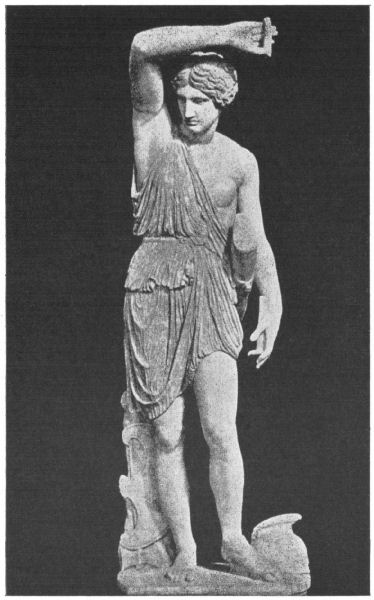
See page 20
アルペイオス(アルペイオス)、河神なり。アレトゥーサを見よ。
Amazon
祭壇。供物を捧げし構造物なり。最古の祭壇は、ただ土や芝、あるいは粗きままの石を積み重ねたるものに過ぎざりき。されど、供犠の儀式がより厳かになるにつれ、壮麗なる祭壇が築かれし。あるものは大理石や真鍮にて造られ、彫刻や浮彫にて飾られ、その隅々には獣の頭部の模型が施されし。高さは二フィートより二十フィートまで様々にて、あるものは堅固に築かれ、またあるものは犠牲の血を留めんがため、中空に造られし。あるものには皿のごときものが備えられ、その中に乳香を投じ、燃え盛る脂肪の臭いを消し去りし。これこそ、祭壇にて香を焚く慣習の起源となりしものならん。
Ambarvalia (Ambarva′lia) were festivals in honor of Ceres, instituted by Roman husbandmen to purge their fields. At the spring festival the head of each family led an animal, usually a pig or ram, decked with oak boughs, round his grounds, and offered milk and new wine. After harvest there was another festival, at which Ceres was presented with the first-fruits of the season. See Ceres.
アマルテイア(アマルタイア)、ユピテルを養いし山羊なり。
Amber, see Heliades.
アマゾン族(アマゾンズ)は、スキティアに住みし女兵士の民族なり。ヘラクレスは彼らを完全に打ち破り、[頁 21]その女王ヒッポリュテをテセウスに妻として与えし。この戦いの後、この民族は絶滅せしものと見えたり。
Ambrosia (Ambro′sia) were Bacchanalian festivals.
See page 20
Amica (Ami′ca), a name of Venus.
Amazon
Amphion (Amphi′on) was the son of Jupiter and Antiope. He was greatly skilled in music; and it is said that, at the sound of his lute, the stones arranged themselves so regularly as to make the walls of the city of Thebes.
See page 20
Amphitrite (Amphitri′te) (or Salatia), the wife of Neptune, [Pg 22] was a daughter of Oceanus and Tethys. She was the mother of Triton, a sea god.
Amazon
Amycus (Amy′cus) was king of Bebrycia. He was a son of Neptune, and was killed by Pollux.
参照 20
Ancaeus (Ancae′us). A son of Neptune, who left a cup of wine to hunt a wild boar which killed him, and the wine was untasted. This was the origin of the proverb—“There’s many a slip ’twixt cup and lip.”
アマゾン族
Ancilia (Ancil′ia), the twelve sacred shields. The first Ancile was supposed to have fallen from heaven in answer to the prayer of Numa Pompilius. It was kept with the greatest care, as it was prophesied that the fate of the Roman people would depend upon its preservation. An order of priesthood was established to take care of the Ancilia, and on 1st March each year the shields were carried in procession, and in the evening there was a great feast, called Coena Saliaris.
アンバルウァリア祭(アンバルウァリア)は、ケレスを讃えし祭典にして、ローマの農夫らがその畑を清めんがために設けしものなり。春の祭典には、各家の主が、通常は豚か雄羊なる動物を樫の枝にて飾り、己の領地を巡り、乳と新酒を捧げし。収穫の後には別の祭典ありて、その折にはケレスにその季節の初穂が捧げられし。ケレスを参照せよ。
Andromeda (Androm′eda), the daughter of Cepheus, king of the Ethiopians, was wife of Perseus, by whom she was rescued when she was chained to a rock and was about to be devoured by a sea-monster.
琥珀、ヘリアデスを参照せよ。
Anemone (Anem′one). Venus changed Adonis into this flower.
アンブロシア(アンブロシア)は、バッカス祭なりき。
Angeronia (Angero′nia), otherwise Volupia, was the goddess [Pg 23] who had the power of dispelling anguish of mind.
アミカ(アミカ)、ウェヌスの別名なり。
Anna Perenna (Anna Peren′na), one of the rural divinities.
アンフィオン(アンフィオン)は、ユピテルとアンティオペの子なりき。彼は音楽に大いに長じ、そのリュートの音色により、石が規則正しく並び、テーバイの都の城壁を築きしと伝えらる。
Antaeus (Antae′us), a giant who was vanquished by Hercules. Each time that Hercules threw him the giant gained fresh strength from touching the earth, so Hercules lifted him off the ground and squeezed him to death.
アンフィトリテ (アンフィトリテ) (または サラキア)、ネプトゥーヌスの妻、[Pg 22]はオケアノスとテテュスの娘であった。彼女は海の神トリトンの母であった。
Anteros (An′teros), one of the two Cupids, sons of Venus.
アミュコス (アミュコス) はベブリュキアの王であった。彼はネプトゥーヌスの息子であり、ポルックスによって殺された。
Anticlea (Antic′lea), the mother of Ulysses.
アンカイオス (アンカイオス)。ネプトゥーヌスの息子で、一杯の葡萄酒を置いて猪狩りに出かけ、その猪に殺されてしまったため、葡萄酒は一口も飲まれなかった。これが「杯と唇の間には多くの過ちがある」という諺の起源となった。
Antiope (Anti′ope) was the wife of Lycus, King of Thebes. Jupiter, disguised as a satyr, led her astray and corrupted her.
アンキリア (アンキリア)、十二の聖なる盾。最初のアンキレは、ヌマ・ポンピリウスの祈りに応じて天から降ってきたとされていた。ローマ人の運命はその保存にかかると預言されていたため、細心の注意を払って保管された。アンキリアを管理するための神官団が設立され、毎年3月1日には盾がパレードで運ばれ、夕方にはコエナ・サリアリスと呼ばれる盛大な祝宴が催された。
Anubis (Anu′bis) (or Hermanubis (Herman′ubis)). “A god half a dog, a dog half a man.” Called Barker by Virgil and other poets.
アンドロメダ (アンドロメダ)、エチオピアの王ケフェウスの娘で、ペルセウスの妻であった。彼女は岩に鎖で繋がれ、海の怪物に食い尽くされようとしていたところを、彼によって救い出された。
Aonides (Aon′ides), a name of the Muses, from the country Aonia.
アネモネ (アネモネ)。ウェヌスはアドニスをこの花に変えた。
Apaturia (Apatur′ia), an Athenian festival, which received its name from a Greek word signifying deceit.
アンゲローニア (アンゲローニア)、別名ウォルピアは、[Pg 23]心の苦悩を晴らす力を持つ女神であった。
Aphrodite (Aph′rodi′te), a Greek name of Venus.
アンナ・ペレンナ (アンナ・ペレンナ)、田園の神々の一柱。
Apis, a name given to Jupiter by the inhabitants of the Lower Nile. Also the miraculous ox, worshiped in Egypt.
アンタイオス (アンタイオス)、ヘラクレスに打ち負かされた巨人。ヘラクレスが彼を投げ倒すたびに、巨人は大地に触れることで新たな力を得たため、ヘラクレスは彼を地面から持ち上げ、絞め殺した。
Apis (A′pis), King of Argivia. Afterward called Serapis, the greatest god of the Egyptians.
アンテロス (アンテロス)、ウェヌスの息子である二人のクピドの一人。
Apollo (Apol′lo). This famous god, some time King of Arcadia, was the son of Jupiter and Latona. He was known by several names, but principally [Pg 24] by the following:—Sol (the sun); Cynthius, from the mountain called Cynthus in the Isle of Delos, and this same island being his native place obtained for him the name of Delius; Delphinius, from his occasionally assuming the shape of a dolphin. His name of Delphicus was derived from his connection with the splendid Temple at Delphi, where he uttered the famous oracles. Some writers record that this oracle became dumb when Jesus Christ was born. Other common names of Apollo were Didymaeus, Nomius, Paean, and Phoebus. The Greeks called him Agineus, because the streets were under his guardianship, and he was called Pythius from having killed the serpent Python. Apollo is usually represented as a handsome young man without beard, crowned with laurel, and having in one hand a bow, and in the other a lyre. The favorite residence of Apollo was on Mount Parnassus, a mountain of Phocis, in Greece, where he presided over the Muses. Apollo was the accredited father of several children, but the two most renowned were Aesculapius and Phaeton.
アンティクレイア (アンティクレイア)、ユリシーズの母。
Apotheosis (Apothe′osis). The consecration of a god. The ceremony of deification.
アンティオペ (アンティオペ) はテーバイの王リュコスの妻であった。ユピテルはサテュロスに変装し、彼女を誘惑し、堕落させた。
Arachne (Arach′ne), a Lydian princess, who challenged [Pg 25] Minerva to a spinning contest, but Minerva struck her on the head with a spindle, and turned her into a spider.
アヌビス (アヌビス) (またはヘルマヌビス (ヘルマヌビス))。「半分は犬、半分は人の神。」ウェルギリウスや他の詩人たちからはバーカーと呼ばれた。
Arcadia (Arca′dia), a delightful country in the center of Peloponnessus, a favorite place of the gods. Apollo was reputed to have been King of Arcadia.
アオニデス (アオニデス)、アオニアの国に由来する、ムーサたちの名。
Arcas (Ar′cas), a son of Calisto, was turned into a he-bear; and afterward into the constellation called Ursa Minor.
アパトゥリア (アパトゥリア)、欺瞞を意味するギリシャ語にその名を得た、アテナイの祭り。
Archer, see Chiron.
アフロディーテ (アフロディーテ)、ウェヌスのギリシャ名。
Areopagitae (Areop′agi′tae), the judges who sat at the Areopagus.
アピス、下ナイルの住民がユーピテルに与えた名。また、エジプトで崇拝された奇跡の雄牛。
Areopagus (Areop′agus), the hill at Athens where Mars was tried for murder before twelve of the gods.
アピス (アピス)、アルギウィアの王。後にセラピスと呼ばれ、エジプト人にとって最も偉大な神となった。
Ares (A′res). The same as Mars, the god of war.
アポロン (アポロン)。この名高き神は、かつてアルカディアの王であり、ユーピテルとラートーナーの子であった。彼はいくつかの名で知られたが、主として[Pg 24]以下の名で呼ばれた。—ソル(太陽);デロス島のキュントスと呼ばれる山に由来するキュンティオス、そしてこの島が彼の生誕地であることからデリオスという名を得た;時折イルカの姿をとることからデルフィニオス。彼のデルフィコスという名は、彼がデルフォイの壮麗な神殿と関わり、そこで名高い神託を告げたことに由来する。ある著述家たちは、イエス・キリストが生まれた時、この神託が沈黙したと記している。アポロンの他の一般的な名は、ディデュマイオス、ノミオス、パイアン、そしてポイボスであった。ギリシャ人たちは彼をアギネウスと呼んだ、なぜなら街路が彼の守護下にあったからであり、また彼が蛇のピュトンを殺したことからピュティオスと呼ばれた。アポロンは通常、髭のない端麗な若者として描かれ、月桂冠を戴き、片手に弓を、もう一方の手に竪琴を持っている。アポロンのお気に入りの住まいは、ギリシャのフォキスにあるパルナッソス山で、そこで彼はムーサたちを統率した。アポロンは数人の子の父と認められていたが、最も名高い二人はアスクレピオスとパエトーンであった。
Arethusa (Arethu′sa) was one of the nymphs of Diana. She fled from Alpheus, a river god, and was enabled to escape by being turned by Diana into a rivulet which ran underground. She was as virtuous as she was beautiful.
アポテオーシス (アポテオーシス)。神の聖別。神格化の儀式。
Argonauts (Ar′gonauts). This name was given to the fifty heroes who sailed to Colchis in the ship Argo, under the command of Jason, to fetch the Golden Fleece.
アラクネ(アラクネ)は、リュディアの王女にして、[Pg 25]ミネルヴァに紡ぎの技を競うべく挑みし者なり。されどミネルヴァは紡錘にて彼女の頭を打ち、蜘蛛へと変えたり。
Argus (Ar′gus) was a god who had a hundred eyes which [Pg 26] slept and watched by turns. He was charged by Juno to watch Io, but, being slain by Mercury, was changed by Juno into a peacock.
アルカディア(アルカディア)は、ペロポネソスの中央に位置する麗しき国にして、神々が愛でし場所なり。アポロンはアルカディアの王であったと伝えらる。
Ariadne (Ariad′ne), daughter of Minos, King of Crete. After enabling Theseus to get out of the Labyrinth by means of a clew of thread, she fled with him to Naxos, where he ungratefully deserted her; but Bacchus wooed her and married her, and the crown of seven stars which he gave her was turned into a constellation.
アルカス(アルカス)は、カリストの息子にして、雄熊へと姿を変えられ、その後、こぐま座と称される星座となりし者なり。
Arion (Ari′on) was a famous lyric poet of Methymna, in the Island of Lesbos, where he gained great riches by his art. There is a pretty fable which has made the name of Arion famous. Once when traveling from Lesbos his companions robbed him, and proposed to throw him into the sea. He entreated the seamen to let him play upon his harp before they threw him overboard, and he played so sweetly that the dolphins flocked round the vessel. He then threw himself into the sea, and one of the dolphins took him up and carried him to Taenarus, near Corinth. For this act the dolphin was raised to heaven as a constellation.
射手、ケイロンを見よ。
Aristaeus (Aristae′us), son of Apollo and Cyrene, was the god of trees; he also taught mankind the use of honey, and how to get oil from olives. He was a celebrated hunter. His most famous son was Actaeon.
アレオパギタイ(アレオパギタイ)は、アレオパゴスにて座し裁きを下せし判事たちなり。
[Pg 27] Armata (Arma′ta), one of the names of Venus, given to her by Spartan women.
アレオパゴス(アレオパゴス)は、アテネにある丘にして、マールスが十二柱の神々の前で殺人の罪により裁かれし場所なり。
Artemis (Ar′temis). This was the Grecian name of Diana, and the festivals at Delphi were called Artemisia.
アレス(アレス)。マールスと同一にして、戦の神なり。
Arts and Sciences, see Muses.
アレトゥーサ(アレトゥーサ)は、ディアナのニンフの一人なり。彼女は河神アルペイオスより逃れ、ディアナにより地下を流るる小川へと姿を変えられ、逃れることを得たり。彼女は美しきが如く貞淑なりき。
Aruspices (Arus′pices), sacrificial priests.
アルゴナウタイ(アルゴナウタイ)。この名は、イアソンの指揮の下、金羊毛を求め、船アルゴ号にてコルキスへと航海せし五十人の英雄たちに与えられしものなり。
Ascalaphus (Ascal′aphus) was changed into an owl, the harbinger of misfortune, by Ceres, because he informed Pluto that Proserpine had partaken of food in the infernal regions, and thus prevented her return to earth.
アルゴス(アルゴス)は、百の眼を持ち、[Pg 26]それらが交互に眠り、また見張りをせし神なり。彼はユーノーによりイーオーを見張るよう命じられしが、メルクリウスに討たれ、ユーノーにより孔雀へと姿を変えられし。
Ascanius (Asca′nius), the son of Aeneas and Creusa.
アリアドネ(アリアドネ)は、クレタの王ミノスの娘なり。テセウスが糸玉の助けによりラビリンスより脱出するを助けし後、彼と共にナクソスへと逃れしが、そこで彼は恩知らずにも彼女を見捨てたり。されどバッコスは彼女を求婚し、娶り、彼が彼女に与えし七つの星の冠は、星座へと姿を変えられし。
Ascolia (Ascol′ia), Bacchanalian feasts, from a Greek word meaning a leather bottle. The bottles were used in the games to jump on.
アリオン (アリオン) は、レスボス島のメテュムナ出身の有名な叙情詩人であり、その技芸によって莫大な富を築いた。アリオンの名を有名にした美しい寓話がある。かつてレスボス島から旅をしていた際、彼の仲間たちは彼を強奪し、海に投げ込もうと企てた。彼は船乗りたちに、海に投げ込まれる前に竪琴を弾かせてくれるよう懇願し、あまりにも甘美に演奏したため、イルカたちが船の周りに群がった。彼はその後、自ら海に身を投げたが、一頭のイルカが彼を乗せ、コリントス近郊のタエナルスまで運んだ。この行いにより、そのイルカは星座として天に上げられた。
Asopus (Aso′pus). A son of Jupiter, who was killed by one of his father’s thunderbolts.
アリスタイオス (アリスタイオス) は、アポロンとキュレネの子であり、樹木の神であった。彼はまた、人類に蜂蜜の使い方やオリーブから油を採る方法を教えた。彼は名高い狩人であった。彼の最も有名な息子はアクタイオンである。
Assabinus (Assabi′nus), the Ethiopian name of Jupiter.
[頁 27] アルマータ (アルマータ) は、スパルタの女たちによってヴィーナスに与えられた名の一つである。
Ass’s ears, see Midas.
アルテミス (アルテミス)。これはディアナのギリシャ名であり、デルフォイの祭りはアルテミシアと呼ばれた。
Astarte (Astar′te), one of the Eastern names of Venus.
芸術と学問、ミューズを参照。
Asteria (Aste′ria), daughter of Caeus, was carried away by Jupiter, who assumed the shape of an eagle.
アルスピケス (アルスピケス)、生贄の司祭たち。
Astrea (Astre′a), mother of Nemesis, was the goddess of justice; she returned to heaven when the earth became corrupt.
アスカラフォス (アスカラフォス) は、ケレスによって不幸の前兆であるフクロウに変えられた。なぜなら、彼がプルートにプロセルピナが冥界で食べ物を口にしたことを告げ、それによって彼女の地上への帰還を妨げたからである。
[Pg 28] Atalanta (Atalan′ta) was daughter of Caeneus. The oracle told her that marriage would be fatal to her, but, being very beautiful, she had many suitors. She was a very swift runner, and, to get rid of her admirers, she promised to marry any one of them who should outstrip her in a race, but that all who were defeated should be slain. Hippomenes, however, with the aid of Venus, was successful. That goddess gave him three golden apples, one of which he dropped whenever Atalanta caught up to him in the race. She stopped to pick them up, and he was victorious and married her. They were both afterward turned into lions by Cybele, for profaning her temple.
アスカニウス (アスカニウス)、アイネイアスとクレウサの息子。
Ate (A′te). The goddess of revenge, also called the goddess of discord and all evil. She was banished from heaven by her father Jupiter.
アスコリア (アスコリア)、バッカス祭の一種で、ギリシャ語で革袋を意味する言葉に由来する。この革袋は競技で飛び跳ねるのに使われた。
Athena (Athe′na), a name obtained by Minerva as the tutelary goddess of Athens.
アソポス (アソポス)。ジュピターの息子で、父の雷霆の一つによって殺された。
Atlas, was King of Mauritania, now Morocco, in Africa. He was also a great astronomer. He is depicted with the globe on his back, his name signifying great toil or labor. For his inhospitality to Perseus that king changed him into the mountain which bears his name of Atlas. A chain of mountains in Africa is called after him, and so is the Atlantic Ocean. He had seven daughters by his wife Pleione, [Pg 29] they were called by one common name, Pleiades; and by his wife Aethra he had seven more, who were, in the same manner, called Hyades. Both the Pleiades and the Hyades are celestial constellations.
アッサビヌス (アッサビヌス)、ジュピターのエチオピア名。
Atreus (At′reus), the type of fraternal hatred. His dislike of his brother Thyestes went to the extent of killing and roasting his nephews, and inviting their father to a feast, which Thyestes thought was a sign of reconciliation, but he was the victim of his brother’s detestable cruelty.
ロバの耳、ミダスを参照。
Atropos (At′ropos), one of the three sisters called The Fates, who held the shears ready to cut the thread of life.
アスタルテ (アスタルテ)、ヴィーナスの東洋名の一つ。
Atys (A′tys), son of Croesus, was born dumb, but when in a fight he saw a soldier about to kill the king he gained speech, and cried out, “Save the king!” and the string that held his tongue was broken.
アステリア (アステリア)、コイオスの娘で、鷲の姿に変じたジュピターによって連れ去られた。
Atys (A′tys) was a youth beloved by Aurora, and was slain by her father, but, according to Ovid, was afterward turned into a pine-tree.
アストライア(アストライア)は、ネメシスの母にして正義の女神であった。地上に悪がはびこるや、天へと帰還した。
Augaeas (Aug′aeas), a king of Elis, the owner of the stable which Hercules cleansed after three thousand oxen had been kept in it for thirty years. It was cleansed by turning the river Alpheus through it. Augaeas promised to give [Pg 30] Hercules a tenth part of his cattle for his trouble but, for neglecting to keep his promise, Hercules slew him.
[ページ 28]アタランタ(アタランタ)は、カイネウスの娘であった。神託は彼女に、結婚は命取りとなると告げたが、彼女は非常に美しかったため、多くの求婚者がいた。彼女は非常に足の速い走者であり、求婚者たちを退けるため、競走で自分を追い抜いた者とは結婚するが、敗れた者は皆殺されると約束した。しかし、ヒッポメネスはヴィーナスの助けを得て成功した。その女神は彼に三つの黄金の林檎を与え、アタランタが競走で彼に追いつくたびに、彼はそのうちの一つを落とした。彼女はそれらを拾うために立ち止まり、彼は勝利して彼女と結婚した。その後、二人はキュベレーの神殿を冒涜したため、キュベレーによってライオンに変えられた。
Augury (Au′gury). This was a means adopted by the Romans of forming a judgment of futurity by the flight of birds, and the officiating priest was called an augur.
アテー(アテー)。復讐の女神であり、不和とあらゆる悪の女神とも呼ばれた。彼女は父ユピテルによって天から追放された。
Aurora (Auro′ra), the goddess of the morning,
アテナ(アテナ)は、ミネルヴァがアテナイの守護女神として得た名である。
She was daughter of Sol, the sun, and was the mother of the stars and winds. She is represented as riding in a splendid golden chariot drawn by white horses. The goddess loved Tithonus, and begged the gods to grant him immortality, but forgot to ask at the same time that he should not get old and decrepit. See Tithonus.
アトラスは、アフリカのマウレタニア、現在のモロッコの王であった。彼はまた偉大な天文学者でもあった。彼は地球儀を背負った姿で描かれ、その名は「大いなる苦役」または「労働」を意味する。ペルセウスに対する彼の不親切ゆえに、その王は彼をアトラスの名を冠する山に変えた。アフリカの山脈は彼にちなんで名付けられ、大西洋もまた然りである。彼は妻プレイオネとの間に七人の娘をもうけ、[ページ 29]彼女たちは総称してプレイアデスと呼ばれた。そして妻アエトラとの間にはさらに七人の娘をもうけ、彼女たちも同様にヒアデスと呼ばれた。プレイアデスとヒアデスはともに天の星座である。
Auster (Aus′ter), the south wind, a son of Jupiter.
アトレウス(アトレウス)、兄弟間の憎悪の典型なり。彼の弟テュエステスへの嫌悪は、甥たちを殺し、炙り焼きにし、その父を饗宴に招くまでに至りし。テュエステスはこれを和解の印と見なししが、彼は兄の忌まわしき残虐の犠牲となりし。
Avernus (Aver′nus), a poisonous lake, referred to by poets as being at the entrance of the infernal regions, but it was really a lake in Campania, in Italy.
アトロポス(アトロポス)、運命の三女神と称される三姉妹の一柱にして、生命の糸を断ち切るべく、鋏を構えし者なり。
Averruncus Deus (Averrun′cus Deus), a Roman god, who could divert people from evil-doing.
アテュス(アテュス)、クロイソスの息子にして、生まれつき口が利けざりしが、戦いの最中、兵士が王を殺めんとせしを見て、言葉を得て叫びし、「王を救え!」と。これにより、彼の舌を縛りし紐は断たれし。
Axe, see Daedalus.
アテュス(アテュス)は、アウロラに愛されし若者にして、彼女の父により殺されしが、オウィディウスによれば、後に松の木と化ししという。
[Pg 31] Baal (Ba′al), a god of the Phoenicians.
アウゲイアス(アウゲイアス)、エリスの王にして、ヘラクレスが清めし厩の主なり。その厩には三千頭の牛が三十年の間飼われし。アルペイオス川をその中に流し込むことにより、清められし。アウゲイアスは、ヘラクレスの労苦に対し、己が牛の十分の一を与えることを約束せしが、その約束を違えしがゆえに、ヘラクレスは彼を殺めし。[Pg 30]
Baal-Peor (Ba′al-Pe′or), a Moabitish god, associated with licentiousness and obscenity. The modern name is Belphegor.
鳥占い(アウグリー)。これはローマ人により採用されし、鳥の飛翔により未来を判断する手段なり。そして、その儀式を司る祭司はアウグルと呼ばれし。
Babes, see Rumia Dea.
アウロラ(アウロラ)、暁の女神なり、
Bacchantes (Bac′chantes). The priestesses of Bacchus.
彼女は太陽神ソル(Sol)の娘にして、星々と風の母なりき。彼女は白き馬に引かれし、輝かしき黄金の戦車に乗りし姿にて描かれん。女神はティトノスを愛し、神々に彼に不死を与えるよう懇願せしが、同時に彼が老い衰えぬよう願うことを忘れし。ティトノスを見よ。
Bacchus (Bac′chus), the god of wine, was the son of Jupiter and Semele. He is said to have married Ariadne, daughter of Minos, King of Crete, after she was deserted by Theseus. The most distinguished of his children is Hymen, the god of marriage. Bacchus is sometimes referred to under the names of Dionysius, Biformis, Brisaeus, Iacchus, Lenaeus, Lyceus, Liber, and Liber Pater, the symbol of liberty. The god of wine is usually represented as crowned with vine and ivy leaves. In his left hand is a thyrsus, a kind of javelin, having a fir cone for the head, and being encircled with ivy or vine. His chariot is drawn by lions, tigers, or panthers.
アウステル(アウステル)、南風にして、ユピテルの息子なり。
Balios (Ba′lios). A famous horse given by Neptune to Peleus as a wedding present, and was afterward given to Achilles.
アヴェルヌス(アヴェルヌス)、毒の湖にして、詩人たちにより冥界の入り口にあると称されしが、実のところはイタリアのカンパニア地方に位置する湖なりき。
Barker, see Anubis.
アウェルンクス・デウス (アウェルンクス・デウス)、人々を悪行から遠ざけることができたローマの神なり。
Bassarides (Bassar′ides). The priestesses of Bacchus were sometimes so called.
斧、ダイダロスを見よ。
Bear, see Calisto.
バアル・ペオル (バアル・ペオル)、好色と猥褻に関連付けられたモアブ人の神なり。現代の名はベルフェゴールなり。
Beauty, see Venus.
幼児、ルミア・デアを見よ。
Bees, see Mellona.
バッカンテス (バッカンテス)。バッカス神の巫女たちなり。
Belisama (Belisa′ma), a goddess of the Gauls. The name means the Queen of Heaven.
バッカス (バッカス)、酒の神にして、ユピテルとセメレの子なりき。彼はテセウスに見捨てられし後、クレタ島の王ミノスの娘アリアドネと結婚したと伝えらる。彼の子供たちの中で最も著名なるは、結婚の神ヒュメンなり。バッカスは時に、ディオニュシオス、ビフォルミス、ブリサエウス、イアッコス、レナエウス、リュケウス、リベル、そして自由の象徴たるリベル・パテルといった名で呼ばるることもあり。酒の神は通常、ブドウの蔓と蔦の葉を冠した姿で描かれん。彼の左手には、先端にモミの球果を戴き、蔦またはブドウの蔓に囲まれし、槍の一種たるテュルソスが握られん。彼の戦車は、ライオン、トラ、あるいはパンサーに引かれん。
Bellerophon (Beller′ophon), a hero who destroyed a monster called the Chimaera.
バリオス (バリオス)。ネプトゥヌスがペレウスに婚礼の贈り物として与えし名馬にして、その後アキレウスに与えられし。
Bellona (Bello′na), the goddess of war, and wife of Mars. The 24th March was called Bellona’s Day, when her votaries cut themselves with knives and drank the blood of the sacrifice.
吠える者、アヌビスを見よ。
Belphegor (Belphe′gor), see Baal-Peor.
バッサリデス (バッサリデス)。バッカス神の巫女たちは、時にそのように呼ばれし。
Belus (Be′lus). The Chaldean name of the sun.
[頁 32] 戦い、ヴァルハラを見よ。
Berecynthia (Berecyn′thia), a name of Cybele, from a mountain where she was worshiped.
熊、カリストを見よ。
Biformis (Bi′formis), a name of Bacchus, because he was accounted both bearded and beardless.
美、ウェヌスを見よ。
Birds, see Augury.
蜂、メローナを見よ。
Births, see Lucina and Levana.
ベリサマ (ベリサマ)、ガリア人の女神なり。その名は「天の女王」を意味す。
Blacksmith, see Brontes and Vulcan.
ベレロフォン (ベレロフォン)、キマイラと呼ばれる怪物を滅ぼせし英雄なり。
Blind, see Thamyris.
ベローナ (ベローナ)、戦争の女神にして、マールスの妻なり。3月24日はベローナの日と呼ばれ、その日には彼女の崇拝者たちがナイフで自らを傷つけ、生贄の血を飲んだという。
Blue eyes, see Glaukopis.
ベルフェゴール (ベルフェゴール)、バアル・ペオルを見よ。
Bona Dea (Bo′na De′a). “The bountiful goddess,” whose festival was celebrated by the Romans with much magnificence. See Ceres.
ベルス (ベルス)。カルデアにおける太陽の名なり。
[Pg 33] Bonus Eventus (Bo′nus Even′tus). The god of good success, a rural divinity.
ベレキュンティア(ベレキュンティア)、キュベレの別名にして、彼女が崇められし山の名に由来す。
Boreas (Bo′reas), the north wind, son of Astraeus and Aurora.
ビフォルミス(ビフォルミス)、バッカスの別名にして、彼が髭ある姿と髭なき姿の両方にて語られし故なり。
Boundaries, see Terminus.
鳥、占鳥術を見よ。
Boxing, see Pollux.
誕生、ルキナとレヴァナを見よ。
Brahma (Brah′ma). The great Indian deity, represented with four heads looking to the four quarters of the globe.
鍛冶師、ブロンテスとウルカヌスを見よ。
Briareus (Bri′areus), a famous giant. See Aegeon.
盲目、タミュリスを見よ。
Brisaeus (Bris′aeus). A name of Bacchus, referring to the use of grapes and honey.
青き瞳、グラウコピスを見よ。
Brontes (Bront′es), one of the Cyclops. He is the personification of a blacksmith.
ボナ・デア(ボナ・デア)。「豊穣の女神」にして、その祭儀はローマ人により大いなる壮麗さをもって祝われし。ケレスを見よ。
Bubona (Bubo′na), goddess of herdsmen, one of the rural divinities.
[頁 33] ボヌス・エウェントゥス(ボヌス・エウェントゥス)。良き成功の神にして、田園の神性なり。
Buddha (Bud′dha). Primitively, a pagan deity, the Vishnu of the Hindoos.
ボレアス(ボレアス)、北風にして、アストラエウスとアウロラの息子なり。
Byblis (Byb′lis). A niece of Sol, mentioned by Ovid. She shed so many tears for unrequited love that she was turned into a fountain.
境界、テルミヌスを見よ。
Cabiri (Cab′iri). The mysterious rites connected with the worship of these deities were so obscene that [Pg 34] most writers refer to them as secrets which it was unlawful to reveal.
拳闘、ポルックスを見よ。
Cacodaemon (Cac′odae′mon). The Greek name of an evil spirit.
ブラフマー(ブラフマー)。大いなるインドの神性にして、世界の四方を向く四つの頭にて表されし。
Cacus (Ca′cus), a three-headed monster and robber.
ブリアレウス(ブリアレウス)、名高き巨人なり。アイガイオーンを見よ。
Cadmus (Cad′mus), one of the earliest of the Greek demi-gods. He was the reputed inventor of letters, and his alphabet consisted of sixteen letters. It was Cadmus who slew the Boeotian dragon, and sowed its teeth in the ground, from each of which sprang up an armed man.
ブリサエウス(ブリサエウス)。バッカスの別名にして、葡萄と蜜の使用に言及す。
Caduceus (Cadu′ceus). The rod carried by Mercury. It has two winged serpents entwined round the top end. It was supposed to possess the power of producing sleep, and Milton refers to it in Paradise Lost as the “opiate rod.”
ブロンテス(ブロンテス)、キュクロプスの一柱なり。彼は鍛冶師の擬人化なり。
Calisto (Calis′to), an Arcadian nymph, who was turned into a she-bear by Jupiter. In that form she was hunted by her son Arcas, who would have killed her had not Jupiter turned him into a he-bear. The nymph and her son form the constellations known as the Great Bear and Little Bear.
ブボナ(ブボナ)、牧夫の女神にして、田園の神性の一柱なり。
Calliope (Calli′ope). The Muse who presided over epic poetry and rhetoric. She is generally depicted using a stylus and wax tablets, the ancient writing materials.
ブッダ(ブッダ)。元来、異教の神性にして、ヒンドゥー教徒のヴィシュヌなり。
Calpe (Cal′pe). One of the pillars of Hercules.
ビュブリス(ビュブリス)。ソル(太陽神)の姪にして、オウィディウスにより言及されし。彼女は報われぬ恋ゆえに多くの涙を流し、ついに泉と化せり。
Calypso (Calyp′so) was queen of the island of Ogygia, on which Ulysses was wrecked, and where he was persuaded to remain seven years.
カビリ(カビリ)。これら神々の崇拝にまつわる神秘的な儀式は、あまりに猥褻なるがゆえに、[頁 34] 多くの著述家は、それを明かすことまかりならぬ秘密として言及せり。
[Pg 35] Cama (Ca′ma). The Indian god of love and marriage.
カコダイモン(カコダイモン)。悪しき精霊のギリシア名なり。
Camillus (Camil′lus), a name of Mercury, from his office of minister to the gods.
カクス(カクス)、三つの頭を持つ怪物にして盗賊なり。
Canache (Can′ache). The name of one of Actaeon’s hounds.
カドモス(カドモス)は、ギリシアの最も古き半神の一柱なり。彼は文字の発明者と伝えられ、そのアルファベットは十六文字より成りたり。ボイオティアの竜を討ち、その歯を地に蒔きしはカドモスなり。その一つ一つより武装せる男が生まれ出でたり。
Canopus (Cano′pus). The Egyptian god of water, the conqueror of fire.
カドゥケウス(カドゥケウス)。メルクリウスが携えし杖なり。その先端には二匹の翼ある蛇が絡みつきたり。眠りをもたらす力を持つとされ、ミルトンは『失楽園』にてこれを「眠りを誘う杖」と称えたり。
Capis (Cap′is) or Capula (Cap′ula). A peculiar cup with ears, used in drinking the health of the deities.
カリスト(カリスト)は、アルカディアのニンフにして、ユピテルにより雌熊に変えられし者なり。その姿にて息子アルカスに狩られしが、もしユピテルが彼を雄熊に変えざりせば、彼女は殺されしであろう。このニンフと息子は、大熊座と小熊座として知られる星座を成す。
Capitolinus (Capitoli′nus). A name of Jupiter, from the Capitoline hill, on the top of which a temple was built and dedicated to him.
カリオペ(カリオペ)。叙事詩と弁論術を司るムーサなり。彼女は通常、古代の筆記具であるスタイラスと蝋板を用いて描かれる。
Capripedes (Cap′ri′pedes). Pan, the Egipans, the Satyrs, and Fauns, were so called from having goat’s feet.
カルペ(カルペ)。ヘラクレスの柱の一つなり。
Caprotina (Caproti′na). A name of Juno.
カリュプソ(カリュプソ)は、オギュギア島の女王なり。ユリシーズはそこに難破し、七年間留まるよう説得された。
Cassandra (Cassan′dra), a daughter of Priam and Hecuba, who was granted by Apollo the power of seeing into futurity, but having offended that god he prevented people from believing her predictions.
[Pg 35] カーマ(カーマ)。インドの愛と結婚の神なり。
Cassiopeia (Cassiope′ia). The Ethiopian queen who set her beauty in comparison with that of the Nereides, who thereupon chained her to a rock and left her to be devoured by a sea-monster, but she was delivered by Perseus. See Andromeda.
カミルス(カミルス)。メルクリウスの別名にして、神々の従者としての職務に由来する。
Castalia (Casta′lia). One of the fountains in Mount Parnassus, sacred to the Muses.
カナケ(カナケ)。アクタイオンの猟犬の一匹の名なり。
Castalides (Casta′li′des), a name of the Muses, from the fountain Castalia or Castalius.
カノプス(カノプス)。エジプトの水の神にして、火を征服せし者なり。
[Pg 36] Castor (Cas′tor), son of Jupiter and Leda, twin brother of Pollux, noted for his skill in horsemanship. He went with Jason in quest of the Golden Fleece.
カピス(カピス)またはカプラ(カプラ)。耳付きの珍しき杯にして、神々の健康を祝して酒を飲む際に用いられた。
Cauther (Cau′ther), in Mohammedan mythology, is the lake of paradise, whose waters are as sweet as honey, as cold as snow, and as clear as crystal; and any believer who tastes thereof is said to thirst no more.
カピトリヌス(カピトリヌス)。ユピテルの別名にして、カピトリヌスの丘に由来し、その頂には彼に捧げられし神殿が建てられた。
Celeno (Cel′eno) was one of the Harpies, progenitor of Zephyrus, the west wind.
カプリペデス(カプリペデス)。パン、アイギパン、サテュロス、ファウヌスは、山羊の足を持つゆえにそう呼ばれた。
Centaur (Cen′taur). A huntsman who had the forepart like a man, and the remainder of the body like a horse. The Centauri lived in Thessaly.
カプロティナ(カプロティナ)。ユノの別名なり。
Cephalus (Cep′halus) was married to Procris, whom he accidentally slew by shooting her while she was secretly watching him, he thinking she was a wild beast. Cephalus was the type of constancy.
カサンドラ(カサンドラ)は、プリアモスとヘカベの娘にして、アポロンより未来を視る力を授かりし者なり。されど、かの神を怒らせしゆえ、人々は彼女の予言を信ずることを禁じられし。
Ceraunius (Cerau′nius). A Greek name of Jupiter, meaning The Fulminator, from his thunderbolts.
カシオペア(カシオペイア)。エチオピアの女王にして、その美貌をネレイデスと比べし者なり。ゆえにネレイデスは彼女を岩に鎖で繋ぎ、海の怪物に喰らわせんとせしが、ペルセウスにより救い出されし。アンドロメダを見よ。
Cerberus (Cer′berus). Pluto’s famous three-headed dog, which guarded the gate of the infernal regions, preventing the living from entering, and the inhabitants from going out.
カスタリア(カスタリア)。パルナッソス山にある泉の一つにして、ムーサたちに聖なるものなり。
Ceremonies, see Themis.
カスタリデス(カスタリデス)。泉カスタリア、あるいはカスタリウスにちなみ、ムーサたちの別名なり。
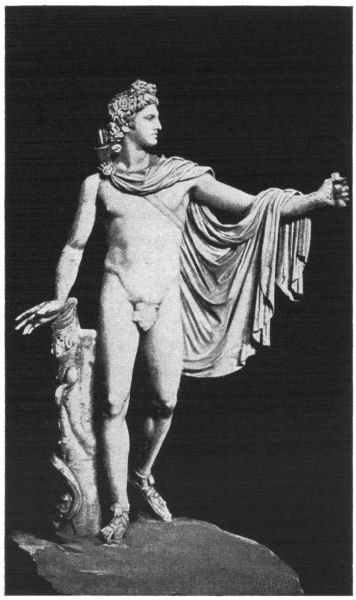
Apollo Belvedere
カウテル(カウテル)。イスラム神話における楽園の湖にして、その水は蜜のごとく甘く、雪のごとく冷たく、水晶のごとく澄みわたる。かの水を味わいし信者は、もはや喉の渇きを感じぬと伝えらる。
[Pg 37] Ceres (Ce′res), daughter of Saturn, the goddess of agriculture, and of the fruits of the earth. She taught Triptolemus how to grow corn, and sent him to teach the inhabitants of the earth. She was known by the names of Magna Dea, Bona Dea, Alma Mammosa, and Thesmorphonis. Ceres was the mother of Proserpine. See Ambarvalia.
ケラエノ(ケラエノ)は、ハルピュイアの一柱にして、西風ゼピュロスの祖なり。
Cestus (Ces′tus), the girdle of Venus, which excited irresistible affection.
ケンタウロス(ケンタウロス)。上半身は人、下半身は馬の姿をなしし狩人なり。ケンタウロイはテッサリアに住みし。
Chaos (Cha′os) allegorically represented the confused mass of matter supposed to have existed before the creation of the world, and out of which the world was formed.
ケファロス(ケファロス)はプロクリスと結婚せしが、彼女が密かに彼を見張る中、彼が野獣と誤認して射殺し、不慮にも妻を殺めし。ケファロスは貞節の象徴なりき。
Charon (Char′on) was the son of Nox and Erebus. He was the ferryman who conveyed the spirits of the dead, in a boat, over the rivers Acheron and Styx to the Elysian Fields. “Charon’s toll” [Pg 38] was a coin put into the hands of the dead with which to pay the grim ferryman.
ケラウニオス(ケラウニオス)。ユピテルのギリシャ名にして、その雷霆より「雷撃者」を意味す。
Charybdis (Charyb′dis). A dangerous whirlpool on the coast of Sicily. Personified, it was supposed to have been a woman who plundered travelers, but was at last killed by Hercules. Scylla and Charybdis are generally spoken of together to represent alternative dangers.
ケルベロス(ケルベロス)。冥王プルートンの名高き三つ頭の犬にして、冥府の門を守り、生ける者の侵入を阻み、また住人たちの脱出を許さざりき。
Chemos (Che′mos). The Moabitish god of war.
儀式、テミスを見よ。
Children, see Nundina.
See page 23
Chimaera (Chimae′ra). A wild illusion, personified in the monster slain by Bellerophon. It had the head and breast of a lion, the body of a goat, and the tail of a serpent. It used to vomit fire.
Apollo Belvedere
Chiron (Chi′ron), the centaur who taught Achilles hunting, music, and the use of medicinal herbs. Jupiter [Pg 39] placed him among the stars, where he appears as Sagittarius, the Archer.
See page 23
Chloris (Chlo′ris). The Greek name of Flora, the goddess of flowers.
Apollo Belvedere
Chou. An Egyptian god corresponding to the Roman Hercules.
頁 23 を見よ
Chronos (Chro′nos). Time, the Grecian name of Saturn.
ベルヴェデーレのアポロン
Cillaros (Cil′laros), see Cyllaros.
[頁 37]ケレス(ケレース)は、サトゥルヌスの娘にして、農業と大地の恵みの女神なり。彼女はトリプトレモスに穀物の育て方を教え、彼を地上に送り、その住民に教えしめたり。彼女はマグナ・デア、ボナ・デア、アルマ・マンモーサ、テスモルフォニスという名にて知られし。ケレスはプロセルピナの母なりき。アンバルヴァリアを参照せよ。
Circe (Cir′ce), daughter of the Sun. The knowledge of poisonous herbs enabled her to destroy her husband, the King of the Sarmatians, for which act she was banished. When Ulysses landed at Aeaea, where she lived, she turned all his followers into swine.
ケストゥス(ケストゥス)は、ウェヌスの帯にして、抗しがたき愛情を掻き立てしものなり。
Cisseta (Cisse′ta). The name of one of Actaeon’s hounds.
カオス(カオス)は、世界創造以前に存在せしとされ、その中より世界が形作られし混沌たる物質の塊を寓意的に表せり。
Citherides (Cither′ides). A name of the Muses, from Mount Citheron.
カロン(カロン)は、ノクスとエレブスの息子なりき。彼は死者の魂を船に乗せ、アケロン川とステュクス川を渡り、エリュシオンの野へと運ぶ渡し守なりき。「カロンの通行料」[頁 38]とは、恐ろしき渡し守に支払うため、死者の手に握らされし硬貨なりき。
Clio (Cli′o). One of the Muses, daughter of Jupiter and Mnemosyne. She presided over history.
カリュブディス(カリュブディス)。シチリア島の沿岸にある危険な渦潮なり。人格化されし姿は、旅人を略奪せし女とされ、ついにヘラクレスに討たれしと伝わる。スキュラとカリュブディスは、二つの危険を対比して語られること多し。
Cloacina (Cloaci′na). The Roman goddess of sewers.
ケモス(ケモス)。モアブ人の戦の神なり。
Clotho (Clo′tho) was one of the Fates. She was present at births, and held the distaff from which was spun the thread of life. See Atropos and Lachesis.
子供たち、ヌンディナを参照せよ。
Clowns of Lycia, The (Ly′cia), were changed into frogs by Latona, because they refused to allow her to drink at one of their streamlets.
キマイラ(キマイラ)。ベレロフォンに討たれし怪物に人格化されし、荒々しき幻影なり。それは獅子の頭と胸、山羊の胴、そして蛇の尾を持ちたり。常に火を吐き出せり。
Cluacina (Clu′aci′na). A name of Venus, given to her at the time of the reconciliation of the Romans and [Pg 40] the Sabines, which was ratified near a statue of the goddess.
ケイロン(ケイロン)は、アキレウスに狩り、音楽、そして薬草の用い方を教えしケンタウロスなり。ユピテルは[頁 39]彼を星々の間に置き、射手座として現れしめたり。
Clytemnestra (Cly′temnes′tra), wife of Agamemnon, slew her husband and married Aegisthus. She attempted to kill her son Orestes, but he was delivered by his sister Electra, who sent him away to Strophius. He afterward returned and slew both Clytemnestra and Aegisthus.
クロリス(クロリス)。花の女神フローラのギリシア名なり。
Clytie (Clyt′ie). A nymph who got herself changed into a sunflower because her love of Apollo was unrequited. In the form of this flower she is still supposed to be turning toward Sol, a name of Apollo.
シュウ。ローマのヘラクレスに相当するエジプトの神なり。
Cneph. In Egyptian mythology the creator of the universe.
クロノス(クロノス)。時を司る神、サトゥルヌスのギリシア名なり。
Cocytus (Cocy′tus), the river of Lamentation. One of the five rivers of the infernal regions.
キラロス(キラロス)、キュラロスを参照せよ。
Coeculus (Coe′culus), a violent robber, was a son of Vulcan.
キルケー (キルケー)、太陽の娘。毒草の知識により、彼女は夫であるサルマティアの王を滅ぼすことができ、その行いのために追放された。オデュッセウスが彼女の住むアイアイア島に上陸した際、彼女は彼の従者たちを皆、豚に変えた。
Coelus (Coe′lus), also called Uranus (or Heaven), was the most ancient of the gods.
キッセタ (キッセタ)。アクタイオンの猟犬の一頭の名。
Coena Saliaris (Coe′na Salia′ris), see Ancilia.
キテリデス (キテリデス)。キタイロン山に由来する、ムーサたちの名。
Collina (Colli′na) was one of the rural deities, the goddess of hills.
クレイオー (クレイオー)。ムーサの一柱にして、ユーピテルとムネモシュネの娘。彼女は歴史を司った。
Comedy, see Thalia.
クロアキナ (クロアキナ)。ローマの下水道の女神。
Comus (Co′mus) was the god of revelry. He presided over entertainments and feasts.
クロートー (クロートー) は運命の三女神の一柱であった。彼女は誕生に立ち会い、生命の糸が紡ぎ出される紡錘(つむ)を握っていた。アトロポスとラケシスを参照せよ。
[Pg 41] Concord (Con′cord). The symbol of Concord was two right hands joined, and a pomegranate.
リュキアの道化たち (リュキア) は、ラートーナによって蛙に変えられた。彼らが彼女に小川で水を飲ませることを拒んだためである。
Concordia (Concor′dia). The goddess of peace. One of the oldest Roman goddesses. She is represented as holding a horn of plenty in one hand, and in the other a scepter, from which fruit is sprouting forth.
クルアキナ (クルアキナ)。ウェヌスの別名。ローマ人とサビニ人の和解の際に彼女に与えられたもので、その和解は女神の像の近くで批准された。[頁 40]
Constancy, see Cephalus.
クリュタイムネーストラー (クリュタイムネーストラー)、アガメムノーンの妻にして、夫を殺しアイギストスと結婚した。彼女は息子オレステースを殺そうとしたが、彼は妹のエレクトラーによって救われ、ストロピオスのもとへ送られた。その後、彼は戻り、クリュタイムネーストラーとアイギストスの両方を殺した。
Consualia (Consu′alia). Games sacred to Neptune.
クリュティエ (クリュティエ)。アポローンへの愛が報われなかったため、ひまわりに姿を変えられたニュンペー。この花の姿になっても、彼女は今なお太陽(アポローンの別名)の方を向いていると信じられている。
Consus (Con′sus). A name given to Neptune as being the god of counsel.
クネフ。 エジプト神話における宇宙の創造主。
Cophetua (Cophe′tua). A legendary king of Africa, who disliked women, but ultimately fell in love with a “beggar-maid,” as mentioned in Romeo and Juliet.
コキュートス (コキュートス)、嘆きの川。冥界の五つの川の一つ。
Copia (Co′pia), the goddess of plenty.
コエクルス (コエクルス)、凶暴な盗賊にして、ウルカヌスの息子であった。
Coran (Co′ran). One of Actaeon’s hounds was so named.
コエルス (コエルス)、ウーラノス(あるいは天)とも呼ばれ、最も古き神々の一柱であった。
Corn, see Ceres.
コエナ・サリアリス (コエナ・サリアリス)、アンキリアを参照せよ。
Coronis (Cor′onis), was a consort of Apollo and mother of Aesculapius. Another Coronis was daughter of a king of Phocis, and was changed by Athena into a crow.
コッリーナ(コッリーナ)は、田園の神々の一柱にして、丘の女神であった。
Corybantes (Coryban′tes) were priests of Cybele. They obtained the name because they were in the habit of striking themselves in their dances.
喜劇、ターリアを参照せよ。
Corydon (Cory′don). A silly love-sick swain mentioned by Virgil.
コモス(コモス)は、酒宴の神なり。彼は娯楽と饗宴を司りし。
[Pg 42] Corythaix (Cory′thaix). A name given to Mars, meaning Shaker of the Helmet.
[頁 41] コンコード(コンコード)。コンコードの象徴は、二つの右手を結びしものと、ザクロであった。
Cotytto (Cotyt′to). The Athenian goddess of immodesty.
コンコルディア(コンコルディア)。平和の女神。最も古きローマの女神の一柱なり。彼女は片手に豊穣の角を、もう一方には果実が芽吹きし笏を携えし姿にて表されん。
Counsel, see Consus.
堅固、ケファルスを参照せよ。
Creditors, see Jani.
コンスアリア(コンスアリア)。ネプトゥーヌスに捧げられし聖なる競技会なり。
Crow, see Coronis.
コンスス(コンスス)。ネプトゥーヌスに与えられし名にして、助言の神としてのものなり。
Cultivated Land, see Sylvester.
コフェチュア(コフェチュア)。アフリカの伝説の王にして、女を嫌いしが、終には『ロミオとジュリエット』に記されし「乞食の乙女」と恋に落ちたり。
Cup-bearer, see Ganymede.
コピア(コピア)、豊穣の女神なり。
Cupid (Cu′pid), the god of love, was the son of Jupiter and Venus. He is represented as a naked, winged boy, with a bow and arrows, and a torch. When he grew up to be a man he married Psyche.
コラン(コラン)。アクタイオーンの猟犬の一頭、かく名付けられし。
Cuvera (Cuve′ra). The Indian god of wealth corresponding to the Greek Plutus.
穀物、ケレースを参照せよ。
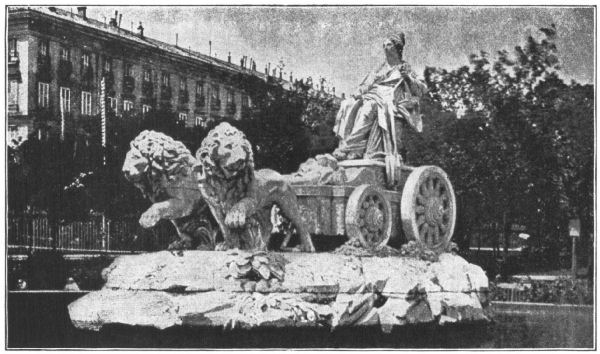
Cybele (Cy′bele). The mother of the gods, and hence called Magna Mater. She was wife of Saturn. She is sometimes referred to under the names of Ceres, Rhea, Ops, and Vesta. She is represented as riding in a chariot drawn by lions. In one hand she holds a scepter, and in the other a key. On her head is a castelated [Pg 43] crown, to denote that she was the first to protect castles and walls with towers.
コロニス(コロニス)は、アポローン妃にしてアスクレピオスの母なり。また別のコロニスは、ポキス王の娘にして、アテーナーにより鴉へと変えられし。
Cyclops (Cy′clops) or Cyclopes (Cy′clopes) were the gigantic, one-eyed workmen of Vulcan, who made Jove’s thunderbolts. Hesiod gives their names as Arges, Brontes, and Steropes.
コリュバンテス(コリュバンテス)は、キュベレーの神官なり。彼らは舞踏の際に自らを打ち叩く習わしありし故、この名を得たり。
Cygnus (Cyg′nus), the bosom friend of Phaeton. He died of grief on the death of his friend, and was turned into a swan.
コリドン(コリドン)。ウェルギリウスが言及せし、愚かな恋煩いの羊飼いなり。
Cyllaros (Cyll′aros), one of Castor’s horses. The color is mentioned as being coal-black, with white legs and tail. See Cillaros.
[頁 42] コリュタイクス(コリュタイクス)。マールスに与えられし名にして、兜を揺らす者、の意なり。
Cyllo (Cyl′lo). The name of one of Actaeon’s hounds, which was lame.
コテュット(コテュット)。アテナイの慎み無き女神なり。
Cyllopotes (Cyllop′otes). A name given to one of Actaeon’s hounds which limped.
助言、コンススを参照せよ。
Cynosure (Cyn′osure). One of the nurses of Jupiter, turned by the god into a conspicuous constellation.
債権者、ヤーニを参照せよ。
[Pg 44] Cyparissus (Cyparis′sus). A boy of whom Apollo was very fond; and when he died he was changed, at Apollo’s intercession, into a cypress tree, the branches of which typify mourning.
鴉、コロニスを参照せよ。
Cypress (Cy′press), see Cyparissus.
耕作地、シルウェステルを参照せよ。
Cypria (Cy′pria). A name of Venus, because she was worshiped in the island of Cyprus.
献酌官、ガニュメデスを参照せよ。
Cythera (Cyth′era). A name of Venus, from the island to which she was wafted in the shell.
クピド(クピド)、愛の神にして、ユーピテルとウェヌスの御子なり。彼は裸身にして翼ある少年として、弓矢と松明を携えし姿にて表されん。成人せし時、プシュケーと結婚せり。
Dactyli (Dacty′li) were priests of Cybele. They were given the name, because, like the fingers, they were ten in number.
クベーラ。ギリシアのプルートゥスに対応する、インドの富の神。
Daedalus (Daed′alus) was a great architect and sculptor. He invented the wedge, the axe, the level, and the gimlet, and was the first to use sails. Daedalus also constructed the famous labyrinth for Minos, King of Crete. See Icarus.
キュベレー。神々の母であり、ゆえにマグナ・マーテルと呼ばれた。彼女はサトゥルヌスの妻であった。彼女は時にケレス、レアー、オプス、ウェスタの名で言及されることがある。彼女はライオンに引かれた戦車に乗る姿で描かれる。片手には笏を、もう一方の手には鍵を携えている。頭上には城壁を模した冠を戴いており、これは彼女が城や塔のある壁を守護した最初の者であることを示している。[Pg 43]
Dagon (Da′gon). A god of the Philistines, half man half fish, like the mermaid. Milton describes him as “Upward man and downward fish.”
キュクロプス、あるいはキュクローペスは、ウルカヌスの巨大な一つ目の職人たちであり、ユーピテルの雷霆を造りし者たちであった。ヘーシオドスは彼らの名をアルゲス、ブロンテス、ステロペスと記している。
Dahak (Da′hak). The Persian devil.
キュグヌスは、パエトンの親友であった。彼は友の死を深く悲しみ、その悲嘆のうちに命を落とし、白鳥へと姿を変えられた。
Daityas (Dai′tyas). In Hindoo mythology the devils or evil gods.
キュラロスは、カストルの馬の一頭。その毛色は石炭のように黒く、脚と尾は白であったと記されている。チラロスを参照せよ。
Danae (Dan′ae) was a daughter of Acrisius and Eurydice. She had a son by Jupiter, who was drifted out to sea in a boat, but was saved by Polydectes and educated.
キュロは、アクタイオーンの猟犬の一頭の名であり、足が不自由であった。
See page 42
キュロポテスは、アクタイオーンの猟犬の一頭に与えられた名であり、足を引きずっていた。
Fountain of Cybele (Rhea)
キュノスーラは、ユーピテルの乳母の一人であり、神によって輝かしい星座へと変えられた。
[Pg 45] Danaides (Dana′ides), see Danaus.
[Pg 44]キュパリッススは、アポローンが深く愛した少年であった。彼が死した時、アポローンの執り成しにより、その姿は糸杉の木へと変えられた。その枝は喪を象徴するものとされる。
Danaus (Dana′us), King of Argos, was the father of fifty daughters, who, all but one, at the command of their father, slew their husbands directly after marriage. For this crime they were condemned to the task of forever trying to draw water with vessels without any bottoms. See Hypermnestra.
サイプレス、キュパリッススを参照せよ。
Dancing, see Terpsichore.
キュプリアは、ウェヌスの名の一つであり、彼女がキュプロス島で崇拝されていたことに由来する。
Dangers, see Charybdis, also Scylla.
キュテラは、ウェヌスの名の一つであり、彼女が貝に乗って漂着した島に由来する。
Daphne (Daph′ne). The goddess of the earth. Apollo courted her, but she fled from him, and was, at her own request, turned into a laurel tree.
Dardanus (Dar′danus), a son of Jupiter, who built the city of Dardania, and by some writers was accounted the founder of Troy.
ダイダロス(ダイダロス)は、偉大なる建築家にして彫刻家なりき。彼は楔、斧、水準器、そして錐を発明し、また帆を初めて用いたる者なり。ダイダロスはまた、クレタの王ミノスのために、かの名高き迷宮を建造せり。イカロスを見よ。
Dead-toll, see Charon.
ダゴン(ダゴン)。ペリシテ人の神にして、人魚のごとく、上半身は人、下半身は魚なり。ミルトンは彼を「上は人、下は魚」と描写せり。
Death, see Nox.
ダハク(ダハク)。ペルシアの悪魔なり。
Deceiver, The, see Apaturia.
ダイティヤ(ダイティヤ)。ヒンドゥー神話における悪魔、あるいは邪悪なる神々なり。
Deianira (Deiani′ra), daughter of Oeneus, was wife of Hercules. See Hercules.
ダナエ(ダナエ)は、アクリシオスとエウリュディケの娘なりき。彼女はユピテルとの間に息子をもうけしが、その子は小舟にて海へと流されしが、ポリデクテスに救われ、教育を受けたり。
Delius (De′lius), a name of Apollo, from the island in which he was born.
See page 42
Delphi (Del′phi). A town on Mount Parnassus, famous for its oracle, and for a temple of Apollo. See Delphos.
Fountain of Cybele (Rhea)
Delphicus (Del′phicus). A name of Apollo, from Delphi.
See page 42
[Pg 46] Delphos (Del′phos), the place where the temple was built, from which the oracle of Apollo was given.
Fountain of Cybele (Rhea)
Demarus (De′marus). The Phoenician name of Jupiter.
頁 42 をみよ
Demogorgon (De′mogor′gon) was the tyrant genius of the soil or earth, the life and support of plants. He was depicted as an old man covered with moss, and was said to live underground. He is sometimes called the king of the elves and fays.
キュベレ(レアー)の泉
Deucalion (Deuca′lion), one of the demi-gods, son of Prometheus and Pyrra. He and his wife, by making a ship, survived the deluge which Jupiter sent on the earth, circa 1503 B.C.
[頁 45]ダナイデス(ダナイデス)、ダナオスを見よ。
Devil, see Dahak, Daityas, and Obambou.
ダナオス(ダナオス)、アルゴスの王にして、五十人の娘の父なりき。彼女らは、一人を除き、父の命により、結婚直後に夫を殺害せり。この罪ゆえに、彼女らは底なき器にて永遠に水を汲み続けるという罰を受けたり。ヒュペルムネストラを見よ。
Diana (Di′ana), goddess of hunting and of chastity. She was the sister of Apollo, and daughter of Jupiter and Latona. She was known among the Greeks as Diana or Phoebe, and was honored as a triform goddess. As a celestial divinity she was called Luna; as a terrestrial Diana or Dictynna; and in the infernal regions Hecate.
舞踏、テルプシコラを見よ。
Dictynna (Dictyn′na), a Greek name of Diana as a terrestrial goddess.
危険、カリュブディス、またスキュラを見よ。
Dido (Di′do). A daughter of Belus, King of Tyre. It was this princess who bought a piece of land in Africa as large as could be encompassed by [Pg 47] a bullock’s hide, and when the purchase was completed, cut the hide into strips, and so secured a large tract of land. Here she built Carthage; and Virgil tells that when Aeneas was shipwrecked on the neighboring coast she received him with every kindness, and at last fell in love with him. But Aeneas did not reciprocate her affections, and this so grieved her that she stabbed herself. A tale is told in Facetiae Cantabrigienses of Professor Porson, who being one of a set party, the conversation turned on the subject of punning, when Porson observing that he could pun on any subject, a person present defied him to do so on the Latin gerunds, di, do, dum, which, however, he immediately did in the following admirable couplet:
ダフネ(ダフネ)。大地の女神なり。アポロンは彼女に求愛せしが、彼女は彼より逃れ、己の願いにより、月桂樹へと姿を変えたり。
Dies Pater (Di′es Pa′ter), or Father of the Day, a name of Jupiter.
ダルダノス(ダルダノス)、ユピテルの息子にして、ダルダニア市を建設せし者なり。ある著述家らにより、トロイアの創始者と見なされし者なり。
Dii Selecti (Dii Selec′ti) composed the second class of gods. They were Coelus, Saturn, Genius, Oreus, Sol, Bacchus, Terra, and Luna.
死者の通行料、カロンを見よ。
Dindymene (Din′dyme′ne). A name of Cybele, from a mountain where she was worshiped.
死、ノクスを見よ。
Diomedes (Diome′des), the cruel tyrant of Thrace, who fed his mares on the flesh of his guests. He was [Pg 48] overcome by Hercules, and himself given to the same horses as food.
欺く者、アパトゥリアを見よ。
Dione (Dio′ne). A poetic name of Venus.
デイアネイラ(デイアネイラ)、オイネウスの娘にして、ヘラクレスの妻なりき。ヘラクレスを見よ。
Dionysia (Diony′sia) were festivals in honor of Bacchus.
デリウス(デリウス)、アポロンの別名にして、彼が生まれし島に由来す。
Dionysius (Diony′sius). A name of Bacchus, either from his father Jupiter (Dios), or from his nurses, the nymphs called Nysae.
デルフィ(デルフィ)。パルナッソス山上の町にして、その神託所とアポロンの神殿にて名高し。デルフォスを見よ。
Dioscuri (Dios′curi). Castor and Pollux, the sons of Jupiter.
デルフィクス(デルフィクス)。アポロンの別名にして、デルフィに由来す。
Dirae (Di′rae). A name of the Furies.
[頁 46]デルフォス(デルフォス)、神殿が建てられし地、アポロンの神託が授けられし所なり。
Dis. A name of Pluto, god of hell, signifying riches.
デマルス(デマルス)。ユピテルのフェニキア名なり。
Discord, see Ate.
デモゴルゴン(デモゴルゴン)は、土壌あるいは大地の暴君たる精霊にして、植物の生命と支えなりき。彼は苔に覆われし老翁として描かれ、地下に住まうと伝えられし。時に妖精と仙女の王とも呼ばれし。
Discordia (Discor′dia), sister of Nemesis, the Furies, and Death, was driven from heaven for having sown discord among the gods.
デウカリオン(デウカリオン)、半神の一人にして、プロメテウスとピュラーの子なり。彼とその妻は、船を造りしことにより、紀元前およそ1503年頃、ユピテルが地上に送りし大洪水を生き延びたり。
Diseases, see Pandora.
悪魔、ダハク、ダイティヤ、オバンブーを参照せよ。
Distaff, see Pallas.
ディアナ(ディアナ)、狩猟と貞節の女神なり。彼女はアポロンの妹にして、ユピテルとラトナの娘なりき。ギリシャ人の中にはディアナあるいはポイベーとして知られ、三相一体の女神として崇められし。天上の神性としてはルナと呼ばれ、地上の神性としてはディアナあるいはディクティンナ、そして冥界においてはヘカテと呼ばれし。
Dithyrambus. A surname of Bacchus.
ディクティンナ(ディクティンナ)、地上の女神としてのディアナのギリシャ名なり。
Dodona (Dodo′na) was a celebrated oracle of Jupiter.
ディードー(ディー′ドー)。テュロスの王ベールスの娘。この王女は、アフリカにて、雄牛の皮一枚で囲えるほどの広さの土地を買い求め、[頁 47] 買い取りが済むと、その皮を細長く切り裂き、広大な土地を手に入れたのであった。ここに彼女はカルタゴを築き、ウェルギリウスが語るところによれば、アイネイアースが隣接する海岸に難破した際、彼女は彼をあらゆる親切をもって迎え入れ、ついには彼に恋い焦がれたという。しかし、アイネイアースは彼女の愛情に応えることなく、このことに深く悲しんだ彼女は、自ら剣を刺して果てた。『ケンブリッジの諧謔集』には、ポーソン教授の逸話が語られている。ある宴席にて、会話が駄洒落の話題に移った際、ポーソンはどんな主題でも駄洒落を言えると述べたところ、居合わせた者がラテン語の動名詞、di、do、dumで駄洒落を言ってみよと挑んだ。しかし彼は、即座に以下の見事な二行詩でそれをやってのけたのであった。
Dodonaeus (Dodonae′us). A name of Jupiter, from the city of Dodona.
ディエス・パテル(ディー′エス・パー′テル)、すなわち「日の父」は、ユーピテルの別名である。
Dog, see Lares.
ディー・セレクトゥス(ディー・セレク′ティー)は、第二級の神々を構成した。彼らはコエルス、サトゥルヌス、ゲニウス、オレウス、ソール、バックス、テッラ、そしてルーナであった。
[Pg 49] Dolabra (Dola′bra). The knife used by the priests to cut up the sacrifices.
ディンデュメネー(ディン′デュメ′ネー)。キュベレーの別名にして、彼女が崇拝されし山の名に由来する。
Dolphin, see Arion.
ディオメーデース(ディオメー′デース)は、トラキアの残忍なる暴君にして、その牝馬に客人の肉を食らわせし者なり。彼は[頁 48] ヘーラクレースに打ち負かされ、自らも同じ馬たちの餌食とされた。
Doorga (Door′ga). A Hindoo goddess.
ディオネー(ディオ′ネー)。ウェーヌスの詩的なる別名。
Doris (Do′ris) was daughter of Oceanus, and sister of Nereus, two of the marine deities. From these two sisters sprang the several tribes of water nymphs.
ディオニューシア(ディオニュー′シア)は、バックスを称える祭典であった。
Doto (Do′to). One of the Nereids or sea nymphs.
ディオニューシオス(ディオニュー′シオス)。バックスの別名にして、その父ユーピテル(ディオス)に由来するか、あるいはその養育者たるニュサイと呼ばれるニンフたちに由来する。
Draco (Dra′co). One of Actaeon’s hounds.
ディオスクーロイ(ディオス′クーリー)。カストールとポルックス、ユーピテルの息子たち。
Dragon, seven-headed, see Geryon.
ディーライ(ディー′ライ)。フューリーたちの別名。
Dreams, see Morpheus.
ディス。冥界の神プルートーの別名にして、「富」を意味する。
Dryads (Dry′ads) were rural deities, the nymphs of the forests, to whom their votaries offered oil, milk, and honey.
ディスコード、アーテーを参照せよ。
Dumbness (Dumb′ness), see Atys.
ディスコーディア(ディスコーディア)は、ネメシス、フーリエ、そして死の姉妹にして、神々の間に不和を蒔いたがゆえに、天界より追放されし者なり。
Dweurgar (Dweur′gar). Scandinavian god of the Echo—a pigmy.
病、パンドラを見よ。
Eacus (E′acus), son of Jupiter and Egina, one of the judges of the infernal regions, who was appointed to judge the Europeans. See Aeacus.
紡錘、パラスを見よ。
Earth, see Antaeus.
ディテュランボス。バッコスの一つの異名なり。
Eblis (Eb′lis), the Mohammedan evil genius.
ドドナ(ドドーナ)は、ユピテルの名高き神託所なり。
Echidna (Echid′na). A woman having a serpent’s tail. She was the reputed mother of Chimaera, and also of the many-headed dog Orthos, of the [Pg 50] three-hundred-headed dragon of the Hesperides, of the Colchian dragon, of the Sphinx, of Cerberus, of Scylla, of the Gorgons, of the Lernaean Hydra, of the vulture that gnawed away the liver of Prometheus, and also of the Nemean lion; in fact, the mother of all adversity and tribulation.
ドドナイオス(ドドナイオス)。ドドナの都に由来する、ユピテルの名なり。
Echnobas (Echno′bas), one of Actaeon’s hounds.
犬、ラレスを見よ。
Echo (Ech′o) was a nymph who fell in love with Narcissus. But when he languished and died she pined away from grief and died also, preserving nothing but her voice, which repeats every sound that reaches her. Another fable makes Echo a daughter of Air and Tellus. She was partly deprived of speech by Juno, being allowed only to reply to questions.
[Pg 49] ドラブラ(ドラブラ)。祭司たちが供物を切り分けるに用いたる刀なり。
Egeon. A giant sea-god, who assisted the Titans against Jupiter.
イルカ、アリオンを見よ。
Egeria (Ege′ria). A nymph who is said to have suggested to Numa all his wise laws. She became his wife, and at his death was so disconsolate, and shed so many tears, that Diana changed her into a fountain.
ドゥールガー(ドゥールガー)。ヒンドゥーの女神なり。
[Pg 51] Egil (E′gil). The Vulcan of northern mythology.
ドリス(ドリス)は、オケアノスの娘にして、ネレウスの姉妹、二柱の海の神々なり。この二柱の姉妹より、様々な水妖精の種族が生まれ出でたり。
Egipans (Egip′ans) were rural deities who inhabited the forests and mountains, the upper half of the body being like that of a man, and the lower half like a goat.
ドト(ドト)。ネレイデス、すなわち海の妖精の一柱なり。
Egis (E′gis) was the shield of Minerva. It obtained its name because it was covered with the skin of the goat Amalthaea, which nourished Jupiter. See Aegis.
ドラコ(ドラコ)。アクタイオンの猟犬の一匹なり。
Eleusinian Mysteries (Eleusin′ian). Religious rites in honor of Ceres, performed at Eleusis, in Attica.
竜、七つの頭を持つ、ゲリュオンを見よ。
Elysium (Elys′ium), or the Elysian Fields. The temporary abode of the just in the infernal regions.
夢、モルペウスを見よ。
Empyrean, The (Empyre′an). The fifth heaven, the seat of the heathen deity.
ドリュアス(ドリュアス)は、田園の神々、森の妖精たちにして、崇拝者たちは油、乳、そして蜜を捧げたり。
Endymion (Endym′ion). A shepherd, who acquired from Jupiter the faculty of being always young. One of the lovers of Diana.
唖(唖)、アティスを見よ。
Entertainments, see Comus.
ドゥウェルガル(ドゥウェルガル)。スカンジナビアのこだまの神—小人なり。
Enyo was the Grecian name of Bellona, the goddess of war and cruelty.
大地、アンタイオスを見よ。
Eolus (E′olus), see Aeolus.
イブリース(イブリース)、ムハンマド教の邪悪なる精霊なり。
Eos (E′os). The Grecian name of Aurora.
エキドナ(エキドナ)。蛇の尾を持つ女なり。彼女はキマイラの母とされ、また多頭の犬オルトロスの母、[Pg 50]ヘスペリデスの三百頭の竜の母、コルキスの竜の母、スフィンクスの母、ケルベロスの母、スキュラの母、ゴルゴンたちの母、レルネアのヒュドラの母、プロメテウスの肝臓を食い破りしハゲタカの母、そしてネメアの獅子の母なり。実に、あらゆる逆境と苦難の母なり。
Eous (E′ous). One of the four horses which drew the chariot of Sol, the sun. The word is Greek, and means red.
エクノバス(エクノバス)、アクタイオンの猟犬の一匹なり。
Ephialtes (Eph′ial′tes). A giant who lost his right eye in an encounter with Hercules, and the left eye was destroyed by Apollo.
エコー(エコー)はナルキッソスに恋したニンフであった。されど彼が衰弱し死せし時、彼女もまた悲嘆に暮れて身をやつし、声のみを残して息絶えたり。その声は、彼女に届くあらゆる音を繰り返すのみ。別の寓話によれば、エコーは空気と大地の娘であるという。彼女はユーノーにより言葉の一部を奪われ、ただ問いに答えることのみを許されし身であった。
[Pg 52] Erato (Er′ato). One of the Muses, the patroness of light poetry; she presided over the triumphs and complaints of lovers, and is generally represented as crowned with roses and myrtle, and holding a lyre in her hand.
アイガイオーン。巨人なる海の神にして、ティーターン族がユーピテルに抗するを助けし者。
Erebus (Er′ebus), son of Chaos, one of the gods of Hades, sometimes alluded to as representing the infernal regions.
エゲリア(エゲリア)。ヌマにその賢明なる法を全て示唆せしと伝えられるニンフ。彼女はヌマの妻となり、彼の死に際してはあまりに悲嘆に暮れ、多くの涙を流せしゆえ、ディアナは彼女を泉へと変えたり。
Ergatis (Erga′tis). A name given to Minerva. It means the work-woman, and was given to the goddess because she was credited with having invented spinning and weaving.
[頁 51] エギル(エギル)。北欧神話におけるウルカヌス。
Erictheus (Eric′theus), fourth King of Athens, was the son of Vulcan.
エギパン(エギパン)は森や山に住まう田園の神々なり。その身の上半分は人の如く、下半分は山羊の如し。
Erinnys (Erin′nys). A Greek name of the Furies. It means Disturber of the Mind.
アイギス(アイギス)はミネルウァの盾なり。ユーピテルを養いし山羊アマルテイアの皮にて覆われしゆえ、その名を得たり。アイギスを見よ。
Erisichthon (Erisich′thon) was punished with perpetual hunger because he defiled the groves of Ceres, and cut down one of the sacred oaks.
エレウシスの秘儀(エレウシスの)。アッティカのエレウシスにて、ケレースを崇め行われし宗教儀式なり。
Eros (Er′os). The Greek god of love.
エーリュシオン(エーリュシオン)、あるいはエーリュシオンの野。冥界における正しき者の仮の住処なり。
Erostratus (Eros′tratus). The rascal who burnt the temple of Diana at Ephesus, thereby hoping to make his name immortal.
エンピュリアン(エンピュリアン)。第五の天、異教の神々の座なり。
Erycina (Eryc′ina). A name of Venus, from Mount Eryx in Sicily.
エンデュミオン(エンデュミオン)。ユーピテルより常に若きままである能力を得し羊飼い。ディアナの恋人の一人なり。
Erythreos (Erythre′os). The Grecian name of one of the horses of Sol’s chariot.
娯楽、コモスを見よ。
Esculapius (Escula′pius), see Aesculapius.
嫉妬、フューリーを見よ。
Eta (E′ta), see Aeetes.
エニュオはベローナ、すなわち戦と残酷の女神のギリシア名なり。
[Pg 53] Ethon (E′thon), one of the horses who drew the chariot of Sol—the sun. The word is Greek, and signifies hot.
エオルス(エオルス)、アイオロスを見よ。
Etna (Et′na). A volcanic mountain, beneath which, according to Virgil, there is buried the giant Typhon, who breathes forth devouring flames.
エーオス(エーオス)。アウローラ(曙の女神)のギリシア名なり。
Eudromos (Eu′dromos). The name of one of Actaeon’s hounds.
エオウス(エオウス)。太陽神ソル(太陽)の戦車を引く四頭の馬の一頭なり。この語はギリシア語にして、赤を意味す。
Eulalon (Eu′lalon), one of the names of Apollo.
エフィアルテス(エフィアルテス)。ヘーラクレースとの遭遇にて右目を失い、左目はアポロンにより破壊されし巨人なり。
Eumenides (Eume′nides), a name of the Furies, meaning mild, and referring to the time when they were approved by Minerva.
[頁 52]エラトー(エラートー)。ムーサの一柱にして、軽妙なる詩歌の守護神なり。恋人たちの勝利と嘆きを司り、通常、薔薇とギンバイカの冠を戴き、手には竪琴を携えし姿にて表されん。
Euphrosyne (Euphro′syne), one of the three Graces, see Graces.
エレボス(エレブス)。カオスの子にして、ハーデースの神々の一柱なり。時に冥界を表すものとして言及されん。
Eurus (Eu′rus). The east wind. A son of Aeolus.
エルガティス(エルガーティス)。ミネルヴァに与えられし名なり。その意味するところは「働き女」にして、紡績と機織を発明せしと信じられし故に、この名が女神に与えられしなり。
Euryale (Eury′ale) was one of the Gorgons, daughter of Phorcus and Ceto.
エリクトニオス(エリクテウス)。アテーナイの第四代の王にして、ウルカヌスの子なり。
Eurydice (Euryd′ice), wife of Orpheus, who was killed by a serpent on her wedding night.
エリニュス(エリニュス)。フューリーたちのギリシア名なり。その意味するところは「心の攪乱者」なり。
Eurythion (Euryth′ion). A seven-headed dragon. See Geryon.
エリシクトン(エリシクトン)。永久の飢えにて罰せられしは、ケレースの聖なる森を汚し、聖なる樫の木の一本を伐り倒せしがためなり。
Euterpe (Eu′terpe), one of the Muses, the patroness of instrumental music. The word means agreeable.
エロス(エロス)。ギリシアの愛の神なり。
[Pg 54] Euvyhe (Eu′vyhe), an expression meaning “Well done, son.” Jupiter so frequently addressed his son Bacchus by those words that the phrase at last became one of his names.
ヘロストラトス(エロストラトス)。エフェソスのディアナ神殿を焼き払いし悪漢なり。それによりて己が名を不朽ならしめんと望みしなり。
Evening Star, see Hesperus.
エリキナ(エリキナ)。ウェヌスの名の一つにして、シチリア島のエリュクス山に由来す。
Evil, see Cacodaemon.
エリュトレオス(エリュトレオス)。太陽神ソルが戦車を牽く馬の一頭のギリシア名なり。
Evils, see Pandora.
エスクラピウス(エスクラピウス)。アスクレピオスを見よ。
Eye, of one, see Cyclops and Glaukopis.
エータ(エータ)。アイエーテースを見よ。
Fame was a poetical deity, represented as having wings and blowing a trumpet. A temple was dedicated to her by the Romans.
[頁 53]エトン(エトン)。太陽神ソルが戦車を牽きし馬の一頭なり。この語はギリシア語にして、「熱き」を意味す。
Fate, see Nereus.
エトナ(エトナ)。火山にして、ウェルギリウスによれば、その下には巨神テューポーンが埋もれ、彼は猛き炎を吐き出さん。
Fates, or Parcae, were the three daughters of Necessity. Their names were Clotho, who held the distaff; Lachesis, who turned the spindle; and Atropos, who cut the thread with the fatal shears.
エウドロモス(エウドロモス)。アクタイオーンの猟犬の一頭の名なり。
Faun. A rural divinity, half man and half goat. They were very similar to the Satyrs. The Fauns attended the god Pan, and the Satyrs attended Bacchus.
エウラロン(エウラロン)。アポローンが名の一つなり。
Favonius (Favo′nius). The wind favorable to vegetation, that is, Zephyr—the west wind.
エウメニデス(エウメニデス)。フューリーたちの名の一つにして、「温和なる者たち」を意味し、ミネルヴァに認められし時を指し示すなり。
[Pg 55] Fays.
エウプロシュネー(エウプロシュネー)。三美神の一柱なり。グラーティアたちを見よ。
Feasts, see Comus.
エウロス(エウロス)。東風なり。アイオロスの子なり。
Febris (Fe′bris) (fever), one of the evil deities, was worshiped that she might not do harm.
エウリュアレ(エウリュアレー)は、ゴルゴンの一柱にして、ポルキュスとケートーの娘なり。
Februus (Feb′ruus). A name of Pluto, from the part of the funeral rites which consisted of purifications.
エウリュディケー(エウリュディケー)は、オルフェウスの妻にして、婚礼の夜に蛇に噛まれ命を落としき。
Feronia (Fero′nia), the Roman goddess of orchards, was patroness of enfranchised slaves. Some authors think Feronia is the same as Juno.
エウリュティオン(エウリュティオン)。七つの頭を持つ竜なり。ゲーリュオーンを見よ。
Fertility, see Lupercus.
エウテルペー(エウテルペー)は、ムーサの一柱にして、器楽の守護者なり。その名は「心地よきもの」を意味す。
Festivals, see Thalia.
[頁 54] エウウィーヘ(エウウィーヘ)は、「よくぞ成し遂げたり、我が子よ」という意味の言葉なり。ユーピテルは、その子バックスを常にこの言葉にて呼びかけしゆえ、ついにこの句はバックスの名の一つとなりぬ。
Fidelity, see Iolaus.
宵の明星、ヘスペロスを見よ。
Fides (Fi′des), the goddess of faith and honesty, and a temple in the Capitol of Rome.
悪、カコダイモーンを見よ。
Fine Arts, see Minerva.
災厄、パンドーラーを見よ。
Fire, see Salamander, Vesta, and Vulcan.
目、一つ目の、キュクロープスおよびグラウコーピスを見よ。
Fisherman, see Glaucus.
運命、ネーレウスを見よ。
Flath-innis (Flath′-in′nis), in Celtic mythology, is Paradise.
運命の女神たち、あるいはパルカエは、必然の三人の娘たちなり。その名は、糸巻き棒を握りしクローソー、紡錘を回ししラケシス、そして運命のハサミにて糸を断ち切りしアトロポスなりき。
Fleece, Golden, see Golden Fleece, Argonauts, and Jason.
ファウヌス。半人半獣の田園の神性なり。サテュロスと酷似せり。ファウヌスは牧神パンに仕え、サテュロスはバックスに仕えき。
Flies, see Muscarius.
ファウォーニウス(ファウォーニウス)。草木の生育に好ましき風、すなわちゼピュロス—西風なり。
Flocks, see Pales (goddess of pastures).
[頁 55] 妖精たち。
Flora (Flo′ra), goddess of flowers and gardens, was wife of Zephyrus. She enjoyed perpetual youth. Her Grecian name was Chloris.
饗宴、コモスを見よ。
[Pg 56] Floralia (Flora′lia) were licentious games instituted in honor of the goddess Flora.
フェブリス(フェブリス)(熱病)は、悪しき神性の一柱にして、害をなすことなからんことを願い崇められき。
Flowers, see Flora, Chloris, Hortensis, and Zephyrus.
フェブルウス(フェブルウス)。プルートーの別名にして、葬儀の儀式における清めの部分に由来す。
Flute, see Marsyas.
フェローニア(フェローニア)は、ローマの果樹園の女神にして、解放奴隷の守護者なりき。一部の著述家は、フェローニアをユーノーと同一視せり。
Fortuna (Fortu′na), the goddess of fortune, had a temple erected to her by Servius Tullius. She was supposed to be able to bestow riches or poverty on mankind, and was esteemed one of the most potent of the ancient goddesses. She is usually represented as standing on a wheel, with a bandage over her eyes, and holding a cornucopia.
豊穣、ルペルクスを見よ。
Fraud, one of the evil deities, was represented as a goddess with a human face and a serpent’s body, and at the end of her tail was a scorpion’s sting. She lived in the river Cocytus, and nothing but her head was ever seen.
祭典、タレイアを見よ。
Freyr (Frey′r). The Scandinavian god of fertility and peace. The patron god of Sweden and Iceland.
忠誠、イオラオスを見よ。
Freyja (Frey′ja). The Scandinavian Venus. The goddess of love.
フィーデス(フィーデス)は、信仰と誠実の女神にして、ローマのカンピドリオの丘に神殿あり。
Friga (Fri′ga). The Saxon goddess of earthly enjoyments. The name Friday is derived from her. In Scandinavian mythology she is the goddess of marriage.
美術、ミネルヴァを見よ。
Fro. The Scandinavian god of tempests and winds.
火、サラマンダー、ウェスタ、ウルカヌスを参照。
Frogs, see Clowns of Lycia.
火災保険、カノープスを参照。
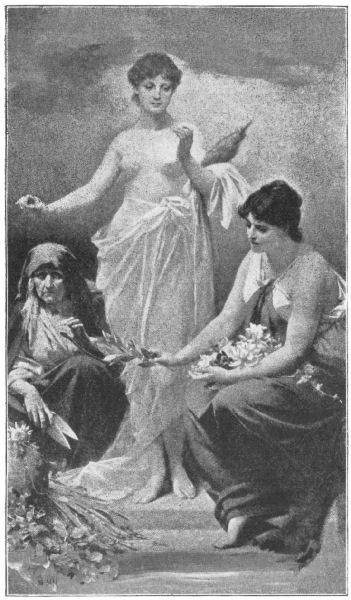
See page 54
漁師、グラウコスを参照。
The Fates
フラート=イニス(フラート′-イン′ニス)、ケルト神話において、楽園なり。
[Pg 57] Fruits, see Ceres, and Pomona.
黄金の羊毛、黄金の羊毛、アルゴナウタイ、イアソンを参照。
Funerals, see Libitina, and Manes.
蠅、ムスカリウスを参照。
Furies, The, were the three daughters of Acheron and Nox. They were the punishers of evil-doers. Their names were Tisiphone, Megaera, and Alecto, and were supposed to personify rage, slaughter, and envy.
羊の群れ、パレス(牧草地の女神)を参照。
Futurity, see Cassandra.
フローラ(フロー′ラ)、花と庭園の女神にして、ゼピュロスの妻なりき。彼女は永遠の若さを享受せり。彼女のギリシア名はクロリスなりき。
Gabriel (Ga′briel), in Jewish mythology is the prince of fire and thunder, and the angel of death to the favored people of God.
[頁 56]フロラリア(フロラ′リア)は、女神フローラを称え設けられし、放蕩なる競技なりき。
Galataea (Galatae′a). A sea nymph. Polyphemus, one of the Cyclops, loved her, but she disdained his attentions and became the lover of Acis, a Sicilian shepherd.
花、フローラ、クロリス、ホルテンシス、ゼピュロスを参照。
Gallantes (Gallan′tes), madmen, from Galli (which see).
笛、マルシュアスを参照。
Galli (Gal′li) were priests of Cybele who used to cut their arms with knives when they sacrificed, and acted so like madmen that demented people got the name of Gallantes.
フォルトゥーナ(フォルトゥー′ナ)、運命の女神にして、セルウィウス・トゥッリウスにより神殿を建てられし。彼女は人類に富または貧困を授ける力ありと信じられ、古代の女神の中でも最も強力なる者の一人と崇められし。彼女は通常、車輪の上に立ち、目に包帯を巻き、豊穣の角を携えし姿にて表されり。
Ganesa (Gan′esa). The Indian Mercury. The god of wisdom and prudence.
欺瞞、邪悪なる神々の一柱にして、人の顔と蛇の体を持つ女神として表されし。その尾の先には蠍の毒針ありき。彼女はコキュートス川に住み、その頭部以外は決して見られざりき。
Ganga. One of the three Indian river goddesses.
フレイ(フレイ′ル)。スカンジナビアの豊穣と平和の神。スウェーデンとアイスランドの守護神なり。
Ganymede, a beautiful Phrygian youth, son of Tros, King of Troy. He succeeded Hebe in the office of cup-bearer to Jupiter. He is generally represented sitting on the back of a flying eagle.
フレイヤ(フレイ′ヤ)。スカンジナビアのウェヌス。愛の女神なり。
Gardens, see Pomona (goddess of fruit-trees).
フリガ(フリ′ガ)。サクソン人の地上の享楽の女神。金曜日の名は彼女に由来す。スカンジナビア神話においては、彼女は結婚の女神なり。
[Pg 58] Gates, see Janus.
フロー。スカンジナビアの嵐と風の神なり。
Gautama (Gau′tama) (Buddha). The chief deity of Burmah.
蛙、リュキアの道化師たちを参照。
Genii were domestic divinities. Every man was supposed to have two of these genii accompanying him; one brought him happiness, the other misery.
See page 54
Genitor (Gen′itor). A Lycian name of Jupiter.
The Fates
Geometry, see Mercury.
See page 54
Geryon (Ge′ryon) was a triple-bodied monster who lived at Gades, where his numerous flocks were guarded by Orthos, a two-headed dog, and by Eurythion, a seven-headed dragon. These guardians were destroyed by Hercules, and the cattle taken away.
The Fates
Gimlet, see Daedalus.
頁54を参照。
Girdle, see Cestus (Venus’s).
運命の女神たち
Glaucus (Glau′cus) was a fisherman who became a sea-god through eating a sea-weed, which he thought invigorated the fishes and might strengthen him.
[頁 57]果物、ケレス、ポモナを参照。
Glaukopis (Glauko′pis). A name given to Minerva, because she had blue eyes.
葬儀、リビティナ、マネスを参照。
Gnomes (Gno′mes), a name given by Plato to the invisible deities who were supposed to inhabit the earth.
復讐の女神たちは、アケローンとノックスの三柱の娘たちなりき。悪しき行いを為す者どもを罰する者なりき。その名はティシフォネ、メガイラ、そしてアレクトと称され、怒り、殺戮、そして嫉妬を擬人化したものと信じられし。
Gnossis (Gnos′sis), a name given to Ariadne, from the city of Gnossus, in Crete.
未来、カサンドラを見よ。
Goat’s Feet, see Capripedes.
ガラテイア(ガラテイア)。海のニンフなり。キュクロプスの一人ポリフェモスは彼女を愛せしが、彼女はその求愛を退け、シチリアの羊飼いアキスの恋人となりぬ。
[Pg 59] Golden Apple, see Atalanta.
ガランテス(ガランテス)、狂人たち、ガッリ(そちらを見よ)より出でし。
Golden Fleece, The, was a ram’s hide, sometimes described as white, and at other times as purple and golden. It was given to Phryxus, who carried it to Colchis, where King Aeetes entertained Phryxus, and the hide was hung up in the grove of Mars. Jason and forty-nine companions fetched back the golden fleece. See Argonauts.
ガッリ(ガッリ)はキュベレの神官たちにして、供犠を捧げし時、刀にて己が腕を切り裂き、狂人の如く振る舞いしゆえ、狂乱せし人々はガランテスと称されしなり。
Gopya (Gopy′a). Indian mythological nymphs.
ガネーシャ(ガネーシャ)。インドのメルクリウスなり。知恵と賢慮の神なり。
Gorgons, The (Gor′gons), were three sisters, named Stheno, Euryale, and Medusa. They petrified every one they looked at. Instead of hair their heads were covered with vipers. Perseus conquered them, and cut off the head of Medusa, which was placed on the shield of Minerva, and all who fixed their eyes thereon were turned into stone.
ガンガー。インドの三柱の河の女神の一柱なり。
Graces, The, were the attendants of Venus. Their names were, Aglaia, so called from her beauty and goodness; Thalia, from her perpetual freshness; and Euphrosyne, from her cheerfulness. They are generally depicted as three cheerful maidens with hands joined, and either nude or only wearing transparent robes—the idea being that kindnesses, as personified by the Graces, should be done with sincerity and candor, and without disguise. They were supposed to teach the duties of gratitude and friendship, and they promoted love and harmony among mankind.
ガニュメデス、トロイアの王トロスの息子にして、美しきフリュギアの若者なり。ヘーベーの後を継ぎ、ユピテルの酌人の任に就きし。一般には飛翔する鷲の背に座す姿にて描かれし。
[Pg 60] Graces (fourth), see Pasithea.
庭園、ポモナ(果樹の女神)を見よ。
Gradivus (Grad′ivus). A name given to Mars by the Romans. It meant the warrior who defended the city against all external enemies.
[頁 58] 門、ヤヌスを見よ。
Gragus (Gra′gus). The name by which Jupiter was worshiped in Lycia.
ガウタマ(ガウタマ)(ブッダ)。ビルマの主神なり。
Granaries, see Tutelina.
ゲニイは家庭の神々なりき。人は皆、二柱のゲニイに付き添われしと信じられ、一柱は幸福をもたらし、他の一柱は不幸をもたらすものなりき。
Grapsios (Grap′sios). A Lycian name of Jupiter.
ゲニトル(ゲニトル)。ユピテルのリュキアにおける呼称なり。
Grasshopper, see Tithonus.
幾何学、メルクリウスを見よ。
Grief, see Niobe.
ゲリュオン(ゲリュオン)はガデスに住まいし三つの体を持つ怪物なりき。彼の数多の家畜は、二つの頭を持つ犬オルトロスと、七つの頭を持つ竜エリュティオンにより守られしが、これらの守護者たちはヘラクレスにより滅ぼされ、家畜は奪われしなり。
Hades (Ha′des). The Greek name of Pluto, the god of hell, the word signifying hidden, dark, and gloomy; the underworld, or infernal regions; sometimes written Ades.
帯、ケストス(ウェヌスの)を見よ。
Hailstorms, see Nuriel.
グラウコス(グラウクス)は漁師であったが、海藻を食らいしことにより海の神と成り果てた。彼はその海藻が魚を活気づけ、己をも強くするであろうと考えたのである。
Halcyone (Halcy′one) (or Alcyone), one of the Pleiades, was a daughter of Aeolus.
グラウコピス(グラウコピス)。ミネルヴァに与えられし名にして、彼女が青き瞳を持ちし故なり。
Halcyons (Halcy′ons) were sea birds, supposed to be the Greek kingfishers. They made their nests on the waves, and during the period of incubation the sea was always calm. Hence the modern term Halcyon Days.
ノーム(ノーム)。プラトンが名付けし、大地に住まうと信じられし見えざる神々の名なり。
Hamadryades (Hamadry′ades) were wood-nymphs, who presided over trees.
グノシス(グノシス)。クレタ島のグノッソス市にちなみ、アリアドネに与えられし名なり。
Happiness, see Genii.
山羊、イフィゲニア、メンデス、そしてヴィーナスを見よ。
Haroeris (Haroe′ris). The Egyptian god, whose eyes are the sun and moon.
山羊の足、カプリペデスを見よ。
[Pg 61] Harpies, The (Har′pies), (literally, snatchers, demons of destruction, or, in the modern sense, extortioners). They were monsters, half-birds, half-maidens, having the heads and breasts of women, the bodies of birds, and the claws of lions. Their names were Aello, Ocypete, and Celeno. They were loathsome creatures, living in filth, and poisoning everything they came in contact with.
[頁 59] 黄金の林檎、アタランタを見よ。
Harpikruti (Harpi′kruti). The Egyptian name of the god Harpocrates.
黄金の羊毛は、雄羊の皮なり。時に白きものと記され、またある時は紫と黄金に輝くものと記されし。これはフリクソスに与えられ、彼はこれをコルキスへと運びし。かの地にてアイエテス王はフリクソスをもてなし、その皮はマールスの森に吊るされし。イアソンと四十九人の仲間たちは、この黄金の羊毛を取り戻しに赴きし。アルゴナウタイを見よ。
Harpocrates (Harpoc′rates), or Horus, an Egyptian god, son of Osiris and Isis. He was the god of silence and secrecy. He is usually represented as a young man, holding a finger of one hand to his lips (expressive of a command to preserve silence), while in the other hand he holds a cornucopia, signifying early vegetation.
ゴピヤ(ゴピヤ)。インド神話のニンフたちなり。
Harvest, see Segetia. A Roman divinity, invoked by the husbandman that the harvest might be plentiful.
ゴルゴン(ゴルゴン)は、ステンノ、エウリュアレ、そしてメドゥーサと名付けられし三姉妹なり。彼女たちは、その眼差しを向けし者すべてを石と化しし。髪の代わりに、その頭は毒蛇に覆われし。ペルセウスは彼女たちを打ち破り、メドゥーサの首を切り落とし、その首はミネルヴァの盾に据えられし。これに目を留めし者すべては石と化したる。
Hawk, see Nysus.
グラティアは、ヴィーナスの侍女たちなり。その名は、美と善なる心よりアグライア、永遠の瑞々しさよりタレイア、そして陽気なる心よりエウフロシュネと名付けられし。彼女たちは通常、手を繋ぎし三人の陽気なる乙女として描かれ、裸体であるか、あるいは透き通る衣のみを纏いし姿なり。これは、グラティアが体現する親切なる行いは、偽りなく、誠実かつ率直になされるべきであるという思想を表す。彼女たちは感謝と友情の務めを教え、人類の間に愛と調和を促進すると信じられし。
Hazis (Ha′zis). The Syrian war-god.
[頁 60] グラティア(第四の)、パシテアを見よ。
Health, see Hygeia and Salus.
グラディウス(グラディーウス)。ローマ人によりマルスに与えられし名なり。それは都市をあらゆる外敵より守護せし戦士を意味せり。
Heaven, Queen of, (Hea′ven) see Belisama. God of, see Coelus.
グラグス(グラーグス)。リュキアにてユピテルが崇められし名なり。
[Pg 62] Hebe (He′be), daughter of Zeus (Jupiter) and Hera (Juno), was the goddess of youth. She was cup-bearer to Jupiter and the gods, until she had an awkward fall at a festival, causing her to alight in an indecent posture, which so displeased Jupiter that she was deprived of her office, and Ganymede was appointed in her stead.
穀倉、トゥテリナを参照せよ。
Hecate (Hec′ate). There were two goddesses known by this name, but the one generally referred to in modern literature is Hecate, or Proserpine, the name by which Diana was known in the infernal regions. In heaven her name was Luna, and her terrestrial name was Diana. She was a moon-goddess, and is generally represented in art with three bodies, standing back to back, a torch, a sword, and a lance in each right hand.
グラプシオス(グラプシオス)。ユピテルのリュキアにおける名なり。
Hecuba (Hec′uba). The wife of Priam, king of Troy, and mother of Paris. Taken captive in the Trojan war, she fell to the lot of Ulysses after the destruction of Troy, and was afterwards changed into a hound.
蝉、ティートーノスを参照せよ。
Heifer, see Ino.
悲嘆、ニオベーを参照せよ。
[Pg 63] Helena (Hel′ena) when a child was so beautiful that Theseus and Perithous stole her, but she was restored by Castor and Pollux. She became the wife of Menelaus, king of Sparta, but eloped with Paris, and thus caused the Trojan War. After the death of Paris she married Deiphobus, his brother, and then betrayed him to Menelaus. She was afterward tied to a tree and strangled by order of Polyxo, king of Rhodes.
Heliades, The (He′liades), were the daughters of Sol, and the sisters of Phaeton, at whose death they were so sad that they stood mourning till they became metamorphosed into poplar trees, and their tears were turned into amber.
ハーデース(ハーデース)。プルートーのギリシア名にして、冥府の神なり。その語は隠されしもの、暗きもの、陰鬱なるものを意味し、冥界、あるいは地獄の領域を指す。時にはアデースとも記されし。
Helicon (Hel′icon). A mountain in Boeotia sacred to the Muses, from which place the fountain Hippocrene flowed.
雹嵐、ヌリエルを参照せよ。
Heliconiades (Helico′niades). A name given to the Muses, from Mount Helicon.
ハルキュオネー(ハルキュオネー)(あるいはアルキュオネー)は、プレアデスの一柱にして、アイオロスの娘なりき。
Heliopolis (Heliop′olis), in Egypt, was the city of the sun.
ハルキュオン(ハルキュオン)は海鳥にして、ギリシアのカワセミと信じられし。彼らは波の上に巣を作り、抱卵の期間には海は常に穏やかになりし。故に、現代の用語「ハルキュオンの日々」の語源となりし。
Helios (He′lios). The Grecian sun-god, or charioteer of the sun, who went home every evening in a golden boat which had wings.
ハマドリュアデス(ハマドリュアデス)は木のニュンペーにして、木々を司りし。
Heliotrope (Hel′iotrope). Clytie was turned into this flower by Apollo. See Clytie.
幸福、ゲニイを参照せよ。
[Pg 64] Helle (Hel′le) was drowned in the sea, into which she fell from off the back of the golden ram, on which she and Phryxus were escaping from the oppression of their stepmother Ino. The episode gave the name of the Hellespont to the part of the sea where Helle was drowned, and it is now called the Dardanelles. She was the daughter of Athamas and Nephele.
ハロエリス(ハロエリス)。エジプトの神にして、その両眼は太陽と月なり。
Hellespontiacus (Hellespontia′cus). A title of Priapus.
[Pg 61]ハルピュイア(ハルピーズ)、(文字通りには、奪い去る者、破壊の悪魔、あるいは現代の意味では強奪者)。彼らは半鳥半乙女の怪物にして、女の頭と胸、鳥の体、そして獅子の鉤爪を持ちし。その名はアエロ、オキュペテ、そしてケライノーなりき。彼らは忌まわしき生き物にして、汚穢の中に住み、触れるもの全てを毒せし。
Hemphta (Hemph′ta). The Egyptian god Jupiter.
ハルピクルティ(ハルピクルティ)。神ハルポクラテスのエジプト名なり。
Hephaestus (Hephaes′tus). The Greek Vulcan, the smith of the gods.
ハルポクラテス(ハルポクラテス)、あるいはホルスは、オシリスとイシスの息子なるエジプトの神なり。彼は沈黙と秘密の神なりき。通常、片手の指を唇に当て(沈黙を守る命令を表す)、若き男の姿にて描かれ、他方の手には豊穣の角を持ち、それは初期の植生を意味す。
Hera (He′ra). The Greek name of Juno.
収穫、セゲティアを見よ。豊穣を願う農夫により呼び出されし、ローマの神格なり。
Heracles (Her′acles) is the same as Hercules.
鷹、ニシュスを見よ。
Hercules (Her′cules) was the son of Jupiter and Alcmena. The goddess Juno hated him from his birth, and sent two serpents to kill him, but though only eight months old he strangled them. As he got older he was set by his master Eurystheus what were thought to be twelve impossible tasks which have long been known as the “Twelve Labors of Hercules.” They were:
ハジス(ハージス)。シリアの軍神なり。
First, To slay the Nemean Lion.
健康、ヒュゲイアとサルスを見よ。
Second, To destroy the Hydra which infested the marshes of Lerna.
天、女王(ヘーヴン)、ベリサマを見よ。神、コエルスを見よ。
Third, To bring to Eurystheus the Arcadian Stag with the golden horns and brazen hoofs.
[Pg 62]ヘーベー(ヘーベー)は、ゼウス(ユーピテル)とヘーラー(ユーノー)の娘にして、青春の女神なりき。彼女はユーピテルと神々の酌人なりしが、ある祭にて不器用にも転倒し、不作法なる姿勢にて着地せしめたり。これにユーピテルは大いに不興を覚え、彼女はその職を解かれ、ガニュメーデースがその代わりに任じられしなり。
Fourth, To bring to his master the Boar of Erymanthus.
ヘカテー(ヘカテー)。この名にて知られし女神は二人ありしが、近代文学にて一般に言及さるるは、ヘカテー、すなわちプロセルピナなり。これは、冥界にてディアーナが知られし名なり。天上にてはルーナと称され、地上にてはディアーナと称されし。彼女は月の女神にして、一般に美術においては、三つの身体が背中合わせに立ち、それぞれの右手に松明、剣、槍を携えし姿にて描かれしなり。
[Pg 65] Fifth, To cleanse the stable of King Augeas, in which 3,000 oxen had been kept for thirty years, but had never been cleaned out.
ヘカベー(ヘキュバ)。トロイアの王プリアモスの妻にして、パリスの母なり。トロイア戦争にて捕虜となり、トロイア滅亡の後、ウリュッセウスの分け前となり、その後、犬へと姿を変えられしなり。
Sixth, To destroy the Stymphalides, terrible carnivorous birds.
若い雌牛、イーノーを見よ。
Seventh, To capture the Bull which was desolating Crete.
[Pg 63]ヘレネー(ヘレナ)は、幼き頃より美しきがゆえに、テーセウスとペイリトオスに誘拐されしが、カストールとポルックスにより取り戻されし。彼女はスパルタの王メネラオスの妻となりしが、パリスと駆け落ちし、これによりトロイア戦争を引き起こせしなり。パリスの死後、その弟デイポボスと結婚せしが、その後、彼をメネラオスに裏切りて引き渡せし。その後、ロドスの王ポリュクソーの命により、木に縛り付けられ絞殺されしなり。
Eighth, To capture the mares of Diomedes, which breathed fire from their nostrils, and ate human flesh.
ヘリアデス(ヘーリアデス)は、太陽神ソルの娘たちにして、パエトンの姉妹であった。パエトンの死に際し、彼女らは深く悲しみ、ポプラの木に変身するまで嘆き悲しんだ。そして、彼女らの涙は琥珀と化した。
Ninth, To procure the girdle of Hippolyte, queen of the Amazons.
ヘリコン(ヘリコン)。ボイオティアにある、ムーサたちに聖なる山。この地よりヒッポクレネの泉が湧き出でたり。
Tenth, To bring to Eurystheus the flesh-eating oxen of Geryon, the monster king of Gades.
ヘリコニアデス(ヘリコニアデス)。ヘリコン山にちなみ、ムーサたちに与えられし名なり。
Eleventh, To bring away some of the golden apples from the garden of the Hesperides.
ヘリオポリス(ヘリオポリス)。エジプトにありし、太陽の都なりき。
Twelfth, To bring up from Hades the three-headed dog, Cerberus.
ヘリオス(ヘーリオス)。ギリシアの太陽神、あるいは太陽の御者。彼は毎夕、翼ある黄金の舟に乗りて帰還せり。
All these tasks he successfully accomplished, and, besides, he assisted the gods in their wars with the giants. Several other wonderful feats are mentioned under other headings, as Antaeus, Cacus, etc. His death was brought about through his endeavors to preserve Deianira from the attacks of Nessus, the centaur, whom he killed. The centaur, before he expired, gave his mystic tunic to Deianira, who in turn gave it to Hercules, and he put it on, but his doing so brought on an illness of which he could not be cured. In a fit of desperation he cast himself into a funeral pile on Mount Oeta; but Jupiter had him [Pg 66] taken to heaven in a four-horse chariot, and only the mortal part of Hercules was consumed.
ヘリオトロープ(ヘリオトロープ)。クリュティエはアポロンによりてこの花に変えられし。クリュティエの項を見よ。
Herdsmen, see Bubona.
[頁 64] ヘレ(ヘレ)は、継母イーノーの圧政より逃れんとするフリクソスと共に、黄金の牡羊の背より海に落ち、溺れ死にたり。この出来事により、ヘレが溺れし海のその部分にはヘレスポントの名が与えられ、今やダーダネルス海峡と呼ばる。彼女はアタマスとネフェレの娘なりき。
Hermae (Her′mae) were statues of Hermes (Mercury), which were set up in Athens for boundaries, and as direction marks for travelers.
ヘレスポンティアクス(ヘレスポンティアクス)。プリアポスの称号なり。
Hermanubis (Her′manu′bis), see Anubis.
ヘンプタ(ヘンプタ)。エジプトの神ユピテルなり。
Hermathenae (Hermathe′nae) were statues of Mercury and Minerva placed together.
ヘパイストス(ヘパイストス)。ギリシアのウルカヌス、神々の鍛冶師なり。
Hermes (Her′mes). A Greek name of the god Mercury.
ヘラ(ヘラ)。ユノのギリシア名なり。
Hermione (Hermi′one), daughter of Mars and Venus, who was turned into a serpent, and allowed to live in the Elysian Fields. There was another Hermione, daughter of Menelaus and Helen; she was betrothed to Orestes, but was carried away by Pyrrhus, the son of Achilles.
ヘラクレス(ヘラクレス)は、ヘルクレスと同一なり。
Hero (He′ro). A priestess of Venus, with whom Leander was so enamored that he swam across the Hellespont every night to visit her, but at last was drowned; when Hero saw the fate of her lover she threw herself into the sea and was also drowned.
ヘルクレス(ヘルクレス)は、ユピテルとアルクメネの子なりき。 女神ユノは彼が生まれし時より彼を憎み、 二匹の蛇を送りて彼を殺めんとせしが、 生後わずか八ヶ月にして彼はそれらを絞め殺したり。 成長するにつれ、彼は主君エウリュステウスにより、 不可能と思われし十二の難業を課せられ、 これらは長きにわたり「ヘルクレスの十二の功業」として知らる。 それらは以下の通りなりき。
Heroes, see Valhalla.
第一に、ネメアの獅子を討ち果たすこと。
Hesperides (Hesper′ides). Three daughters of Hesperus, King [Pg 67] of Italy. They were appointed to guard the golden apples which Juno gave Jupiter on their wedding day. See Hercules.
第二に、レルナの沼地を荒らししヒュドラを滅ぼすこと。
Hesperus (Hes′perus), brother of Atlas, was changed into the evening star.
第三に、エウリュステウスのもとへ、黄金の角と青銅の蹄を持つアルカディアの鹿を連れてくること。
Hestia (Hes′tia). The Greek name of Vesta, the goddess of the hearth.
第四に、主のもとへエリュマントスの猪を連れてくること。
Hieroglyphics (Hierogly′phics), see Mercury.
[頁 65] 第五に、アウゲイアス王の厩舎を清めること。そこには三千頭の牛が三十年の間飼われていたが、一度も掃除されたことがなかった。
Highways, see Janus.
第六に、恐ろしき肉食鳥、ステュムパリデスの鳥を滅ぼすこと。
Hildur (Hil′dur). The Scandinavian Mars.
第七に、クレタ島を荒廃させていた牡牛を捕らえること。
Hippia (Hip′pia). A surname of Minerva.
第八に、鼻孔より火を吹き、人の肉を食らうディオメデスの牝馬を捕らえること。
Hippius (Hip′pius). A surname of Neptune.
第九に、アマゾン族の女王ヒッポリュテの帯を手に入れること。
Hippocampus (Hippocam′pus). The name of Neptune’s favorite horse, a fabulous marine animal, half horse and half fish.
第十に、エウリュステウスのもとへ、ガデスを治める怪物王ゲリュオンの、人の肉を食らう牛たちを連れてくること。
Hippocrenides (Hippocre′nides), a name of the Muses, from the fountain of Hippocrene (the horse fountain), which was formed by a kick of the winged horse Pegasus.
第十一に、ヘスペリデスの園より黄金の林檎をいくつか持ち去ること。
Hippolyte (Hippol′yte), queen of the Amazons, daughter of Mars. Her father gave her a famous girdle, which Hercules was required to procure (see [Pg 68] Hercules). She was conquered by Hercules, and given by him in marriage to Theseus.
第十二に、ハーデスより三つの頭を持つ犬、ケルベロスを連れ出すこと。
Hippolytus (Hippol′ytus) was the son of Theseus and Hippolyte; he was killed by a fall from a chariot, but was raised to life again by Diana, or, as some say, by Aesculapius.
これら全ての難業を彼は見事に成し遂げ、その上、巨人族との戦いにおいては神々を助けた。アンタイオス、カクスなど、他の見出しのもとにも彼の数々の驚くべき偉業が記されている。彼の死は、ケンタウロス族のネッソスがデイアネイラを襲うのを防がんとした努力によってもたらされた。彼はネッソスを殺したが、そのケンタウロスは息絶える前に、己の神秘なる衣をデイアネイラに与え、デイアネイラはそれをヘラクレスに贈った。ヘラクレスはそれを身につけたが、その行いが彼を不治の病に陥らせた。絶望のあまり、彼はオイタ山の薪の山に身を投じた。しかし、ユピテルは彼を四頭立ての戦車に乗せて天へと召し上げ、ヘラクレスの定命の部分のみが燃え尽きたのであった。
Hippona (Hippo′na) was a rural divinity, the goddess of horses.
牧夫、ブボナを見よ。
History, see Clio and Saga.
ヘルマエ(ヘルマエ)はヘルメス(メルクリウス)の像であり、アテネにおいて境界標として、また旅人の道標として立てられた。
Honey, see Aristaeus and Dryads.
ヘルマヌビス(ヘルマヌビス)、アヌビスを見よ。
Hope, see Pandora.
ヘルマテナエ(ヘルマテナエ)は、メルクリウスとミネルヴァの像が共に置かれたものであった。
Horae (Ho′rae) were the daughters of Sol and Chronis, the goddesses of the seasons.
ヘルメス(ヘルメス)。メルクリウス神のギリシア名なり。
Horse, see Cyllaros.
ヘルミオーネ(ヘルミオーネ)。マールスとウェヌスの娘にして、 蛇と化し、エリュシオンの野に住まうことを許されし者なり。また別のヘルミオーネは、 メネラオスとヘレネの娘にして、 オレステスと婚約せしが、 アキレウスの子ピュロスに連れ去られし者なり。
Horse Races, see Neptune.
ヘロ(ヘロ)。ウェヌスの巫女にして、レアンドロスは彼女に 深く心を奪われ、毎夜ヘレスポントス海峡を泳ぎ渡りて訪れしが、 ついに溺れ死にたり。ヘロは愛する者の運命を知るや、 自ら海に身を投げ、共に溺れ死にたり。
Horses, see Hippona.
英雄たち、ヴァルハラを見よ。
Hortensis (Horten′sis), a name of Venus, because she looked after plants and flowers in gardens.
ヘスペリデス(ヘスペリデス)。イタリアの王ヘスペルスの三人の娘たちなり。 [Pg 67] 彼女らは、ユーノーがユーピテルに婚礼の日に贈られし 黄金の林檎を守護するよう命じられし。ヘラクレスを見よ。
Horus (Ho′rus). The name of two deities, one Sol, the Egyptian day god; the other, the son of Osiris and Isis. See Harpocrates.
ヘスペルス(ヘスペルス)。アトラスの兄弟にして、 宵の明星と化せし者なり。
Hostilina (Hostil′ina). A rural divinity; goddess of growing corn.
ヘスティア(ヘスティア)。炉の女神ウェスタのギリシア名なり。
Hunger, see Erisichthon.
ヒエログリフ(ヒエログリフ)、メルクリウスを見よ。
Hunting, see Diana.
街道、ヤーヌスを見よ。
Huntsmen, see Pan.
ヒルドル(ヒルドル)。スカンディナヴィアのマールスなり。
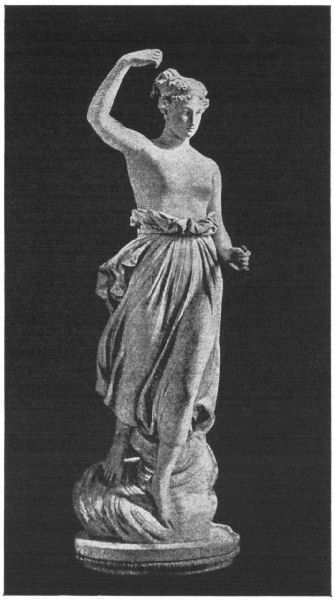
See page 62
ヒッピア(ヒッピア)。ミネルウァの別名なり。
Hebe
ヒッピウス(ヒッピウス)。ネプトゥーヌスの別名なり。
Hyacinthus (Hyacin′thus) was a boy greatly loved by Apollo; but he was accidentally slain by him with a [Pg 69] quoit. Apollo caused to spring from his blood the flower Hyacinth.
ヒッポカンポス(ヒッポカンポス)。ネプトゥーヌスが寵愛せし 馬の名にして、半身は馬、半身は魚なる伝説上の海の獣なり。
Hyades (Hy′ades) were seven daughters of Atlas and Aethra, and they formed a constellation which, when it rises with the sun, threatens rain.
ヒッポクレニデス(ヒッポクレニデス)。ムーサたちの別名にして、 翼ある馬ペガソスの蹴りによりて生じしヒッポクレネ(馬の泉)の泉に由来す。
Hydra (Hy′dra). A monster serpent, which had a hundred heads. It was slain by Hercules. See Hercules.
ヒッポリュテ(ヒッポリュテ)。アマゾン族の女王にして、 マールスの娘なり。その父は彼女に名高き帯を与えしが、 ヘラクレスはこれを手に入れることを求められし( [Pg 68] ヘラクレスを見よ)。彼女はヘラクレスに征服され、 彼によりテセウスに妻として与えられし。
Hygeia (Hyge′ia), the goddess of health, was a daughter of Aesculapius and Epione. She was represented as a young woman giving a serpent drink out of a saucer, the serpent being twined round her arm.
ヒッポリュトス(ヒッポリュトス)。テセウスとヒッポリュテの子なり。 彼は戦車より落ちて命を落とせしが、 ディアナにより、あるいは、ある者たちの言うにはアスクレピオスにより、 再び生を授けられし。
Hylas (Hy′las). A beautiful boy beloved by Hercules. The nymphs were jealous of him, and spirited him away while he was drawing water for Hercules. See Wm. Morris’s tragedy, “The Life and Death of Jason.”
ヒッポナ(ヒッポナ)は、田園の神にして、馬の女神なりき。
Hymen (Hy′men), the Grecian god of marriage, was either the son of Bacchus and Venus, or, as some say, of Apollo and one of the Muses. He was represented as a handsome youth, holding in his hand a burning torch.
歴史、クレイオとサガを見よ。
Hymn, see Paean.
蜜、アリスタイオスとドリュアスを見よ。
[Pg 70] Hyperion (Hype′rion). Son of Coelus and Terra. The model of manly beauty, synonymous with Apollo. The personification of the sun.
希望、パンドラを見よ。
Hypermnestra (Hypermnes′tra). One of the fifty daughters of Danaus, who were collectively called the Danaides. She was the one who refused to kill her husband on the wedding night. See Danaus.
ホーライ(ホーライ)は、ソルとクロニスの娘たちにして、季節の女神たちなりき。
Iapetos (Iap′etos). The father of Atlas. See Japetus.
競馬、ネプトゥーヌスを見よ。
Iblees (Ib′lees). The Arabian Satan.
馬たち、ヒッポナを見よ。
Icarus (Ic′arus), son of Daedalus, who with his father made themselves wings with which to fly from Crete to escape the resentment of Minos. The wings were fixed to the shoulders by wax. Icarus flew too near the sun, and the heat melting the wax, caused the wings to drop off, and he fell into the Aegean or Icarian sea and was drowned.
ホルテンシス(ホルテンシス)は、ウェヌスの名なりき、彼女が庭園の草木や花々を慈しみし故に。
Ichnobate (Ichnoba′te). One of Actaeon’s hounds; the word means tracker.
ホルス(ホルス)。二柱の神々の名なりき。一柱はソル、エジプトの昼の神。もう一柱はオシリスとイシスの息子なり。ハルポクラテスを見よ。
Idaea (Idae′a). A name of Cybele, from Mount Ida, where she was worshiped.
ホスティリナ(ホスティリナ)。田園の神なりき。育つ穀物の女神なり。
Idaean Mother (Idae′an Mother). Cybele was sometimes so called, in Cyprus, in which there is a grove sacred to Venus.
飢え、エリシクトンを見よ。
[Pg 71] Idalia (Ida′lia). A name of Venus, from Mount Idalus, in Cyprus, in which there is a grove sacred to Venus.
狩り、ディアナを見よ。
Imperator (Impera′tor) was a name of Jupiter, given to him at Praeneste.
狩人たち、パンを見よ。
Inachus (I′nachus) was one of the earliest of the demi-gods or heroes, King of Argos.
See page 62
Incendiary, see Erostratus.
Hebe
Incense, see Venus.
See page 62
Incubus (In′cubus). A Roman name of Pan, meaning The Nightmare. See Innus.
Hebe
Indigetes (Indig′etes) were deified mortals, gods of the fourth order. They were peculiar to some district.
頁62を見よ。
Indra (In′dra). The Hindoo Jupiter; his wife was Indrant, who presides over the winds and thunder.
ヘーベー
Infants, see Natio.
ヒュアキントス(ヒュアキントス)は、アポロンに深く愛されし少年なりき。されど、彼は誤ってアポロンに円盤で殺されし。[頁 69]アポロンは彼の血よりヒュアキントスの花を咲かせしなり。
Innus (In′nus). A name of Pan, the same as Incubus.
ヒュアデス(ヒュアデス)は、アトラスとアエトラの七人の娘たちなりき。彼女らは星座を成し、太陽と共に昇りし時、雨を告げしなり。
Ino (In′o), second wife of Athamas, King of Thebes, father of Phryxus and Helle. Ino had two children, who could not ascend the throne while Phryxus and Helle were alive. Ino therefore persecuted them to such a degree that they determined to escape. They did so on a ram, whose hide became the Golden Fleece (see Phryxus and Helle). Ino destroyed herself, and was changed by Neptune into a sea-goddess.
ヒュドラ(ヒュドラ)。百の頭を持つ恐ろしき蛇なりき。ヘラクレスに殺されし。ヘラクレスを見よ。
Inoa (Ino′a) were festivals in memory of Ino.
ヒュゲイア(ヒュゲイア)は、健康の女神にして、アスクレピオスとエピオネの娘なりき。彼女は若き女の姿にて描かれ、皿より蛇に飲み物を与え、その蛇は彼女の腕に巻きつきしなり。
[Pg 72] Instrumental Music, see Euterpe.
ヒュラス(ヒュラス)。ヘラクレスに愛されし美しき少年なりき。ニンフたちは彼を妬み、ヘラクレスのために水を汲みし折、彼を連れ去りし。ウィリアム・モリスの悲劇「イアソンの生と死」を見よ。
Io (I′o) was a daughter of Inachus, and a priestess of Juno at Argos. Jupiter courted her, and was detected by Juno, when the god turned Io into a beautiful heifer. Juno demanded the beast of Jupiter, and set the hundred-eyed Argus to watch her. Jupiter persuaded Mercury to destroy Argus, and Io was set at liberty, and restored to human shape. Juno continued her persecutions, and Io had to wander from place to place till she came to Egypt, where she became wife of King Osiris, and won such good opinions from the Egyptians that after her death she was worshiped as the goddess Isis.
ヒュメーン(ヒュメーン)は、ギリシアの結婚の神にして、バッコスとウェヌスの息子、あるいは、ある者たちの言うには、アポロンとムーサの一柱の息子なりき。彼は手に燃え盛る松明を携えし美しき若者の姿にて描かれし。
Iolaus (Iola′us), son of Iphicles, assisted Hercules in conquering the Hydra, by burning with hot irons the place where the heads were cut off; and for his assistance he was restored to youth by Hebe. Lovers used to go to his monument at Phocis and ratify their vows of fidelity.
賛歌、パイアンを見よ。
Iothun (Io′thun). Celtic mythological monsters, or giants.
[ページ 70]ヒュペリオン(ヒュペーリオン)。コエルスとテラの息子。男らしい美の模範であり、アポロンと同義。太陽の擬人化。
Iphicles (Iph′icles) was twin brother of Hercules, and father of Iolaus.
ヒュペルムネストラ(ヒュペルムネストラ)。ダナオスが持つ五十人の娘の一人にして、総じてダナイデスと呼ばれし者たち。彼女は婚礼の夜に夫を殺すことを拒みし者なり。ダナオスを見よ。
Iphigenia (Iphigeni′a) was a daughter of Agamemnon and Clytemnestra. Agamemnon made a vow to Diana, which involved the sacrifice of Iphigenia, but just at the critical moment she was carried to heaven, and a beautiful goat was found on the altar in her place.
[Pg 73] Iris (I′ris), daughter of Thaumas and Electra, was the attendant of Juno, and one of the messengers of the gods. Her duty was to cut the thread which detained expiring souls. She is the personification of the rainbow.
イアペトス(イアペトス)。アトラスの父。ヤペトスを見よ。
Iron, see Vulcan.
イブリース(イブリース)。アラビアのサタン。
Isis (I′sis), wife of Osiris, and a much worshiped divinity of the Egyptians. See Io.
イカロス(イカロス)、ダイダロスの息子にして、父と共に翼を造り、ミノスの怒りより逃れんとクレタ島より飛び去りし者。翼は蝋にて肩に固定されし。イカロスは太陽にあまりにも近づきすぎ、熱により蝋は溶け落ち、翼は外れ、彼はエーゲ海あるいはイカリア海へと落ちて溺れ死にたり。
Itys (I′tys) was killed by his mother Procne when six years old, and given to his father Tereus, a Thracian of Daulis, as food. The gods were so enraged at this that they turned Itys into a pheasant, Procne into a swallow, and Tereus into a hawk.
イクノバテ(イクノバーテ)。アクタイオンの猟犬の一匹にして、その言葉は追跡者を意味す。
Ixion (Ixi′on), the son of Phlegyas, King of the Lapithae. For attempting to produce thunder, Jupiter cast him into hell, and had him bound to a wheel, surrounded with serpents, which is forever turning over a river of fire.
イダイア(イダイア)。キュベレが持つ名の一つにして、彼女が崇められしイダ山に由来す。
Jani (Ja′ni) was a place in Rome where there were three statues of Janus, and it was a meeting-place for usurers and creditors.
イダイアの母(イダイアン・マザー)。キュベレは時にそのように呼ばれし。キュプロスにはウェヌスに捧げられし聖なる森あり。
Janitor (Ja′nitor). A title of Janus, from the gates before [Pg 74] the doors of private houses being called Januae.
[ページ 71]イダリア(イダリア)。ウェヌスが持つ名の一つにして、キュプロスのイダルス山に由来す。そこにはウェヌスに捧げられし聖なる森あり。
Janus (Ja′nus). A king of Italy, said to have been the son of Coelus, others say of Apollo; he sheltered Saturn when he was driven from heaven by Jupiter. Janus presided over highways, gates, and locks, and is usually represented with two faces, because he was acquainted with the past and the future; or, according to others, because he was taken for the sun, who opens the day at his rising, and shuts it at his setting. A brazen temple was erected to him in Rome, which was always open in time of war, and closed during peace.
インペラトル(インペラトル)はユピテルが持つ名の一つにして、プラエネステにて彼に与えられし。
Japetus (Jap′etus), son of Coelus and Terra, husband of Clymene. He was looked upon by the Greeks as the father of all mankind. See Iapetos.
イナコス(イナコス)は半神あるいは英雄の最も古き者の一人にして、アルゴスの王なり。
Jason (Ja′son), the son of Aeson, king of Iolcos; he was brought up by the centaur Chiron. His uncle Aeeta sent him to fetch the Golden Fleece from Colchis (see Argonauts). He went in the ship Argo with forty-nine companions, the flower of Greek youth. With the help of Juno they got safe to Colchis, but the King Aeetes promised to restore the Golden Fleece only on condition that the Argonauts [Pg 75] performed certain services. Jason was to tame the wild fiery bulls, and to make them plow the field of Mars; to sow in the ground the teeth of a serpent, from which would spring armed men who would fight against him who plowed the field of Mars; to kill the fiery dragon which guarded the tree on which the Golden Fleece was hung. The fate of Jason and the rest of the Argonauts seemed certain; but Medea, the king’s daughter, fell in love with Jason, and with the help of charms which she gave him he overcame all the difficulties which the king had put in his way. He took away the Golden Fleece and Medea also. The king sent his son Absyrtus to overtake the fugitives, but Medea killed him, and strewed his limbs in his father’s path, so that he might be delayed in collecting them, and this enabled Jason and Medea to escape. After a time Jason got tired of Medea, and married Glauce, which cruelty Medea revenged by killing her children before their father’s eyes. Jason was accidentally killed by a beam of the ship Argo falling on him.
放火犯、エロストラトスを見よ。
Jocasta (Jocas′ta) (otherwise Epicasta), wife of Laius, King of Thebes, who in after-life married her own son, Oedipus, not knowing who he was, and, on discovering the fatal mistake, hanged herself.
香、ウェヌスを見よ。
Jove. A very general name of Jupiter.
インキュブス(インキュブス)。パンが持つローマの名にして、悪夢を意味す。インヌスを見よ。
[Pg 76] Judges in Hell, The, were Rhadamanthus for Asiatics; Aeacus for Europeans; Minos was the presiding judge in the infernal regions. See Triptolemus.
インディゲテス(インディゲテス)は神格化されし定命の者たちにして、第四位の神々なり。彼らは特定の地域に固有なりき。
Jugatinus (Jugatin′us) was one of the nuptial deities.
インドラ(インドラ)。ヒンドゥーのユピテルにして、彼の妻はインドラニであり、風と雷を司る。
Juno (Ju′no) was the daughter of Saturn and Ops, alias Cybele. She was married to Jupiter, and became queen of all the gods and goddesses, and mistress of heaven and earth. Juno was the mother of Mars, Vulcan, Hebe, and Lucina. She prompted the gods to conspire against Jupiter, but the attempt was frustrated, and Apollo and Neptune were banished from heaven by Jupiter. Juno is the goddess of marriage, and the protectress of married women; and she had special regard for virtuous women. In the competition for the celebrated Golden Apple, which Juno, Venus, and Minerva each claimed as the fairest among the goddesses, Juno was much displeased when Paris gave the apple to Venus. The goddess is generally represented riding in a chariot drawn by peacocks, with a diadem on her head, and a scepter in her hand.
幼児、ナティオを見よ。
Jupiter (Ju′piter), son of Saturn and Cybele (or Ops), was born on Mount Ida, in Crete, and nourished by the goat Amalthaea. When quite young Jupiter rescued his father from the Titans; and afterward, with the help of Hercules, defeated the giants, the sons of earth, when they made war against heaven. Jupiter was [Pg 77] worshiped with great solemnity under various names by most of the heathen nations. The Africans called him Ammon; the Babylonians, Belus; and the Egyptians, Osiris (see Jove). He is represented as a majestic personage seated on a throne, holding in his hands a scepter and a thunderbolt; at his feet stood a spread eagle.
インヌス(インヌス)。パンが持つ名の一つにして、インキュブスと同じ。
Justice, see Astrea, Nemesis.
イーノー (イーノー) は、テーバイの王アタマスの二番目の妻であり、フリクソスとヘレーの父であった。イーノーには二人の子があったが、フリクソスとヘレーが生きている限り、王位に就くことはできなかった。ゆえにイーノーは彼らをひどく迫害し、彼らは逃亡を決意した。彼らは牡羊に乗って逃げ、その毛皮は金色の羊毛となった(フリクソスとヘレーの項を参照)。イーノーは自ら命を絶ち、ネプトゥーヌスによって海の女神へと変えられた。
Kaloc (Ka′loc). One of the chief of the Mexican gods.
[Pg 72]器楽、エウテルペーの項を参照。
Kama (Kam′a). The Hindoo god of love.
イーオー (イーオー) はイナコスの子にして、アルゴスのユーノーの巫女であった。ユーピテルは彼女に求愛したが、ユーノーに察知され、神はイーオーを美しい牝牛に変えた。ユーノーはユーピテルにその獣を要求し、百眼のアルゴスを置いて彼女を見張らせた。ユーピテルはメルクリウスを説得してアルゴスを滅ぼさせ、イーオーは解放され、人間の姿に戻された。ユーノーは迫害を続け、イーオーはエジプトに至るまで各地をさまよわねばならなかった。そこで彼女はオシーリス王の妻となり、エジプト人から厚い信頼を得たため、死後には女神イーシスとして崇拝された。
Kebla (Keb′la). The point of the compass which worshipers look to during their invocations. Thus the Sol or Sun worshipers turn to the east, where the sun rises, and the Mohammedans turn toward Mecca.
イオラオス (イオラオス) はイーピクレスの子にして、ヘーラクレースがヒュドラーを征服するのを助け、首が切り落とされた場所を熱い鉄で焼いた。その助けにより、彼はヘーベーによって若さを取り戻した。恋人たちはポキスにある彼の記念碑を訪れ、貞節の誓いを交わすのが常であった。
Kederli (Ke′derli), in Mohammedan mythology, is a god corresponding to the English St. George, and is still invoked by the Turks when they go to war.
ヨーザン (ヨーザン)。ケルト神話の怪物、あるいは巨人。
Kiun (Ki′un). The Egyptian Venus.
イーピクレス (イーピクレス) はヘーラクレースの双子の兄弟であり、イオラオスの父であった。
Kneph. An Egyptian god, having a ram’s head and a man’s body.
イーピゲネイア (イーピゲネイア) はアガメムノーンとクリュタイムネーストラーの娘であった。アガメムノーンはディアーナに誓いを立て、それはイーピゲネイアの犠牲を伴うものであったが、まさにその肝心な瞬間に彼女は天へと運ばれ、祭壇には彼女の代わりに美しい山羊が見つかった。
Krishna (Krish′na). An Indian god, the revenger of wrongs; also called the Indian Apollo.
[ページ 73]イーリス(アイリス)は、タウマースとエレクトラの娘にして、ユーノーの侍女、そして神々の使者の一人なり。その務めは、今まさに息絶えんとする魂を繋ぎ止める糸を断ち切ることにありき。彼女は虹の擬人化なり。
Krodo (Kro′do). The Saxon Saturn.
鉄、ウルカヌスを見よ。
[Pg 78] Kumara (Ku′ma′ra). The war-god of the Hindoos.
イシス(アイシス)は、オシリスの妻にして、エジプト人によって篤く崇められし神なり。イーオーを見よ。
Kuvera (Ku′vera). The Hindoo god of riches.
イテュス(アイティス)は、六歳の時、母プロクネに殺され、ダウリスのトラキア人たる父テレウスに食として供されし。神々はこの行いに激怒し、イテュスを雉に、プロクネを燕に、そしてテレウスを鷹に変え給いし。
イクシオン(イクシオン)は、ラピタイ族の王フレギュアスの息子なり。雷を創り出さんと企てしが故に、ユピテルは彼を冥府へと投げ入れ、蛇に囲まれし車輪に縛り付け給いし。その車輪は炎の河の上を永遠に回り続ける定めとなれり。
Labyrinth, see Theseus.
ヤーニトル(ヤーニトル)。ヤーヌスの称号の一つなり。私邸の門がヤーヌアエと呼ばれしに由来す。[ページ 74]
Lachesis (Lach′esis). One of the three goddesses of Fate, the Parcae. She spun the thread of life.
ヤーヌス(ヤーヌス)。イタリアの王にして、カイルスの息子とも、あるいはアポロンの息子とも言われし。ユピテルに天界より追われしサトゥルヌスを匿いし。ヤーヌスは街道、門、そして錠を司り、過去と未来に通じしが故に、通常は二つの顔を持つ姿にて表されし。あるいは、他の説によれば、彼は太陽と見なされしが故に、その昇る時に一日を開き、その沈む時に一日を閉じるゆえに、二つの顔を持つとされし。ローマには彼に捧げられし青銅の神殿が建てられ、戦時には常に開かれ、平和時には閉じられし。
Lacinia (Lacin′ia). A name of Juno.
ヤペトゥス(ヤペトゥス)は、カイルスとテラの息子にして、クリメネの夫なり。彼はギリシア人によって全人類の父と見なされし。イアペトスを見よ。
Lactura. One of the goddesses of growing corn.
イアソン(イアソン)は、イオルコス王アイソンの息子なり。彼はケンタウロス族のケイローンに育てられし。彼の叔父アイエテスは、彼をコルキスへ遣わし、金の羊毛を獲らせしめた(アルゴナウタイを参照せよ)。彼はアルゴ号に乗り、ギリシアの若者たちの精鋭たる四十九人の仲間と共に旅立ちし。ユーノーの助けを得て、彼らは無事にコルキスへと辿り着いたが、アイエテス王は、アルゴナウタイが[Pg 75]ある種の奉仕を為すという条件のもとでのみ、金の羊毛を返還すると約束した。イアソンは荒々しい火を吐く雄牛を飼いならし、それらにマールスの畑を耕させ、大地に蛇の歯を蒔くこととされた。そこから武装した男たちが湧き出し、マールスの畑を耕した者と戦うであろう。また、金の羊毛が懸けられた木を守る火を吐く竜を殺すことも課せられた。イアソンと他のアルゴナウタイの運命は定まったかに見えたが、王の娘メデイアはイアソンに恋い焦がれ、彼女が彼に与えし呪文の助けを得て、彼は王が彼の行く手に置いたあらゆる困難を克服した。彼は金の羊毛とメデイアをも連れ去った。王は息子アブシュルトスを遣わし、逃亡者たちを追わせたが、メデイアは彼を殺し、その手足を父の道にばらまいた。これにより、父がそれらを集めるのに手間取るであろうと、そしてこれにより、イアソンとメデイアは逃れることができた。時を経て、イアソンはメデイアに飽き、グラウケーと結婚した。この残酷さにメデイアは、父の目の前で我が子らを殺すことで復讐した。イアソンは、アルゴ号の船梁が彼の上に落ちてきて、不慮の死を遂げた。
Ladon (La′don). The dragon which guarded the apples in the garden of the Hesperides. Also the name of one of Actaeon’s hounds. Also the river in Arcadia to which Syrinx fled when pursued by Pan, where she was changed into a reed, and where Pan made his first pipe.
イオカステー(イオカステー)(別名エピカステー)は、テーバイ王ライオスの妻なり。彼女は後に、己が息子オイディプスと、彼が誰であるかを知らぬまま結婚し、その致命的な過ちを知るや、自ら首を吊った。
Laelaps (Lae′laps). One of Diana’s hunting-dogs, which, while pursuing a wild boar, was petrified. Also the name of one of Actaeon’s hounds.
ユーピテル。ユーピテルの非常に一般的な別名。
Laksmi (Laks′mi) Hindoo goddess of wealth and pleasure. One of the husbands of Vishnu.
[Pg 76] 冥界の審判者たちは、アジア人にはラダマンテュス、ヨーロッパ人にはアイアコスであり、ミーノースは冥界の主宰審判者であった。トレプトレモスを参照せよ。
Lamentation, see Cocytus.
ユガティヌス(ユガティヌス)は、婚姻の神々の一柱であった。
Lamia (Lam′ia). An evil deity among the Greeks and Romans, and the great dread of their children, whom she had the credit of constantly enticing away and destroying.
ユーノー(ユーノー)は、サトゥルヌスとオプス、またの名をキュベレーの娘であった。彼女はユーピテルと結婚し、全ての神々と女神たちの女王となり、天と地の主となった。ユーノーはマールス、ウルカヌス、ヘーベー、そしてルキナの母であった。彼女は神々を唆し、ユーピテルに反逆させようとしたが、その企ては阻止され、アポローンとネプトゥーヌスはユーピテルによって天界から追放された。ユーノーは婚姻の女神であり、既婚女性の守護者であり、貞淑な女性には特別な配慮を払った。名高き黄金の林檎を巡る争いにおいて、ユーノー、ウェヌス、ミネルウァがそれぞれ女神の中で最も美しいと主張したが、パリスが林檎をウェヌスに与えた時、ユーノーは大いに不満を抱いた。この女神は通常、孔雀に引かせた戦車に乗り、頭には宝冠を戴き、手には笏を持つ姿で描かれる。
Lamp, see Lares and Penates.
ユーピテル(ユーピテル)は、サトゥルヌスとキュベレー(またはオプス)の息子であり、クレタ島のイダ山で生まれ、山羊のアマルテイアによって養育された。ユーピテルはまだ幼い頃、父をティーターン族から救い出し、その後、ヘーラクレースの助けを得て、天界に戦いを挑んだ大地の息子たちである巨人族を打ち破った。ユーピテルは[頁 77]多くの異教の民によって、様々な名のもとに厳かに崇拝された。アフリカ人は彼をアンモンと呼び、バビロニア人はベルスと呼び、エジプト人はオシーリスと呼んだ(ユーウェを参照)。彼は玉座に座し、手には笏と雷霆を携え、足元には翼を広げた鷲が立つ、威厳ある人物として描かれる。
[Pg 79] Lampos (Lam′pos). One of Aurora’s chariot horses, the other being Phaeton.
正義、アストライア、ネメシスを参照。
Laocoon (Laoc′oon). One of the priests of Apollo, who was, with his two sons, strangled to death by serpents, because he opposed the admission of the fatal wooden horse to Troy.
Laomedon (Laom′edon), son of Ilus, a Trojan king. He was famous for having, with the assistance of Apollo and Neptune, built the walls of Troy.
カロック(カロック)。メキシコの主要な神々の一柱。
Lapis (Lap′is). The oath stone. The Romans used to swear by Jupiter Lapis.
カーマ(カーマ)。ヒンドゥーの愛の神。
Lapithus (Lap′ithus), son of Apollo. His numerous children were called Lapithae, and they are notorious for their fight with the centaurs at the nuptial feast of Perithous and Hippodamia.
ケブラ (ケブラ)。崇拝者たちが祈りの際に顔を向ける方位なり。故に、太陽崇拝者たちは日の出ずる東方へ向き、イスラム教徒たちはメッカの方角へ向かう。
Lares and Penates (La′res and Pena′tes) were sons of Mercury and Lara, or, as other mythologists say, of Jupiter and Lamida. They belonged to the lower order of Roman gods, and presided over homes and families. Their statues were generally fixed within the doors of houses, or near the hearths. Lamps were sacred to them, as symbols of vigilance, and the dog was their sacrifice.
ケデルリ (ケデルリ) は、イスラム神話における神にして、英国の聖ゲオルギウスに相当する者なり。今なおトルコ人たちが戦に赴く際に祈りを捧げる神である。
Lark, see Scylla and Nysus.
キウン (キウン)。エジプトのヴィーナス。
Latona (Lato′na), daughter of Coelus and Phoebe, mother of Apollo and Diana. Being admired so much by Jupiter, Juno was jealous, and Latona was the object of the goddess’ constant persecution.
クネフ。 羊の頭と人の体を持つエジプトの神。
Laughter, see Momus and Venus.
クリシュナ (クリシュナ)。インドの神にして、不正を晴らす者。また、インドのアポロンとも称される。
[Pg 80] Laurel (Lau′rel), see Daphne.
クロド (クロド)。サクソン人のサトゥルヌス。
Laverna (Laver′na). The Roman patroness of thieves.
[ページ 78]クマーラ (クマーラ)。ヒンドゥーの軍神。
Law, see Menu.
クベーラ (クベーラ)。ヒンドゥーの富の神。
Laws, see Themis.
ラボール (ラボール)、アトラス、ヘラクレスを参照せよ。
Leander (Lean′der), see Hero.
ラビリンス、テセウスを参照せよ。
Leather Bottle, see Ascolia.
ラケシス (ラケシス)。運命の三女神、パルカエの一柱。彼女は生命の糸を紡ぎし者なり。
Leda (Le′da) was the mother of Castor and Pollux, their father being Jupiter, in the shape of a swan. After her death she received the name of Nemesis.
ラキニア (ラキニア)。ユノの別名。
Lemnius (Lem′nius). One of the names of Vulcan.
ラクトゥーラ。 成長する穀物の女神の一柱。
Lemures (Lem′ures). The ghosts of departed souls. Milton, in his “Ode to the Nativity,” says—
ラドン (ラドン)。ヘスペリデスの園にて林檎を守りし竜。また、アクタイオンの猟犬の一頭の名。また、パンに追われしシュリンクスが逃げ込み、葦に変じ、パンが初めて笛を作りしアルカディアの川の名。
They are sometimes referred to as the Manes of the dead.
ラエラプス (ラエラプス)。ディアナの猟犬の一頭にして、猪を追ううちに石と化したる者。また、アクタイオンの猟犬の一頭の名。
Lenaeus (Lenae′us). One of the names of Bacchus.
ラクシュミー (ラクシュミー)。ヒンドゥーの富と快楽の女神。ヴィシュヌの妻の一人。
Lerna (Ler′na). The lake or swamp near Argos where Hercules conquered the Lernaean Hydra.
嘆き、コキュートスを参照せよ。
Lethe (Le′the). One of the rivers of the infernal regions, of which the souls of the departed are obliged to drink to produce oblivion or forgetfulness of everything they did or knew while alive on the earth.
ラミア (ラミア)。ギリシャ人およびローマ人の間に伝わる邪悪なる神。そして、常に子供たちを誘い出し、滅ぼすと信じられ、彼らの子らが大いに恐れし存在。
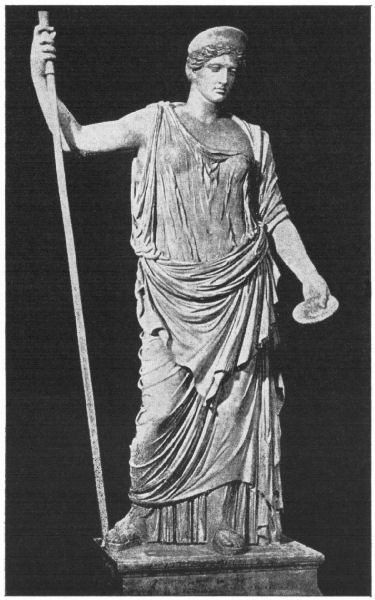
See page 64
ランプ、ラレスとペナーテスを参照せよ。
Hera
[Pg 79]ランポス(ランポス)。アウロラの戦車の馬の一頭にして、もう一頭はパエトンなり。
[Pg 81] Leucothea (Leucoth′ea). The name of Ino after she was transformed into a sea nymph.
ラオコーン(ラオコーン)。アポロンの神官の一人にして、トロイアに破滅をもたらす木馬を迎え入れることに反対せしが故に、二人の息子と共に蛇に絞め殺されし者なり。
Levana (Leva′na). The deity who presided over new-born infants.
ラオメドン(ラオメドン)、イロスの子、トロイアの王なり。アポロンとネプトゥヌスの助力を得て、トロイアの城壁を築きしことで名高し。
Level, The, see Daedalus.
ラピス(ラピス)。誓いの石。ローマ人らはユピテル・ラピスに誓いしものなり。
Liakura (Liak′ura). Mount Parnassus.
ラピトス(ラピトス)、アポロンの子なり。その多くの子らはラピタイと呼ばれ、ペリトオスとヒッポダミアの婚礼の宴にてケンタウロス族と戦いしことで悪名高し。
Liberal Arts, see Minerva.
ラレスとペナテス(ラレスとペナテス)はメルクリウスとララの息子たち、あるいは他の神話学者らが言うには、ユピテルとラミダの息子たちなり。彼らはローマの神々の下位の階級に属し、家々と家族を司りし。その像は概して家々の戸の内側、あるいは炉辺に据えられし。灯火は警戒の象徴として彼らに聖なるものとされ、犬は彼らの供物なりき。
Liber Pater (Li′ber Pa′ter). A name of Bacchus.
ヒバリ、スキューラとニュソスを見よ。
Liberty, see Bacchus.
ラトナ(ラトナ)、コエルスとポイベの娘にして、アポロンとディアナの母なり。ユピテルに深く愛されしが故に、ユノは嫉妬し、ラトナは女神の絶え間なき迫害の的となりし。
Libissa (Lib′issa). Queen of fays and fairies.
笑い、モムスとウェヌスを見よ。
Libitina (Libiti′na). A Roman goddess, the chief of the funeral deities.
[Pg 80]月桂樹(ゲッケイジュ)、ダフネを見よ。
Licentiousness, see Belphegor.
ラウェルナ(ラウェルナ)。ローマの盗賊の守護女神なり。
Ligea (Lige′a). A Greek syren or sea-nymph, one of the Nereides.
法、メヌーを見よ。
Lightning, see Agni.
立法者、ノミウスを見よ。
Lilith (Li′lith). A Jewish myth representing a finely dressed woman who is a great enemy to new-born children. She was said to have been Adam’s first wife, but, refusing to submit to him, was turned from Paradise and made a specter.
法、テミスを見よ。
Lina (Li′na). The goddess of the art of weaving.
レアンドロス(レアンドロス)、ヘロを見よ。
Lindor (Lin′dor). A lover in the shape of a shepherd, like Corydon; a love-sick swain.
革袋、アスコリアを見よ。
Lion, see Atalanta, Chimaera.
レダ(レダ)はカストルとポルックスの母にして、その父は白鳥の姿をとりしユピテルなりき。死後、彼女はネメシスという名を受けし。
Liver, see Tityus and Prometheus.
レムニウス(レムニウス)。ウルカヌスの名の一つなり。
Locks, see Janus.
レムレス(レムレス)。亡くなった魂の幽霊。ミルトンは「降誕の頌歌」にてこう述べている—
[Pg 82] Lofen (Lo′fen). The Scandinavian god who guards friendship.
彼らは時に死者のマネスとして言及される。
Lofua (Lof′ua). The Scandinavian goddess who reconciles lovers.
レナイオス(レナイオス)。バッカスの一つの名。
Loke. The Scandinavian Satan, the god of strife, the spirit of evil. Written also Lok, and Loki.
レルナ(レルナ)。アルゴス近郊の湖、あるいは沼地にして、ヘラクレスがレルネアのヒュドラを征服せし場所なり。
Lotis (Lo′tis). A daughter of Neptune, who fled from Priapus, and only escaped from him by being transformed into a lotus-plant.
レテ(レテ)。冥界の河の一つにして、亡者たちはこれを飲まねばならぬ。さすれば、生前地上にて為し、知りしことの全てを忘却せしめられるなり。
Lotus-Plant (Lo′tus-Plant), see Lotis.
See page 64
Love, see Cupid, Eros, Venus.
Hera
Lucian (Lu′cian). The impersonation of folly, changed into an ass.
See page 64
Lucifer (Lu′cifer). The morning star.
Hera
Lucina (Luci′na). The goddess who presides at the birth of children. She was a daughter of Jupiter and Juno, or, according to others, of Latona.
ページ64を参照せよ
Lud. In ancient British mythology the king of the Britons. He is said to have given his name to London.
ヘラ
Luna (Lu′na). The name of Diana as a celestial divinity. See Diana and Hecate. Also, the Italian goddess of the moon.
[Pg 81] レウコテア(レウコテア)。イノが海のニンフへと変身せし後の名。
Lupercus (Lu′percus), or Pan. The Roman god of fertility; his festival day was 15th February, and the festivals were called Lupercalia.
レヴァナ(レヴァナ)。新生児を司りし神。
[Pg 83] Lycaonian Food (Lycaon′ian). Execrable viands, such as were supplied to Jupiter by Lycaon. To test the divine knowledge of the god he served up human flesh, which Jove discovered, and punished Lycaon by turning him into a wolf.
水平器、ダイダロスを参照せよ。
Lycian Clowns were turned into frogs by Latona or Ceres.
リアクラ(リアクラ)。パルナッソス山。
Lymniades (Lymni′ades). Nymphs who resided in marshes.
自由七科、ミネルヴァを参照せよ。
Lynceus (Lyn′ceus). One of the Argonauts. The personification of sharpsightedness.
リーベル・パテル(リーベル・パテル)。バッカスの一つの名。
Lyre. This musical instrument is constantly associated with the doings of the ancient deities. Amphion built the walls of Thebes by the music of his lyre. Arion charmed the dolphins in a similar way. Hercules broke the head of Linus, his music-master, with the lyre he was learning to use; and Orpheus charmed the most savage beasts, and even the Harpies and gods of the infernal regions, with the enchanting music of the stringed lyre. See Mercury.
自由、バッカスを参照せよ。
Magicians, see Telchines.
リビティナ(リビティナ)。ローマの女神にして、葬儀の神々を統べる者。
Magna Dea (Mag′na De′a), a name of Ceres.
放蕩、ベルフェゴールを参照せよ。
Magpies, see Pierides.
リゲア(リゲア)。ギリシャのセイレーン、あるいは海のニンフにして、ネレイデスの一柱。
Mahasoor (Ma′ha′soor). The Hindoo god of evil.
稲妻、アグニを参照せよ。
Maia (Ma′ia). The mother of the Grecian Mercury.
リリス(リリス)。新生児にとって大いなる敵である、美しく装いし女を表すユダヤの神話。彼女はアダムの最初の妻であったと伝えられるが、彼に従うことを拒みしゆえ、楽園より追放され、幽霊と化せり。
Mammon (Mam′mon). The money god.
リナ(リナ)。織物の技芸を司る女神。
[Pg 84] Manes (Ma′nes). The souls of the departed. The Roman god of funerals and tombs.
リンドール(リンドール)。コリドンが如き羊飼いの姿をとりし恋人。恋に病める若者。
Manuring Land, see Picumnus.
獅子、アタランタ、キマイラを参照せよ。
March 24, Bellona’s Day. See Bellona.
肝臓、ティテュオスとプロメテウスを参照せよ。
Marina (Mari′na). A name of Venus, meaning sea-foam, from her having been formed from the froth of the sea. See Aphrodite.
錠、ヤヌスを参照せよ。
Marriage, see Cama, Hymen, Juno, Jugatinus.
[Pg 82] ローフェン(ローフェン)。友情を守護するスカンジナビアの神。
Mars, the god of war, was the son of Jupiter and Juno. Venus was his favorite goddess, and among their children were Cupid, Anteros, and Harmonia. In the Trojan War Mars took the part of the Trojans, but was defeated by Diomedes. The first month of the old Roman year (our March) was sacred to Mars.
ロフア(ロフア)。恋人たちを和解させるスカンジナビアの女神。
Marshes, see Lymniades.
ローケ。スカンジナビアのサタン、争いの神、悪の精霊。ロク、そしてロキとも記される。
Marsyas (Mar′syas). The name of the piper who challenged Apollo to a musical contest, and, being defeated, was flayed to death by the god. He was the supposed inventor of the flute.
ロティス(ローティス)。ネプチューンの娘にして、プリアーポスより逃れ、蓮の植物に変身することで辛うじて彼より逃れたる者。
Marut (Ma′rut). The Hindoo god of tempestuous winds.
蓮の植物(ロータス・プラント)、ロティスを見よ。
Matura (Matu′ra). One of the rural deities who protected the growing corn at time of ripening.
愛、キューピッド、エロス、ヴィーナスを見よ。
Maximus (Max′imus). One of the appellations of Jupiter, being the greatest of the gods.
ルキアヌス(ルーシアン)。愚かさの擬人化にして、驢馬に変えられたる者。
Measures and Weights, see Mercury.
ルシファー(ルーシファー)。暁の明星なり。
[Pg 85] Medea (Mede′a). Wife of Jason, chief of the Argonauts. To punish her husband for infidelity, Medea killed two of her children in their father’s presence. She was a great sorceress. See Jason.
ルキナ(ルーシーナ)。子供の誕生を司る女神なり。彼女はユーピテルとユーノーの娘、あるいは他の説によればラートーナーの娘であった。
Medicine, see Apollo.
ルッド。古代ブリテン神話におけるブリトン人の王。彼はロンドンにその名を与えしと伝えられる。
Meditation, see Harpocrates.
ルーナ(ルーナ)。天上の神性としてのディアーナの名。ディアーナとヘカテーを見よ。また、イタリアの月の女神なり。
Medusa (Medu′sa). One of the Gorgons. Minerva changed her beautiful hair into serpents. She was conquered by Perseus, who cut off her head, and placed it on Minerva’s shield. Every one who looked at the head was turned into stone.
ルペルクス(ルーペルクス)、あるいはパン。ローマの豊穣の神なり。その祭日は二月十五日であり、その祭りはルペルカリアと呼ばれた。
Ulysses, in the Odyssey, relates that he wished to see more of the inhabitants of Hades, but was afraid, as he says—
[Pg 83]リュカオーンの食膳(リュカオーニアン)。忌まわしき料理にして、リュカオーンがユーピテルに供したるがごとき。神の神聖なる知識を試さんとて、彼は人肉を供し、これをユーピテルは看破し、リュカオーンを狼に変えて罰した。
[Pg 86] Megaera (Meg′aera). One of the three Furies—Greek goddesses of vengeance.
リュキアの道化者たちは、ラートーナーあるいはケレースによって蛙に変えられた。
Megale (Meg′ale). A Greek name of Juno, meaning great.
リュムニアデス(リュムニーアデス)。沼地に住まうニュンペーたちなり。
Melicerta (Melicer′ta), see Palaemon.
リュンケウス(リュンケウス)。アルゴナウタイの一人。鋭い視力の擬人化なり。
Mellona (Mello′na). One of the rural divinities, the goddess of bees.
リュラー。この楽器は、常に古代の神々の行いと結びつけられる。アンフィオーンは、そのリュラーの調べによりテーバイの城壁を築きし。アリオーンもまた、同様にしてイルカを魅了せし。ヘーラクレースは、習いしリュラーにて、その音楽教師リノスの頭を打ち砕きし。そしてオルペウスは、弦のリュラーの魅惑的な調べにより、最も獰猛なる獣たち、さらにはハルピュイアや冥界の神々をも魅了せし。メルクリウスを見よ。
Melpomene (Melpom′ene). One of the nine Muses, the goddess of tragedy.
Memnon (Mem′non), son of Tithonus and of Eos, who after the death of Hector brought the Aethiopians to the assistance of Priam in the war against Troy.
魔術師、テルキネスを参照。
Memory, see Mnemosyne.
マグナ・デア (マグナ・デア)、ケレスの別名。
Mendes (Men′des). An Egyptian god like Pan. He was worshiped in the form of a goat.
カササギ、ピエリデスを参照。
Menelaus (Menela′us). A Spartan king, brother of Agamemnon. The elopement of his wife Helen with Paris was the cause of the siege of Troy. See Helena.
マハスール (マハスール)。ヒンドゥー教の悪の神。
Menu (Me′nu), or Manu (Ma′nu). The Hindoo law-giver. See Satyavrata.
マイア (マイア)。ギリシアのメルクリウスの母。
Merchants, see Mercury.
マモン (マモン)。金銭の神。
Mercury (Mer′cury), the son of Jupiter and Maia, was the messenger of the gods, and the conductor of the souls of the dead to Hades. He was the supposed inventor of weights and measures, and presided over orators and merchants. Mercury was accounted a most cunning thief, for he stole the bow and quiver of Apollo, the [Pg 87] girdle of Venus, the trident of Neptune, the tools of Vulcan, and the sword of Mars, and he was therefore called the god of thieves. He is the supposed inventor of the lyre, which he exchanged with Apollo for the Caduceus. There was also an Egyptian Mercury under the name of Thoth, or Thaut, who is credited with having taught the Egyptians geometry and hieroglyphics. Hermes is the Greek name of Mercury. In art he is usually represented as having on a winged cap, and with wings on his heels.
[Pg 84] マネス (マネス)。故人の魂。ローマの葬儀と墓の神。
Meru (Me′ru). The abode of the Hindoo god Vishnu. It is at the top of a mountain 8,000 leagues high. The Olympus of the East Indians.
土地の肥沃化、ピクムヌスを参照。
Midas (Mi′das). A king of Phrygia, who begged of Bacchus the special gift that everything that he touched might be turned into gold. The request was granted, and as soon as he touched his food it also was turned to gold, and for fear of being starved he was compelled to ask the god to withdraw the power he had bestowed upon him. He was told to bathe in the river Pactolus. He did so, and the sands [Pg 88] which he stood on were golden forever after. It was this same king who, being appointed to be judge in a musical contest between Apollo and Pan, gave the satyr the palm; whereupon Apollo, to show his contempt, bestowed on him a pair of asses’ ears. This gave rise to the term “Midas-eared” as a synonym for ill-judged, or indiscriminate.
3月24日、ベローナの日。ベローナを参照。
Milo (Mi′lo), a celebrated Croton athlete, who is said to have felled an ox with his fist, and to have eaten the beast in one day. His statue is often seen with one hand in the rift of a tree trunk, out of which he is vainly trying to withdraw it. The fable is, that when he got to be an old man he attempted to split an oak tree, but having lost his youthful vigor, the tree closed on his hand and he was held a prisoner till the wolves came and devoured him.
マリーナ (マリーナ)。ウェヌスの別名にして、海の泡を意味し、彼女が海の泡より生まれし故に。アフロディーテを参照。
Mimallones (Mimallo′nes). The “wild women” who accompanied Bacchus, so called because they mimicked his actions, putting horns on their heads when they took part in his orgies.
結婚、カーマ、ヒュメーン、ユーノー、ユガティヌスを参照。
Mimir (Mi′mir). In Scandinavian mythology the god of wisdom.
マルス、戦争の神にして、ユピテルとユーノーの子なり。ウェヌスは彼の寵愛する女神にして、その子らの中にはクピド、アンテロス、ハルモニアありき。トロイア戦争にて、マルスはトロイア勢に味方せしが、ディオメデスに敗れし。古代ローマ暦の最初の月(我らの3月)はマルスに捧げられし。
Mind, see Erinnys.
沼地、リュムニアデスを参照。
Minerva (Miner′va), the goddess of wisdom, war, and the liberal arts, is said to have sprung from the [Pg 89] head of Jupiter fully armed for battle. She was a great benefactress of mankind, and patroness of the fine arts. She was the tutelar deity of the city of Athens. She is also known by the names of Pallas, Parthenos, Tritonia, and Glaukopis. She was very generally worshiped by the ancients, and her temple at Athens, the Parthenon, still remains. She is represented in statues and pictures as wearing a golden helmet encircled with an olive branch, and a breastplate. In her right hand she carries a lance, and by her side is the famous aegis or shield, covered with the skin of Amalthaea, the goat which nourished Jupiter; and for the boss of the shield is the head of Medusa. An owl, the emblem of meditation, is on the left; and a cock, the emblem of courage, on the right. The Elgin Marbles in the British Museum, London, were brought from the Parthenon, her temple at Athens.
マルシュアス (マルシュアス)。アポロンに音楽の技を挑みし笛吹きにして、敗れて神により皮を剥がれ死に至りし。彼は笛の発明者とされし。
Minos (Mi′nos). The supreme of the three judges of hell, before whom the spirits of the departed appeared and heard their doom.
マルト (マルト)。ヒンドゥー教の嵐の風の神。
Minotaur (Min′otaur). The monster, half man, half bull, which Theseus slew.
マトゥーラ (マトゥーラ)。穀物が熟する頃に成長する穀物を守りし田園の神々の一柱。
Mirth, see Momus.
マクシムス (マクシムス)。ユピテルの別称の一にして、神々の中で最も偉大なる故に。
Misery, see Genii.
度量衡、メルクリウスを参照。
Mithras (Mith′ras). A Persian divinity, the ruler of the universe, corresponding with the Roman Sol.
[Pg 85] メデイア (メデイア)。イアソンの妻にして、アルゴナウタイの首領。夫の不貞を罰するため、メデイアは父の目の前で二人の子を殺めし。彼女は偉大なる魔女なりき。イアソンを参照。
[Pg 90] Mnemosyne (Mnemos′yne). Mother of the Muses and goddess of memory. Jupiter courted the goddess in the guise of a shepherd.
医術、アポロンを参照。
Moakibat (Moak′ibat). The recording angel of the Mohammedans.
瞑想、ハルポクラテスを参照。
Moloch (Mo′loch). A god of the Phoenicians to whom human victims, principally children, were sacrificed. Moloch is figurative of the influence which impels us to sacrifice that which we ought to cherish most dearly.
メドゥーサ(メドゥーサ)。ゴルゴンの一柱。ミネルヴァは彼女の美しい髪を蛇に変えたり。彼女はペルセウスに討たれ、その首を斬り落とされ、ミネルヴァの盾に据えられたり。その首を見た者は皆、石と化したり。
Momus (Mo′mus). The god of mockery and blame. The god who blamed Jove for not having made a window in man’s breast, so that his thoughts could be seen. His bitter jests occasioned his being driven from heaven in disgrace. He is represented as holding an image of Folly in one hand, and raising a mask from his face with the other. He is also described as the god of mirth or laughter.
オデュッセイアにて、ユリシーズは冥府の住人をもっと見たいと願えども、恐れを抱き、かく語りき—
Moneta (Mone′ta). A name given to Juno by those writers who considered her the goddess of money.
[頁 86] メガイラ(メガイラ)。三柱の復讐の女神、ギリシャの復讐の女神の一柱なり。
Money, see Moneta.
メガーレ(メガーレ)。ユノのギリシャ名にして、「偉大なる」を意味す。
Money-God, see Mammon.
メリケルタ(メリケルタ)、パラエモンを見よ。
Moon. The moon was, by the ancients, called Hecate before and after setting; Astarte [Pg 91] when in crescent form; Diana when in full. See Luna.
メローナ(メローナ)。田園の神々の一柱にして、蜜蜂の女神なり。
Morpheus (Mor′pheus). The Greek god of sleep and dreams, the son and minister of Somnus.
メルポメネ(メルポメネ)。九柱のムーサの一柱にして、悲劇の女神なり。
Mors. Death, a daughter of Nox (Night).
メムノン(メムノン)。ティトノスとエオスの息子にして、ヘクトルの死後、トロイアとの戦いにおいて、プリアモスの援軍としてエチオピア人を率いたり。
Mountain, see Atlas, Nymph.
記憶、ムネモシュネを見よ。
Mulciber (Mul′ciber). A name of Vulcan, sometimes spelled Mulcifer, the smelter of metals. See Vulcan.
メンデス(メンデス)。パンに似たるエジプトの神。彼は山羊の姿にて崇められし。
Munin (Mun′in). The Scandinavian god of memory, represented by the raven that was perched on Odin’s shoulder.
メネラオス(メネラオス)。スパルタの王にして、アガメムノンの兄弟なり。彼の妻ヘレネがパリスと駆け落ちせしこと、トロイア攻囲の原因となりき。ヘレナを見よ。
Muscarius (Musca′rius). A name given to Jupiter because he kept off the flies from the sacrifices.
メヌ(メヌ)、またはマヌ(マヌ)。ヒンドゥーの立法者なり。サティヤヴラタを見よ。
Muses, The (Mu′ses), were nine daughters of Jupiter and Mnemosyne. They presided over the arts and sciences, music and poetry. Their names were, Calliope, Clio, Erato, Thalia, Melpomene, Terpsichore, Euterpe, Polyhymnia, and Urania. They principally resided in Mount Parnassus, at Helicon.
商人、メルクリウスを見よ。
[Pg 92] Music, see Apollo, Muses.
メルクリウス(メルクリウス)は、ユピテルとマイアの子にして、神々の使者であり、死者の魂をハーデスへと導く者であった。彼は重量と度量の発明者とされ、弁論家と商人を司りし者なり。メルクリウスは最も狡猾なる盗人として知られ、アポロンの弓と矢筒、[頁 87]ウェヌスの帯、ネプトゥーヌスの三叉槍、ウルカヌスの道具、そしてマールスの剣を盗みし故、盗賊の神と呼ばれし。彼はリラの考案者とされ、それをアポロンとカドゥケウスと交換せり。また、トト、あるいはタウトという名のエジプトのメルクリウスもおり、エジプト人に幾何学とヒエログリフを教えしと伝えらる。ヘルメスはメルクリウスのギリシア名なり。美術においては、通常、翼ある帽子をかぶり、かかとには翼を持つ姿で描かれし。
Mythras (My′thras). The Egyptian name of Apollo.
メルー(メルー)。ヒンドゥーの神ヴィシュヌの住処なり。高さ8,000リーグの山の頂にあり。東インド人のオリンポスなり。
Naiads, The (Nai′ads), were beautiful nymphs of human form who presided over springs, fountains, and wells. They resided in the meadows by the sides of rivers. Virgil mentions Aegle as being the fairest of the Naiades.
ミダス(ミダス)。フリュギアの王にして、バッカスに、触れるもの全てが黄金に変わるという特別な賜物を懇願せり。その願いは聞き届けられ、彼が食物に触れるや否や、それもまた黄金と化し、飢え死にせぬかと恐れ、神に授けられし力を撤回するよう懇願せざるを得ざりき。彼はパクトロス川にて身を清めるよう告げられし。その通りにせしところ、彼が立ちし砂は[頁 88]その後永遠に黄金となりし。この同じ王は、アポロンとパンとの音楽競技において審判に任じられし際、サテュロスに勝利を与えし。するとアポロンは、その軽蔑を示すべく、彼にロバの耳一対を授けし。これにより、「ミダスの耳を持つ」という言葉が、判断を誤った、あるいは無差別な、という意味の同義語として生じたり。
Nandi (Nan′di). The Hindoo goddess of joy.
ミロ(ミーロ)、クロトンの名高き競技者にして、拳にて雄牛を打ち倒し、その獣を一日で食らい尽くしたと伝えらるる者なり。彼の像はしばしば、木の幹の裂け目に片手を差し入れ、そこから徒労にも引き抜かんと努める姿にて見受けらる。その寓話によれば、彼が老境に入りし時、樫の木を裂かんと試みしが、若き日の精力を失いし故、木は彼の手に閉じかかり、彼は囚われの身となりて、狼ども来たりて彼を食らい尽くすまで、そこにとどまりしという。
Narrae (Nar′rae). The name of the infernal regions amongst the Hindoos.
ミマロネス(ミマローネス)。バッカスに付き従いし「荒ぶる女たち」にして、彼の行いを模倣せし故に斯く呼ばれし。彼の狂宴に参加せし時、頭に角を戴きしという。
Narayan (Na′ra′yan). The mover of the waters. The Hindoo god of tides.
ミーミル(ミーミル)。スカンディナヴィア神話における知恵の神なり。
Narcissus (Narcis′sus), son of Cephisus and the Naiad Liriope, was a beautiful youth, who was so pleased with the reflection of himself which he saw in the placid water of a fountain that he could not help loving it, imagining that it must be some beautiful nymph. His fruitless endeavors to possess himself of the supposed nymph drove him to despair, and he killed himself. There sprang from his blood a flower, which was named after him, Narcissus.
マインド、エリンニースを見よ。
Nastrond (Nas′trond). The Scandinavian place of eternal punishment, corresponding with Hades.
ミネルヴァ(ミネルヴァ)、知恵、戦、そして自由七科の女神にして、ジュピターの頭より、戦の備えを完璧に整えし姿にて生まれ出でしと伝えらる。[Pg 89]彼女は人類の偉大なる恩恵者にして、美術の守護者なりき。彼女はアテネ市の守護神なりき。彼女はまた、パラス、パルテノス、トリトニア、グラウコピスといった名でも知らる。彼女は古き人々により広く崇拝され、アテネにある彼女の神殿、パルテノンは今なお残る。彼女は彫像や絵画において、オリーブの枝に囲まれし黄金の兜と胸当てを身につけた姿にて描かれし。その右手には槍を携え、傍らには名高きアイギス、すなわち盾あり。それはジュピターを養いし山羊アマルテイアの皮にて覆われ、盾の中央にはメドゥーサの首が据えられし。瞑想の象徴たる梟は左に、勇気の象徴たる雄鶏は右に配されし。ロンドンの大英博物館にあるエルギン・マーブルは、アテネにある彼女の神殿、パルテノンより運ばれしものなり。
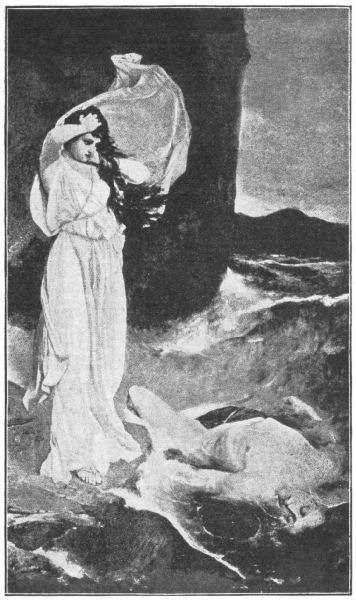
See page 66
ミノス(ミーノス)。冥府の三判官の最高位にして、死者の魂がその前に現れ、己の運命を聞きし者なり。
Hero and Leander
ミノタウロス(ミノーター)。半人半牛の怪物にして、テセウスが討ち果たせしもの。
[Pg 93] Natio (Na′tio). A Roman goddess who took care of young infants.
陽気、モムスを見よ。
Nemaean Lion (Nemae′an), see Hercules.
悲惨、ゲニイを見よ。
Nemesis (Nem′esis), the goddess of vengeance or justice, was one of the infernal deities. Her mother was Nox. She was supposed to be constantly traveling about the earth in search of wickedness, which she punished with the greatest severity. She is referred to by some writers under the name of Adrasteia. The Romans always sacrificed to this goddess before they went to war, because they wished to signify that they never took up arms but in the cause of justice.
ミトラス(ミトラス)。ペルシアの神にして、宇宙を統べる者、ローマのソルに対応す。
Nephalia (Nepha′lia). Grecian festivals in honor of Mnemosyne, the mother of the Muses.
[Pg 90] ムネモシュネ(ムネモシュネ)。ムーサたちの母にして、記憶の女神。ユーピテルは羊飼いの姿を借りてこの女神に求婚せり。
Neptune (Nep′tune), god of the sea, was a son of Saturn and Cybele, and brother to Jupiter and Pluto. He quarreled with Jupiter because he did not consider that the dominion of the sea was equal to Jupiter’s empire of heaven and earth; and he was banished from the celestial regions, after having conspired with Pluto to dethrone Jupiter. Neptune was married to Amphitrite, daughter of Oceanus and Tethys, by whom he had a son named Triton. He was also father of Polyphemus (one of the Cyclopes), Phoreus, and Proteus. Neptune [Pg 94] is represented as being seated in a shell chariot, drawn by dolphins or sea-horses, and surrounded by Tritons and sea-nymphs. He holds in his hand a trident, with which he rules the waves. Though a marine deity, he was reputed to have presided over horse-training and horse-races; but he is principally known as the god of the ocean; and the two functions of the god are portrayed in the sea horses with which his chariot is drawn, the fore-half of the animal being a horse, and the hind-half a dolphin. Ships were also under his protection, and whenever he appeared on the ocean there was a dead calm.
モアキバット(モアキバット)。ムハンマド教徒の記録の天使。
Nereides, The (Nere′ides), were aquatic nymphs. They were daughters of Nereus and Doris, and were fifty in number. They are generally represented as beautiful girls riding on dolphins, and carrying tridents in the right hand or garlands of flowers.
モロク(モロク)。フェニキア人の神にして、人身御供、主として子供たちが犠牲として捧げられしもの。モロクは、我らが最も大切にすべきものを犠牲にせしむる影響力の比喩なり。
Nereus (Nere′us). A sea deity, husband of Doris. He had the gift of prophecy, and foretold fates; but he had also the power of assuming various shapes, which enabled him to escape from the importunities of those who were anxious to consult him.
モムス(モムス)。嘲笑と非難の神。ユーピテルが人の胸に窓を設けず、その思考が見えぬことを咎めし神。彼の辛辣なる冗談は、彼が不名誉にも天界より追放される原因となりぬ。彼は片手に愚行の像を携え、もう一方の手で顔から仮面を上げし姿にて描かれん。また、陽気あるいは笑いの神とも称されん。
Nessus (Nes′sus). The name of the Centaur that was destroyed by Hercules for insulting his wife Deianira. Nessus’s blood-smeared robe proved fatal to Hercules.
モネタ(モネタ)。ユーノーを貨幣の女神と見なしし著述家たちにより、ユーノーに与えられし名。
Nestor (Nes′tor). A grandson of Neptune, his father [Pg 95] being Neleus, and his mother Chloris. Homer makes him one of the greatest of the Greek heroes. He was present at the famous battle between the Lapithae and the Centaurs, and took a leading part in the Trojan war.
貨幣、モネタを見よ。
Nicephorus (Niceph′orus). A name of Jupiter, meaning the bearer of victory.
金銭の神、マモンを見よ。
Nidhogg (Nid′hogg). In Scandinavian mythology the dragon who dwells in Nastrond.
月。月は、古人により、出没の前後にはヘカテと称され、アスタルテは[Pg 91] 三日月形にあるとき、ディアナは満月にあるときと称されし。ルナを見よ。
Niflheim (Nifl′heim). The Scandinavian hell. It was supposed to consist of nine vast regions of ice beneath the North Pole, where darkness reigns eternally. See Nastrond.
モルペウス(モルペウス)。ギリシアの眠りと夢の神にして、ソムヌスの息子にして従者。
Night, see Nox.
モルス。死、ノクス(夜)の娘。
Nightingale, see Philomela.
山、アトラス、ニンフを見よ。
Nightmare, see Incubus.
ムルキベル(ムルキベル)。ウルカヌスの名にして、時にムルキフェルとも綴られ、金属の精錬者なり。ウルカヌスを見よ。
Nilus (Ni′lus), a king of Thebes, who gave his name to the Nile, the great Egyptian river.
ムニン(ムニン)。スカンディナヴィアの記憶の神にして、オーディンの肩に止まりしワタリガラスにて表されん。
Nine, The, see Muses.
ムスカリウス(ムスカリウス)。ユーピテルに与えられし名にして、彼が供物よりハエを遠ざけしが故なり。
Niobe (Ni′obe) was a daughter of Tantalus, and is the personification of grief. By her husband Amphion she had seven sons and seven daughters. By the orders of Latona the father and sons were killed by Apollo, and the daughters (except Chloris) by Diana. Niobe, being overwhelmed with grief, escaped further trouble by being turned into a stone.
ムーサたち (ムーサス) は、ユーピテルとムネーモシュネーの九柱の娘たちであった。彼女たちは芸術と学問、音楽と詩を司った。その名は、カリオペ、クレイオー、エラトー、タレイア、メルポメネー、テルプシコラー、エウテルペー、ポリュムニアー、そしてウーラニアーであった。彼女たちは主にパルナッソス山、ヘリコンに住まわれた。
[Pg 96] Nomius (No′mius). A law-giver; one of the names of Apollo. This title was also given to Mercury for the part he took in inventing beneficent laws.
[頁 92]音楽、アポローン、ムーサたちを参照。
Norns. Three Scandinavian goddesses, who wove the woof of human destiny. The three witches in Shakespeare’s “Macbeth” have their origin in the Scandinavian Norns.
ミュートラス (ミュートラス)。アポローンのエジプト名。
Notus (No′tus). Another name for Auster, the south wind.
Nox was the daughter of Chaos, and sister of Erebus and Mors. She personified night, and was the mother of Nemesis and the Fates.
ナンディ (ナンディ)。ヒンドゥー教の喜びの女神。
Nundina (Nundi′na). The goddess who took charge of children when they were nine days old—the day (Nona dies) on which the Romans named their children.
ナッラーエ (ナッラーエ)。ヒンドゥー教における冥界の名称。
Nuptialis (Nuptia′lis). A title of Juno. When the goddess was invoked under this name the gall of the victim was taken out and thrown behind the altar, signifying that there should be no gall (bitterness) or anger between married people.
ナーラーヤナ (ナーラーヤン)。水の動かし手。ヒンドゥー教の潮汐の神。
Nuriel (Nu′riel). In Hebrew mythology the god of hailstorms.
ナルキッソス (ナルキッスス) は、ケーピソスとナイアデスであるリリオペーの息子にして、泉の穏やかな水面に映る自身の姿に深く魅せられ、それが美しいニュンペーであると想像し、恋せずにはいられなかった美しき若者であった。その想像上のニュンペーを手に入れようとする彼の徒労は彼を絶望へと追いやり、彼は自ら命を絶った。彼の血からは、彼にちなんでナルキッソスと名付けられた花が咲き出でた。
Nyctelius (Nycte′lius). A name given to Bacchus, because his festivals were celebrated by torchlight.
ナーストロンド (ナーストロンド)。ハーデースに相当する、スカンディナヴィアの永遠の罰の場所。
Nymphs. This was a general name for a class of inferior female deities who were attendants of the gods. Some of them presided over springs, fountains, wells, woods, and [Pg 97] the sea. They are spoken of as land-nymphs or Naiads, and sea-nymphs or Nereids, though the former are associated also with fountains and rivers. The Dryads were forest-nymphs, and the Hamadryads were nymphs who lived among the oak-trees—the oak being always specially venerated by the ancients. The mountain-nymphs were called Oreads.
See page 66
Nysae (Ny′sae). The names of the nymphs by whom Bacchus was nursed. See Dionysius.
Hero and Leander
Nysaeus (Ny′saeus). A name of Bacchus, because he was worshiped at Nysa, a town of Aethiopia.
See page 66
Nysus (Ny′sus). A king of Megara who was invisible by virtue of a particular lock of hair. This lock his daughter Scylla cut off, and so betrayed her father to his enemies. She was changed into a lark, and the king into a hawk, and he still pursues his daughter, intending to punish her for her treachery.
Hero and Leander
Oannes (Oan′nes). An Eastern (Babylonian) god, represented as a monster, half-man, half-fish. He was said to have taught men the use of letters in the day-time, and at night to have retired to the depth of the ocean.
頁 66 を参照
Oath, see Lapis.
ヘーローとレアンダー
Ocean, see Neptune.
ネメアーの獅子 (ネメーアン)、ヘーラクレースを参照。
Oceanides (Ocean′ides). Sea-nymphs, daughters of Oceanus and Tethys. Their numbers are variously estimated by different poets; some saying there were as many as 3,000, while others say they were as few as sixteen. The principal of them are mentioned under their respective names, as Amphitrite, Doris, Metis, etc.
ネメシス(ネメシス)は、復讐あるいは正義の女神にして、冥界の神々の一柱なり。その母はノックス。彼女は悪しきものを探し求め、常に地上を巡り、最大の厳しさをもってこれを罰すると信じられし。ある著述家たちは、彼女をアドラステイアの名にて言及す。ローマ人たちは戦に赴く前には必ずこの女神に犠牲を捧げた。それは、彼らが正義のため以外には決して武器を取らぬということを示すためであった。
Oceanus (Oce′anus), son of Coelus and Terra, and husband of Tethys. Several mythological rivers were called his sons, as Alpheus, Peneus, etc., and his daughters were called the Oceanides. Some of the ancients worshiped him as the god of the seas, and invariably invoked his aid when they were about to start on a voyage. He was also thought to personify the immense stream which it was supposed surrounded the earth, and into which the sun and moon and other heavenly bodies sank every day.
ネファリア(ネファリア)。ムーサたちの母であるムネモシュネを称えるギリシャの祭典なり。
Ocridion (Ocrid′ion). A king of Rhodes, who was deified after his death.
ネプチューン(ネプチューン)は、海の神にして、サトゥルヌスとキュベレの子、そしてユピテルとプルートの兄弟なり。彼はユピテルの天地の支配が、海の支配に等しいとは考えず、ユピテルと争った。そして、プルートと共謀してユピテルを王座から引きずり下ろそうとした後、天界から追放された。ネプチューンはオケアノスとテテュスの娘であるアンフィトリテと結婚し、彼女との間にトリトンという息子をもうけた。彼はまた、ポリュフェモス(キュクロプスの一人)、フォレウス、プロテウスの父でもあった。ネプチューン[Pg 94]は、イルカあるいは海馬に引かせた貝殻の戦車に乗り、トリトンたちや海のニンフたちに囲まれている姿で描かれる。彼は手には三叉の矛を持ち、それをもって波を支配する。海の神ではあるが、馬の調教や競馬を司るとも言われた。しかし、彼は主として大洋の神として知られ、その二つの神の機能は、彼の戦車を引く海馬に描かれており、その動物の前半は馬、後半はイルカである。船もまた彼の庇護下にあり、彼が大洋に現れるときには常に静寂が訪れた。
Ocypete (Ocy′pete). One of the Harpies, who infected everything she touched. The word means swift of flight.
ネレイデス(ネレイデス)は、水のニンフたちであった。彼女らはネレウスとドリスの娘たちにして、その数は五十を数えた。一般には、イルカに乗り、右手に三叉の矛、あるいは花の冠を携えし美しき乙女たちの姿にて表される。
Ocyroe (Ocy′roe). A daughter of Chiron, who had the gift of prophecy. She was metamorphosed into a mare.
ネレウス(ネレウス)。海の神にして、ドリスの夫なり。彼は予言の才を有し、運命を告げしが、また、様々な姿に変ずる力をも持ち合わせ、これにより、彼に助言を求めんとする者たちのしつこき懇願より逃れしを得たり。
Odin (O′din). In Scandinavian mythology the god of [Pg 99] the universe, and reputed father of all the Scandinavian kings. His wife’s name was Friga, and his two sons were Thor and Balder. The Wodin of the early German tribes.
ネッソス(ネッソス)。ケンタウロスの一族にして、その名は、妻デイアネイラを侮辱せしが故にヘラクレスに滅ぼされし者なり。ネッソスの血塗られし衣は、ヘラクレスにとって致命的なるものと成り果てたり。
Oeagrus (Oe′agrus). King of Thrace, and father of Orpheus.
ネストル(ネストル)。ネプトゥヌスの孫にして、その父はネレウス、母はクロリスなり。ホメロスは彼をギリシャの英雄たちの中でも最も偉大なる一人と為す。彼はラピタイ族とケンタウロス族との間に起こりし名高き戦いに居合わせ、トロイア戦争においては主導的な役割を担いし。
Oedipus (Oed′ipus). A son of Laius, King of Thebes, best known as the solver of the famous enigma propounded by the Sphinx. In solving the riddle Oedipus unwittingly killed his father, and, discovering the fact, he destroyed his own eyesight, and wandered away from Thebes, attended by his daughter Antigone. Oedipus is the subject of two famous tragedies by Sophocles.
ニケフォロス(ニケフォロス)。ユピテルの別名にして、勝利をもたらす者、の意なり。
Oenone (Oeno′ne). Wife of Paris, a nymph of Mount Ida, who had the gift of prophecy.
ニーズヘッグ(ニーズヘッグ)。スカンディナヴィア神話に登場する竜にして、ナーストレンドに棲まう者なり。
Ogygia (Ogyg′ia). An island, the abode of Calypso, in the Mediterranean Sea, on which Ulysses was shipwrecked. It was so beautiful in sylvan scenery that even Mercury (who dwelt on Olympus) was charmed with the spot.
ニヴルヘイム(ニヴルヘイム)。スカンディナヴィアの地獄なり。北極の下に広がる九つの広大なる氷の領域より成り、そこには永遠の闇が支配せしと信じられし。ナーストレンドを見よ。
Ointment, see Phaon.
夜、ノックスを見よ。
Olenus (Ole′nus). A son of Vulcan, who married Lathaea, a woman who thought herself more beautiful than the goddesses, and as a punishment she and her husband were turned into stone statues.
ナイチンゲール、ピロメラを見よ。
Olives, see Aristaeus.
悪夢、インキュブスを見よ。
Olympius (Olym′pius). A name of Jupiter, from Olympia, where the god had a splendid temple, which [Pg 100] was considered to be one of the seven wonders of the world.
ニルス(ニルス)。テーバイの王にして、その名は偉大なるエジプトの河、ナイルに与えられし。
Olympus (Olym′pus) was the magnificent mountain on the coast of Thessaly, 9,000 feet high, where the gods were supposed to reside. There were several other smaller mountains of the same name.
九柱の女神、ムーサたちを見よ。
Olyras (Oly′ras). A river near Thermopylae, which, it is said, attempted to extinguish the funeral pile on which Hercules was consumed.
ニオベ(ニオベ)はタンタロスの娘にして、悲嘆の擬人化なり。夫アンフィオンとの間に七人の息子と七人の娘を儲けし。ラトナの命により、父と息子たちはアポロンに殺され、娘たち(クロリスを除く)はディアナに殺されし。ニオベは悲しみに打ちひしがれ、石と化すことにより、さらなる苦難より逃れし。
Omophagia (Omopha′gia). A Bacchanalian festival at which some uncooked meats were served.
[96頁]ノミウス(ノーミウス)。立法者にして、アポロンの別名の一つなり。この称号は、慈悲深き法を考案するに際して果たした役割ゆえに、メルクリウスにも与えられしものなり。
Omphale (Om′phale). The Queen of Lydia, to whom Hercules was sold as a bondsman for three years for the murder of Iphitus. Hercules fell in love with her, and led an effeminate life in her society, wearing female apparel, while Omphale wore the lion’s skin.
ノルン。人の運命の緯糸を織りなしし、三柱のスカンディナヴィアの女神たちなり。シェイクスピアの『マクベス』に登場する三人の魔女は、スカンディナヴィアのノルンにその起源を持つものなり。
Onarus (Ona′rus). A priest of Bacchus, said to have married Ariadne after she had been abandoned by Theseus.
ノトゥス(ノートゥス)。アウステル、すなわち南風の別名なり。
Onuva (Onu′va). The Venus of the ancient Gauls.
ノクスはカオス(混沌)の娘にして、エレボス(冥闇)とモルス(死)の姉妹なり。彼女は夜を擬人化したる存在にして、ネメシス(復讐)と運命の女神たちの母なりき。
Opalia (Opa′lia). Roman festivals in honor of Ops, held on 14th of the calends of January.
ヌンディナ(ヌンディーナ)。子供たちが生後九日目になりし時、その世話を司りし女神なり。この日は、ローマ人たちがその子らに名を与えし日(ノナ・ディエス)なりき。
Opiate-rod, see Caduceus.
ヌプティアリス(ヌプティアリス)。ユーノーの称号の一つなり。この名の下に女神が呼び求められし時、犠牲の胆嚢は取り出され、祭壇の背後に投げ捨てられし。これは、夫婦の間に胆汁(苦味)や怒りが存在せぬべきことを意味せしなり。
[Pg 101] Ops. Mother of the gods, a daughter of Coelus and Terra. She was known by the several names of Bona Dea, Rhea, Cybele, Magna Mater, Proserpine, Tellus, and Thya; and occasionally she is spoken of as Juno and Minerva. She personified labor, and is represented as a comely matron, distributing gifts with her right hand, and holding in her left hand a loaf of bread. Her festival was the 14th day of the January calends.
ヌリエル(ヌーリエル)。ヘブライ神話において、雹嵐の神なり。
Oracles, see Themis.
ニュクテリウス(ニュクテリウス)。バッカスに与えられし名なり。彼の祭りが松明の光の下に祝われしゆえに。
Oraea (Orae′a). Certain sacrifices offered to the goddesses of the seasons to invoke fair weather for the ripening of the fruits of the earth.
ニンフ。これは、神々の従者たる下級の女神たちの一種に対する総称なりき。彼女らの中には、泉、噴水、井戸、森、そして海を司りし者たちもおりし。[97頁]彼女らは陸のニンフ、すなわちナイアデス、あるいは海のニンフ、すなわちネレイデスと呼ばれしが、前者はまた、噴水や河川とも関連付けられし。ドリュアデスは森のニンフなりき。そしてハマドリュアデスは、樫の木々の間に住みしニンフなりき。樫は常に古人たちによって特別に崇敬されしゆえに。山のニンフたちはオレイアデスと呼ばれし。
Orbona (Orbo′na). Roman goddess of children, invoked by mothers when they lost or were in danger of losing their offspring.
ニュサイ(ニューサイ)。バッカスが養育されしニンフたちの名なり。ディオニュシオスを参照せよ。
Orchards, see Feronia.
ニュサイオス(ニューサイオス)。バッカスの名の一つなり。彼がエチオピアの町ニュサにて崇拝されしゆえに。
Oreades (O′reades) were mountain nymphs, attendants on Diana.
ニュシュス(ニュシュス)。メガラ国の王にして、ある特別な髪の房の力により、姿を見せぬ者であった。この房を、彼の娘スキュラが切り落とし、父を敵に売り渡した。彼女はヒバリに変えられ、王はタカに変えられた。王は今もなお娘を追い続け、その裏切りに対する罰を与えようとしている。
Orgies. Drunken revels. The riotous feasts of Bacchus were so designated.
Orion (Ori′on). A handsome hunter, of great stature, who was blinded by Oenopion for a grievous wrong done to Merope, and was therefore expelled from Chios. The sound of the Cyclops’ hammers led him to the abode of Vulcan, who gave him a guide. He then consulted an oracle, and had his sight restored, as Longfellow says, by fixing
誓い、ラピスを参照。
[Pg 102] He was afterward slain by Diana and placed amongst the stars, where his constellation is one of the most splendid.
[頁 98]オバンブー(オバンブー)。アフリカ神話の悪魔。
Orithyia (Ori′thy′ia). A daughter of Erechtheus, whose lover, Boreas, carried her off while she was wandering by the river Ilissus. Her children were Zetus and Calais, two winged warriors who accompanied the Argonauts.
大洋、ネプトゥーヌスを参照。
Ormuzd (Or′muzd). In Persian mythology the creator of all things.
オケアニデス(オケアニデス)。海のニンフにして、オケアノスとテテュスの娘たち。その数は詩人によって様々に推測され、ある者は3,000にも及ぶと言い、またある者はわずか16であると言う。その主要な者たちは、それぞれの名の下に記されており、アンフィトリテ、ドリス、メティスなどが挙げられる。
Oros (O′ros). The Egyptian Apollo.
オケアノス(オケアノス)。コエルスとテラの子にして、テテュスの夫。アルペイオス、ペネイオスなど、いくつかの神話上の河川は彼の子と呼ばれ、彼の娘たちはオケアニデスと呼ばれた。古代の人々の中には、彼を海の神として崇め、航海に出る際には必ず彼の助けを求めた者もいた。彼はまた、地球を取り巻くとされた巨大な流れ、そして太陽や月、その他の天体が毎日沈む場所を擬人化したものとも考えられた。
Orphans, see Orbona.
オクリディオン(オクリディオン)。ロードス島の王にして、死後、神格化された。
Orpheus (Or′pheus) was son of Apollo and the Muse Calliope. He was married to Eurydice; but she was stung by a serpent, and died. Orpheus went down to Hades to claim her, and played so sweetly with his lute that Pluto allowed Eurydice to return to the earth with Orpheus, but on condition that he did not look behind him until he had reached the terrestrial regions. Orpheus, however, in his anxiety to see if she were following him, looked round, and Eurydice disappeared from his sight, instantly and forever.
オキュペテ(オキュペテ)。ハルピュイアの一柱にして、触れるもの全てを汚染した。その名は「素早い飛翔」を意味する。
Osiris (Osi′ris). The Egyptian god of the sun, the source of warmth, life, and fruitfulness; he was worshiped under the form of a sacred bull, named Apis.
オキュロエ(オキュロエ)。ケイローンの娘にして、予言の才能を持っていた。彼女は牝馬に変身させられた。
Ossa (Os′sa). One of the mountains of Thessaly (once the residence of the centaurs) which the giants piled on the top of Mount Pelion to enable them to ascend to heaven and attack the gods.
オーディン。スカンジナビア神話において、宇宙の神にして、全てのスカンジナビアの王たちの父と伝えられる。彼の妻の名はフリガ、二人の息子はトールとバルドルであった。初期ゲルマン部族のウォーディンに当たる。
Ox, see Apis.
オエアグルス。トラキアの王にして、オルフェウスの父。
Owl, see Aesculapius and Itys.
オイディプス。テーベの王ライオスの息子にして、スフィンクスが提示せし有名な謎を解きし者として最もよく知られる。その謎を解く中で、オイディプスは知らずして父を殺し、その事実を知るや、自らの視力を奪い、娘アンティゴネに付き添われ、テーベをさまよい去った。オイディプスはソフォクレスによる二つの有名な悲劇の主題である。
Pactolus (Pacto′lus). The river in Lydia where Midas washed himself by order of Bacchus, and the sands were turned to gold.
オイノーネー。パリスの妻にして、予言の才能を持っていたイダ山のニンフ。
Paean (Pae′an). A name given Apollo, from paean, the hymn which was sung in his honor after he had killed the serpent Python. Paeans were solemn songs, praying either for the averting of evil and for rescue, or giving thanks for help vouchsafed.
オギュギア。地中海にあり、カリュプソの住まう島にして、そこにユリシーズは難破せり。その森の景色はあまりに美しく、オリュンポスに住まうメルクリウスさえもその地に魅せられたという。
Palaemon (Palae′mon), or Melicerta, a sea-god, son of Athamas and Ino.
軟膏、ファオンを見よ。
Pales (Pa′les). The goddess of shepherds and sheepfolds [Pg 104] and protectress of flocks; her festivals were called by the Romans Palilia.
オレヌス。ウルカヌスの息子にして、女神たちよりも自らを美しいと思い込んだ女ラタイアと結婚した。その罰として、彼女と夫は石像に変えられた。
Palladium (Palla′dium). A famous statue of the goddess Pallas (Minerva). She is sitting with a spear in her right hand, and in her left a distaff and spindle. Various accounts are given of the origin of the statue. Some writers say that it fell from the skies. It was supposed that the preservation of the statue would be the preservation of Troy; and during the Trojan War the Greeks were greatly encouraged when they became the possessors of it.
オリーブ、アリスタイオスを見よ。
Pallas (Pal′las), or Minerva. The name was given to Minerva when she destroyed a famous giant named Pallas. The Greeks called their goddess of wisdom Pallas Athene. See Minerva.
オリンピウス。ユピテルの別名にして、オリンピアに由来する。そこには神の壮麗な神殿があり、世界の七不思議の一つとされていた。
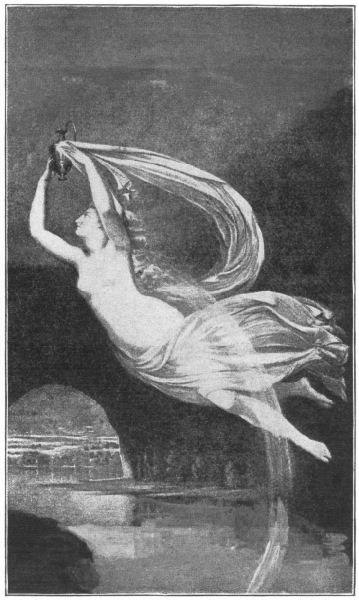
See page 73
オリュンポスは、テッサリアの海岸にある壮大な山にして、高さ9,000フィート、神々が住まうと信じられていた場所である。同名の他のいくつかの小さな山々も存在した。
Iris
オリラス。テルモピュライ近郊の川にして、伝えられるところによれば、ヘラクレスが焼かれた葬儀の薪を消し去ろうと試みたという。
Pan. The Arcadian god of shepherds, huntsmen, and country folk, and chief of the inferior deities, is usually considered to have been the son of Mercury and Penelope. After [Pg 105] his birth he was metamorphosed into the mythical form in which we find him depicted, namely, a horned, long-eared man, with the lower half of the body like a goat. He is generally seen playing a pipe made of reeds of various lengths, which he invented himself, and from which he could produce music which charmed even the gods. These are the Pan-pipes, or Syrinx. Pan’s terrific appearance once so frightened the Gauls when they invaded Greece that they ran away though no one pursued them; and the word panic is said to have been derived from this episode. The Fauns, who greatly resembled Pan, were his attendants.
オモファギア。バッカス祭の一つにして、いくつかの生肉が供された。
Pandora (Pando′ra), according to Hesiod, was the first mortal female. Vulcan made her of clay, and gave her life. Venus gave her beauty; and the art of captivating was bestowed upon her by the Graces. She was taught singing by Apollo, and Mercury taught her oratory. Jupiter gave her a box, the famous “Pandora’s Box,” which she was told to give to her husband, Epimetheus, brother of Prometheus. As soon as he opened it there issued from it numberless diseases and evils which were soon spread all over the world, and from that moment they have afflicted the human race. [Pg 106] It is said that Hope alone remained in the box. Pandora means “the all-gifted.”
オムパレー(オンパレー)。リュディアの女王にして、ヘラクレスがイフィトスの殺害の償いとして、三年の間、奴隷として売られし御方。ヘラクレスは彼女に恋し、その傍らで女の衣を纏い、女々しい生活を送りしが、その間、オムパレーは獅子の皮を身につけたり。
Pantheon (Panthe′on) (lit. “the all-divine place”). The temple of all the gods, built by Agrippa at Rome, in the reign of Augustus (B.C. 27). It was 144 feet in diameter, and 144 feet high; and was built in the Corinthian style of architecture, mostly of marble; while its walls were covered with engraved brass and silver. Its magnificence induced Pliny to give it rank among the wonders of the world.
オナルス(オナールス)。バッカス神の神官にして、アリアドネがテセウスに捨てられし後、彼女と結婚せしと伝えらるる者なり。
Paphia (Pa′phia), a name of Venus.
オヌヴァ(オヌーヴァ)。古代ガリア人のヴィーナスなり。
Papremis (Pap′remis). The Egyptian Mars.
オパリア(オパーリア)。オプス神を称えしローマの祭典にして、一月カレンデの十四日に催されしものなり。
Parcae, The (Par′cae), were goddesses who presided over the destiny of human beings. They were also called the Fates, and were three in number, Atropos, Clotho, and Lachesis. See Fates.
眠りの杖、カドゥケウスを見よ。
Paris (Par′is), the son of Priam, king of Troy, and of his mother Hecuba. It had been predicted that he would be the cause of the destruction of Troy, and his father therefore ordered him to be strangled as soon as he was born; but the slave who had been entrusted with this mission took the child to Mount Ida, and left it there. Some shepherds, however, found the infant and took care of him. He lived among them till he had grown to man’s [Pg 107] estate, and he then married Oenone, a nymph of Ida. At the famous nuptial feast of Peleus and Thetis, Discordia, who had not been invited, attended secretly; and when all were assembled, she threw among the goddesses a golden apple, on which was inscribed “Let the fairest take it.” This occasioned a great contention, for each thought herself the fairest. Ultimately, the contestants were reduced to three, Juno, Pallas (Minerva), and Venus; but Jove himself could not make these three agree, and it was decided that Paris should be the umpire. He was sent for, and each of the goddesses courted his favor by offering all sorts of bribes. Juno offered him power, Pallas wisdom, and Venus promised him the most beautiful woman in the world. Paris gave the golden apple to Venus. Soon after this episode Priam owned Paris as his son, and sent him to Greece to fetch Helen, who was renowned as being the most beautiful woman in the world. She was the wife of Menelaus, king of Sparta; but during his absence Paris carried Helen away to Troy, and this gave rise to the celebrated war between the Greeks and the Trojans, which ended in the destruction of Troy. Paris was among the 676,000 Trojans who fell during or after the siege.
[頁 101] オプス。神々の母にして、コエルスとテラの娘なり。彼女はボナ・デア、レア、キュベレー、マグナ・マーテル、プロセルピナ、テルス、テュアといった幾つかの名にて知られ、時にはユノやミネルヴァとも称されし。彼女は労働を擬人化せしものにして、右手にて贈り物を配り、左手にてパンを抱えし、麗しき貴婦人の姿にて表されし。彼女の祭典は一月カレンデの十四日なりき。
Parnassides (Parnas′sides), a name common to the Muses, from Mount Parnassus.
神託、テミスを見よ。
Parnassus (Parnas′sus). The mountain of the Muses in [Pg 108] Phocis, and sacred to Apollo and Bacchus. Any one who slept on this mountain became a poet. It was named after one of the sons of Bacchus.
オラエア(オライーア)。季節の女神たちに捧げられし特定の供犠にして、大地の果実が熟すための好天を祈願せしものなり。
Parthenon (Par′thenon). The temple of Minerva (or Pallas) on the Acropolis at Athens. It was destroyed by the Persians, and rebuilt by Pericles.
オルボナ(オルボーナ)。ローマの子供の女神にして、母親たちがその子を失い、あるいは失う危険に瀕せし時に、祈願せし女神なり。
Parthenos (Par′thenos) was a name of Juno, and also of Minerva. See Pallas.
果樹園、フェロニアを見よ。
Pasiphae (Pasiph′ae) was the reputed mother of the Minotaur killed by Theseus. She was said to be the daughter of Sol and Perseis, and her husband was Minos, king of Crete.
オレアデス(オレアデス)は山のニンフたちにして、ディアナの侍女たちなりき。
Pasithea (Pasith′ea). Sometimes there are four Graces spoken of; when this is so, the name of the fourth is Pasithea. Also called Aglaia.
オルギア。酩酊せし狂宴なり。バッカス神の乱痴気騒ぎの宴はかく称されし。
Pavan (Pav′an), the Hindoo god of the winds.
オリオン(オリオン)。偉大なる体躯を持つ麗しき狩人にして、メロペに対し犯せし甚だしき過ちゆえに、オエノピオンにより盲目にされ、そのためキオス島より追放されし。キュクロプスたちの槌の音に導かれ、ウルカヌスの住処に至りしが、ウルカヌスは彼に案内者を与えし。その後、彼は神託を求め、ロングフェローが語るごとく、...を凝視せしことにより、視力を回復せし。
Peace, see Concordia.
[頁 102]彼はその後、ディアナによって討たれ、星々の間に置かれ、その星座は最も輝かしいものの一つとなった。
Peacock, see Argus.
オリテュイア(オリテュイア)。エレクテウスの娘にして、その恋人ボレアスは、彼女がイリッソス川のほとりをさまよっていた折に、彼女を連れ去りし。彼女の子らはゼテスとカライス、アルゴナウタイに同行せし二人の翼ある戦士なり。
Pegasus (Peg′asus). The famous winged horse which was said to have sprung from the blood of Medusa when her head was cut off by Perseus. His abode was on Mount Helicon, where, by striking the ground with his hoof, he caused water to spring forth, which formed the fountain afterward called Hippocrene.
オルムズド(オルムズド)。ペルシア神話における万物の創造主。
Peleus (Pe′leus). A king of Thessaly, who married Thetis, one of the Nereides. It is said that he was the only mortal who married an immortal.
オロス(オロス)。エジプトのアポロン。
Pelias (Pe′lias). A son of Neptune and Tyro. He usurped the throne of Cretheus, which Jason was persuaded to relinquish and take the command of the Argonautic expedition. On the return of Jason, Medea, the sorceress, undertook to restore Pelias to youth, but required that the body should first be cut up and put in a caldron of boiling water. When this had been done, Medea refused to fulfil her promise. Pelias had four daughters, who were called the Peliades.
孤児、オルボナを見よ。
Pelias (Pe′lias) was the name of the spear of Achilles, which was so large that none could wield it but the hero himself.
オルフェウス(オルフェウス)はアポロンとムーサのカリオペの子なり。彼はエウリュディケと結婚せしが、彼女は蛇に噛まれ、命を落としぬ。オルフェウスは彼女を取り戻さんと冥府へ下り、そのリュートをかくも甘美に奏でしゆえ、プルートはエウリュディケがオルフェウスと共に地上へ戻ることを許しぬ。されど、彼が地上に辿り着くまで、決して後ろを振り返らぬという条件をつけし。されどオルフェウスは、彼女が己の後を追いて来たるや否やを案じ、振り返りしところ、エウリュディケは彼の視界より、瞬く間に、そして永遠に消え去りぬ。
Pelion (Pe′lion). A well-wooded mountain, famous for the wars between the giants and the gods, and as the abode of the Centaurs, who were expelled by the Lapithae. See Ossa, a mount, which the giants piled upon Pelion, to enable them to scale the heavens.
オシリス(オシリス)。エジプトの太陽神にして、温もり、生命、豊穣の源なり。彼はアピスと名付けられし聖なる雄牛の姿にて崇められし。
Pelops (Pe′lops), son of Tantalus, king of Phrygia. His [Pg 110] father killed him, and served him up to be eaten at a feast given to the gods, who, when they found out what the father of Pelops had done, restored the son to life, and he afterward became the husband of Hippodamia.
オッサ(オッサ)。テッサリアの山々の一つ(かつてケンタウロス族の住処なりし)にして、巨人らが天に昇り神々を襲わんと、ペリオン山の頂に積み上げしものなり。
Penates (Pena′tes). Roman domestic gods. The hearth of the house was their altar. See Lares.
雄牛、アピスを見よ。
Perpetual Punishment, see Sisyphus.
梟、アスクレピオスとイテュスを見よ。
Persephone (Perseph′one). The Greek name of Proserpine.
Perseus (Per′seus) was a son of Jupiter and Danae, the daughter of Acrisius. His first famous exploit was against the Gorgon, Medusa. He was assisted in this enterprise by Pluto, who lent him a helmet which would make him invisible. Pallas lent him her shield, and Mercury supplied him with wings. He made a speedy conquest of the Gorgons, and cut off Medusa’s head, with which he flew through the air, and from the blood sprang the winged horse Pegasus. As he flew along he saw Andromeda chained to the rock, and a sea-monster ready to devour her. He killed the monster, and married Andromeda. When he got back, he showed the Gorgon’s head to King Polydectes, and the monarch was immediately turned into stone.
パイアン(パイアン)。アポロンに与えられし名にして、彼が蛇ピュトンを殺めし後、その栄誉を称え歌われし讃歌パイアンに由来す。パイアンとは厳粛なる歌にして、悪しきを避け救いを求め、あるいは与えられし助けに感謝を捧げしものなり。
Persuasion, goddess of, see Pitho.
パライモン(パライモン)、あるいはメリケルテス、海神にして、アタマスとイノの子なり。
Phaeton (Pha′eton). A son of Sol, or, according to many [Pg 111] mythologists, of Phoebus and Clymene. Anxious to display his skill in horsemanship, he was allowed to drive the chariot of the sun for one day. The horses soon found out the incapacity of the charioteer, became unmanageable, and overturned the chariot. There was such great fear of injury to heaven and earth, that Jove, to stop the destruction, killed Phaeton with a thunderbolt.
パレス (パレス)。羊飼いと羊小屋の女神[Pg 104]そして群れの守護者。彼女の祭りはローマ人によってパリリアと呼ばれた。
Phaon (Pha′on). A boatman of Mitylene, in Lesbos, who received from Venus a box of ointment, with which, when he anointed himself, he grew so beautiful that Sappho became enamored of him; but when the ointment had all been used Phaon returned to his former condition, and Sappho, in despair, drowned herself.
パラディウム (パラディウム)。女神パラス(ミネルヴァ)の有名な像。彼女は右手に槍を、左手に糸巻き棒と紡錘を持って座している。その像の起源については様々な説が伝えられている。ある著述家たちは、それが空から落ちてきたと述べている。その像が保たれることがトロイアの存続につながると考えられており、トロイア戦争中、ギリシア人たちはその像を手に入れたとき、大いに勇気づけられた。
Pheasant, see Itys.
パラス (パラス)、あるいはミネルヴァ。この名は、ミネルヴァがパラスという名の有名な巨人を滅ぼしたときに彼女に与えられた。ギリシア人たちは彼らの知恵の女神をパラス・アテーナーと呼んだ。ミネルヴァの項を参照。
Philoctetes (Philoct′etes) was son of Poeas, and one of the companions of Jason on his Argonautic expedition. He was present at the death of Hercules, and received from him the poisoned arrows which had been dipped in the blood of Hydra. These arrows, an oracle declared, were necessary to be used in the destruction of Troy, and Philoctetes was persuaded by [Pg 112] Ulysses to go and assist at the siege. He appears to have used the weapons with great dexterity and with wonderful effect, for Paris was among the heroes whom he killed. The story of Philoctetes was dramatized by the Greek tragedians Aeschylus, Euripides, and Sophocles.
See page 73
Philomela (Philome′la) was a daughter of Pandion, king of Athens, who was transformed into a nightingale. She was sister to Procne, who married Tereus, King of Thrace. The latter having offered violence to Philomela, her sister, Procne, came to her rescue, and to punish her husband slew her son Itylus, and at a feast Philomela threw Itylus’s head on the banquet table.
Iris
Phlegethon (Phleg′ethon). A river of fire in the infernal regions. It was the picture of desolation, for nothing could grow on its parched and withered banks. Also called Pyriphlegethon.
See page 73
Phlegon (Phle′gon) (burning), one of the four chariot horses of Sol.
Iris
[Pg 113] Phlegyas (Phle′gyas). Son of Mars and father of Ixion and Coronis. For his impiety in desecrating and plundering the temple of Apollo at Delphi, he was sent to Hades, and there was made to sit with a huge stone suspended over his head, ready to be dropped on him at any moment.
ページ73を参照。
Phoebus (Phoe′bus). A name of Apollo, signifying light and life.
イリス
Phorcus (Phor′cus), or Porcys. A son of Neptune, father of the Gorgons. The same as Oceanus.
パン。アルカディアの羊飼い、狩人、そして田舎の人々の神であり、下級の神々の長である彼は、通常、メルクリウスとペネロペの子であると考えられている。[Pg 105]彼の誕生後、彼は我々が彼が描かれているのを見る神話的な姿に変身した。すなわち、角を持ち、耳が長く、体の下半分が山羊のような男の姿である。彼は通常、自ら発明した様々な長さの葦で作られた笛を奏でている姿で描かれ、その笛からは神々さえも魅了する音楽を生み出すことができた。これらはパンパイプ、あるいはシリンクスである。パンの恐ろしい姿は、かつてガリア人たちがギリシアに侵攻した際、彼らを非常に恐れさせ、誰も追っていないにもかかわらず逃げ去らせた。そして「パニック」という言葉はこの出来事に由来すると言われている。パンに酷似したファウヌスたちは、彼の従者であった。
Phryxus (Phryx′us), see Golden Fleece.
パンドラ(パンドーラ)は、ヘシオドスによれば、最初の定命の女であった。ウルカヌスが彼女を粘土で作り、命を与えた。ウェヌスは彼女に美を与え、優美の女神たちによって魅了する術が授けられた。アポロンは彼女に歌を教え、メルクリウスは弁論術を教えた。ユピテルは彼女に一つの箱、かの有名な「パンドラの箱」を与え、プロメテウスの兄弟である夫エピメテウスに渡すよう告げた。彼が箱を開けるやいなや、そこから数えきれないほどの病と悪が飛び出し、たちまち世界中に広がり、その瞬間から人類を苦しめることとなった。[頁 106]箱の中には希望だけが残ったと言われている。パンドラとは「あらゆる賜物を与えられし者」を意味する。
Picumnus (Picum′nus). A rural divinity, who presided over the manuring of lands, also called Sterentius.
パンテオン(パンテオン)(文字通り「全ての神々の場所」)。アウグストゥスの治世(紀元前27年)に、アグリッパがローマに建てた全ての神々の神殿である。直径144フィート、高さ144フィートで、主に大理石を用いたコリント様式の建築で建てられ、その壁は彫刻された真鍮と銀で覆われていた。その壮麗さはプリニウスをして世界の驚異の一つと評価させた。
Picus (Pi′cus). A son of Saturn, father of Faunus, was turned into a woodpecker by Circe, whose love he had not requited.
パフィア(パフィア)、ウェヌスの別名。
Pierides (Pier′ides). A name of the Muses, derived from Pieria, a fountain in Thessaly, near Mount Olympus, where they were supposed to have been born. Also, the daughters of Pierus, a king of Macedonia, who settled in Boeotia. They challenged the Muses to sing, and were changed into magpies.
パプレミス(パプレミス)。エジプトの軍神マルス。
Pietas (Pie′tas). The Roman goddess of domestic affection.
パルカエ(パルカエ)は、人間の運命を司る女神たちであった。彼女たちは運命の女神たちとも呼ばれ、アトロポス、クロト、ラケシスの三柱であった。運命の女神たちを参照。
Pillar, see Calpe.
パリス(パリス)は、トロイアの王プリアモスとその母ヘカベの子であった。彼がトロイア滅亡の原因となるであろうと予言されていたため、その父は彼が生まれ落ちるや否や絞め殺すよう命じた。しかし、この使命を託された奴隷は、その子をイダ山へと運び、そこに置き去りにした。しかし、羊飼いたちがその赤子を見つけ、彼を養育した。彼は彼らの中で成長し、一人前の男となるまで暮らした。そして彼はイダのニンフ、オイノーネと結婚した。[頁 107]ペレウスとテティスの名高き婚礼の宴にて、招かれざる客であったディスコルディアは密かに参列し、皆が揃った時、女神たちの間に黄金の林檎を投げ入れた。その林檎には「最も美しき者、これを取るべし」と刻まれていた。これにより大いなる争いが巻き起こった。なぜなら、各々が己こそ最も美しき者と信じていたからである。最終的に、争う者は三柱に絞られた。すなわち、ユーノー、パラス(ミネルヴァ)、そしてウェヌスである。しかし、ユーピテル自身もこの三柱を納得させることはできず、パリスが審判を務めるべきであると決定された。彼は呼び出され、女神たちはそれぞれあらゆる賄賂を提示して彼の歓心を買おうとした。ユーノーは彼に権力を、パラスは知恵を、そしてウェヌスは彼に世で最も美しき女を約束した。パリスは黄金の林檎をウェヌスに与えた。この出来事の後まもなく、プリアモスはパリスを己が子と認め、世で最も美しき女として名高きヘレネを連れてくるよう、彼をギリシアへと遣わした。彼女はスパルタの王メネラオスの妻であったが、彼の不在中にパリスはヘレネをトロイアへと連れ去った。これにより、ギリシア人とトロイア人の間に名高き戦が勃発し、それはトロイアの滅亡をもって終結した。パリスは、攻囲中またはその後に倒れた676,000人のトロイア人の中にいた。
Pilumnus (Pilum′nus). A rural divinity that presided over [Pg 114] the corn while it was being ground. At Rome he was hence called the god of bakers.
パルナッシデス(パルナッシデス)は、パルナッソス山に由来する、ムーサたちに共通する名である。
Pine-Tree, see Atys.
パルナッソス (パルナッソス)。フォキスにあるムーサたちの山にして、アポロンとバッコスに捧げられし聖なる地なり。[頁 108]この山にて眠りし者は、誰しも詩人となりしという。その名は、バッコスの息子の一人にちなみて名付けられしものなり。
Pirithous (Pirith′ous). A son of Ixion and great friend of Theseus, king of Athens. The marriage of Pirithous and Hippodamia became famous for the quarrel between the drunken Centaurs and the Lapithae, who, with the help of Theseus, Pirithous, and Hercules, attacked and overcame the Centaurs, many of whom were killed, and the remainder took to flight.
パルテノン (パルテノン)。アテネのアクロポリスに建つ、ミネルヴァ(あるいはパラス)の神殿なり。かつてペルシア人により破壊されしが、ペリクレスによりて再建されし。
Pitho (Pi′tho), the goddess of Persuasion, daughter of Mercury and Venus. She is sometimes referred to under the name of Suada.
パルテノス (パルテノス) は、ユノの、またミネルヴァの別名なり。パラスを見よ。
Plants, see Demogorgon.
パシファエ (パシファエ) は、テセウスに討たれしミノタウロスの母と伝えられし者なり。彼女はソルとペルセイスの娘にして、その夫はクレタの王ミノスなりと語られし。
Pleasure, see Rembha.
パシテア (パシテア)。時として、四柱の優美の女神(グレイセス)が語られることあり。その際、第四の女神の名はパシテアなり。アグライアとも呼ばれし。
Pleiades, The (Plei′ades). Seven daughters of Atlas and Pleione. Their names were Electra, Alcyone, Celaeno, Maia, Sterope, Taygete, and Merope. They were made a constellation, but as there are only six stars to be seen, the ancients believed that one of the sisters, Merope, married a mortal, and was ashamed to show herself among her sisters, who had all been married to gods.
パヴァン (パヴァン)、ヒンドゥーの風神なり。
Pluto (Plu′to). King of the infernal regions. He was a son of Saturn and Ops, and husband of [Pg 115] Proserpine, daughter of Ceres. He is sometimes referred to under the name Dis, and he personifies hell. His principal attendant was the three-headed dog Cerberus, and about his throne were the Eumenides, the Harpies, and the Furies.
平和、コンコルディアを見よ。
Plutus (Plu′tus), the god of riches, was son of Jasion or Iasius and Ceres (Demeter), the goddess of corn. He is described as being blind and lame; blind because he so often injudiciously bestows his riches, and lame because fortunes come so slowly.
孔雀、アルゴスを見よ。
Pluvius (Plu′vius). A name of Jupiter, because he had the rain in his control.
ペガサス (ペガサス)。ペルセウスがメドゥーサの首を斬りし時、その血より生まれしと伝えられる、名高き翼ある馬なり。その住処はヘリコン山にありて、彼は蹄にて地を打ちし時、水が湧き出で、後にヒッポクレネと名付けられし泉を成ししという。
Podalirius (Podalir′ius). A famous surgeon, a son of Aesculapius and Epione. His skill in medicine made him very serviceable among the soldiers in the Trojan war.
ペレウス (ペレウス)。テッサリアの王にして、ネレイデスの一人テティスと婚姻を結びし者なり。彼は不死なる者と婚姻を結びし唯一の定命の者なりと伝えられし。
Poet, see Parnassus.
ペリアス (ペリアス)。ネプトゥヌスとテュロの息子なり。彼はクレテウスの王位を簒奪し、イアソンを説得して王位を放棄させ、アルゴナウタイの遠征の指揮を執らせし。イアソンの帰還の後、魔女メデイアはペリアスを若返らせんと請け負いしが、その身をまず切り刻み、沸騰せる大釜に入れよと要求せし。これが為されし時、メデイアは約束を果たすことを拒みし。ペリアスには四人の娘ありて、ペリアデスと呼ばれし。
Poetry, see Apollo, Calliope, The Muses.
ペリアス (ペリアス) は、アキレウスの槍の名なり。その槍はあまりに巨大なれば、英雄自身を除きては、誰もこれを振るうこと能わざりし。
Poisonous Herbs, see Circe.
ペリオン(ペーリオン)。巨人族と神々との戦い、そしてラピタイ族によって追放されたケンタウロス族の住処として名高い、木々に覆われた山なり。巨人族が天に昇らんがため、ペリオン山の上に積み上げたオッサ山を見よ。
Poisonous Lake, see Avernus.
ペロプス(ペーロプス)。フリュギアの王タンタロスの息子なり。[Pg 110]彼の父は彼を殺し、神々に供された宴にて食膳に供したり。神々はペロプスの父が為したことを知り、その息子を蘇らせたれば、彼は後にヒッポダメイアの夫となりぬ。
Pollear (Poll′ear). Son of Siva, the Hindoo god of wisdom.
ペナーテス(ペナーテース)。ローマの家庭の神々なり。家の炉辺は彼らの祭壇なりき。ラレースを見よ。
[Pg 116] Pollux (Pol′lux). Twin brother of Castor. Their father was Jupiter and their mother Leda. He and his brother form the constellation Gemini. His Greek name was Polydeuces. Castor and Pollux are also known under the name of Dioscuri, the presiding deities of public games in Rome, Castor being the god of equestrian exercise, and Pollux the god of boxing. See Aedepol.
永久の罰、シーシュポスを見よ。
Polybotes (Polybo′tes). One of the giants who made war against Jupiter. He was killed by Neptune.
ペルセポネー(ペルセポネー)。プロセルピナのギリシャ名なり。
Polydectes (Polydec′tes) was turned into stone when Perseus showed him Medusa’s head. See Perseus.
ペルセウス(ペルセウス)は、ユーピテルとアクリシオスが娘ダナエーの子なりき。彼の最初の名高き功績は、ゴルゴン、メドゥーサに対するものなり。この企てにおいては、プルートーが彼に姿を隠す兜を貸し与え、彼を助けたり。パラスは己が盾を貸し、メルクリウスは彼に翼を授けたり。彼は速やかにゴルゴンたちを征服し、メドゥーサの首を切り落とし、それと共に空を飛びしに、その血より翼ある馬ペーガソスが生まれ出でたり。彼が飛び行く途中、岩に鎖で繋がれ、今にも彼女を食らわんとする海の怪物を前にしたアンドロメダを見たり。彼はその怪物を殺し、アンドロメダと結婚したり。彼が戻りし時、ゴルゴンの首をポリュデクテス王に見せしに、その王はたちまち石と化したり。
Polydeuces (Polydeu′ces). The Greek name of Pollux.
説得の女神、ピートーを見よ。
Polyhymnia (Polyhym′nia). Daughter of Jupiter and Mnemosyne. One of the Muses who presided over singing and rhetoric.
パエトーン(パエトーン)。ソルの息子、あるいは多くの神話学者によれば、ポイボスとクリュメネーの息子なり。[Pg 111]彼は馬術の腕前を示さんと熱望し、一日限り、太陽の戦車を駆ることを許されし。馬たちはたちまち御者の未熟を見抜き、制御不能となり、戦車を転覆させたり。天と地が傷つくことを大いに恐れ、ユーピテルは破壊を止めんがため、パエトーンを雷霆にて打ち殺したり。
Polyphemus (Polyphe′mus), one of the most celebrated of the Cyclops, a son of the nymph Thoosa and Neptune, or Poseidon, as the Greeks called the god of the sea. He captured Ulysses and twelve of his companions, and it is said that six of them were eaten. The remainder escaped by the ingenuity of Ulysses, who destroyed Polyphemus’s one eye with a fire-brand.
パオーン(パオーン)。レスボス島のミュティレネに住まう船頭なり。彼はウェヌスより軟膏の箱を賜り、これを身に塗れば、その美しさゆえにサッフォーが彼に恋い焦がれるほどになりしが、軟膏が尽きし時、パオーンは元の姿に戻り、サッフォーは絶望のあまり、身を投げて命を絶ちたり。
Polyxena (Polyx′ena). Daughter of Hecuba and Priam, king of Troy. It was by her treachery that Achilles was shot in the heel.
キジ、イテュスを見よ。
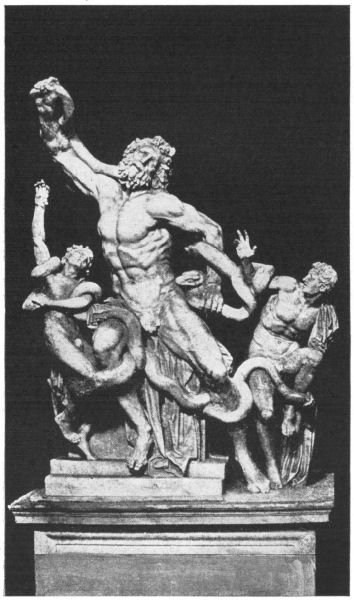
See page 79
ピロクテテス(ピロクテテス)はポイアースの息子にして、イアソンのアルゴナウタイ遠征における仲間の一人なり。彼はヘーラクレースの死に立ち会い、彼よりヒュドラの血に浸されし毒矢を授かりし。この矢は、神託によれば、トロイアの破壊に用いらるべきものとされ、ピロクテテスは[Pg 112]オデュッセウスに説得され、攻囲に加勢せんと赴きし。彼はその武器を大いなる巧みさと驚くべき効果をもって用いしと見え、彼が討ち取りし英雄の中にはパリスもおりし。ピロクテテスの物語は、ギリシアの悲劇詩人アイスキュロス、エウリピデス、ソポクレスによって劇化されし。
Laocoon
ピロメーラ(ピロメーラ)はアテナイの王パンディオンの娘にして、ナイチンゲールに変身せし者なり。彼女はプロクネーの妹なり。プロクネーはトラーキアの王テーレウスと結婚せり。テーレウスがピロメーラに暴力を振るいしゆえ、その姉プロクネーは彼女を救わんとし、夫を罰せんがため、己が息子イテュロスを殺し、宴の席にてピロメーラはイテュロスの首を食卓に投げつけたり。
[Pg 117] Pomona (Pomo′na). The Roman goddess of fruit-trees and gardens.
プレゲトン (プレゲトン)。冥界に流るる炎の河なり。その岸辺は乾き萎え、何一つ生えぬ荒涼たる光景を呈せり。また、ピュリプレゲトンとも呼ばれし。
Poplar-Tree, see Heliades.
フレゴン (フレゴン) (燃ゆるもの)。ソルの四頭立ての戦車の馬の一頭なり。
Portunus (Portu′nus) (Palaemon), son of Ino, was the Roman god of harbors.
[頁 113]フレギュアス (フレギュアス)。マルスの子にして、イクシオンとコロニスの父なり。デルフォイのアポロン神殿を冒涜し略奪せしその不敬のゆえに、彼はハデスへと送られ、頭上に巨大な石を吊るされ、いつ落ちるとも知れぬまま座らされし。
Poseidon (Posei′don). The Greek name of Neptune, god of the sea.
ポイボス (ポイボス)。アポロンの別名にして、光と生命を意味す。
Pracriti (Prac′riti). The Hindoo goddess of nature.
フォルキュス (フォルキュス)、あるいはポルキュス。ネプチューンの子にして、ゴルゴンたちの父なり。オケアノスと同一視されし。
Predictions, see Cassandra.
プリクソス (プリクソス)。黄金の羊毛を見よ。
Priam (Pri′am). The last king of Troy. See Paris.
ピクムヌス (ピクムヌス)。田畑の肥沃を司る田園の神にして、ステレンティウスとも呼ばれし。
Priapus (Pria′pus), the guardian of gardens and god of natural reproduction, was the son of Venus and Bacchus.
ピクス (ピクス)。サトゥルヌスの子にして、ファウヌスの父なり。キルケーの愛に応えざりしゆえ、彼女によりキツツキに変えられし。
Prisca (Pris′ca). Another name of Vesta.
ピエリデス (ピエリデス)。ムーサたちの別名にして、テッサリアのオリンポス山近くにある泉ピエリアに由来す。そこは彼女らが生まれたと信じられし地なり。また、マケドニアの王ピエルスの娘たちにして、ボイオティアに住みし者たちなり。彼女らはムーサたちに歌の勝負を挑み、カササギに変えられし。
Procris (Pro′cris). Daughter of Erechtheus, king of Athens. See Cephalus, her husband.
ピエタス (ピエタス)。ローマの家庭の愛情を司る女神なり。
Progne (Prog′ne), wife of Tereus. Commonly called Procne, whose sister was Philomela. See Itys and Tereus.
柱。カルペを見よ。
Prometheus (Prome′theus), the son of Japetus and father of Deucalion. He presumed to make clay men, and animate them with fire which he had [Pg 118] stolen from heaven. This so displeased Jupiter that he sent him a box full of evils, which Prometheus refused; but his brother Epimetheus, not so cautious, opened it, and the evils spread over all the earth. Jupiter then punished Prometheus by commanding Mercury to bind him to Mount Caucasus, where a vulture daily preyed upon his liver, which grew in the night as much as it had been reduced in the day, so that the punishment was a prolonged torture. Hercules at last killed the vulture and set Prometheus free.
ピルムヌス (ピルムヌス)。穀物が挽かれる間を司りし田園の神なり。[頁 114]ローマにては、ゆえにパン職人の神と呼ばれし。
Prophecy, see Nereus.
松の木。アテュスを見よ。
Proserpine (Proser′pine). A daughter of Jupiter and Ceres. Pluto carried her off to the infernal regions and made her his wife. She was known by the names of “the Queen of Hell,” Hecate, Juno Inferna, and Libitina. She was called by the Greeks Persephone.
ピリトオス (ピリトオス)。イクシオンの息子にして、アテナイの王テセウスの親友なり。ピリトオスとヒッポダミアの婚姻は、酔いしれたケンタウロス族とラピタイ族との争いにより、世に知られることとなった。ラピタイ族は、テセウス、ピリトオス、そしてヘラクレスの助力を得て、ケンタウロス族を襲撃し、これを打ち破りし。多くのケンタウロス族は討ち取られ、残る者は逃げ去りし。
Proteus (Pro′teus). A marine deity, who could foretell events and convert himself at will into all sorts of shapes. According to later legends, Proteus was a son of Poseidon.
ピートー (ピートー)。説得の女神にして、メルクリウスとウェヌスの娘なり。彼女は時にスアーダの名にて呼ばれることあり。
[Pg 119] Psyche (Psy′che). The wife of Cupid. The name is Greek, signifying the soul or spirit.
植物、デモゴルゴンを見よ。
Pygmalion (Pygma′lion). A famous sculptor who had resolved to remain unmarried, but he made such a beautiful statue of a goddess that he begged Venus to give it life. His request being granted, Pygmalion married the animated statue.
快楽、レンバを見よ。
Pylades (Py′lades). The son of Strophius, King of Phanote, and husband of Electra; famous on account of his faithful friendship with Orestes.
プレアデス (プレアデス)。アトラスとプレイオネの七人の娘たちなり。その名はエレクトラ、アルキュオネ、ケラエノ、マイア、ステロペ、タイゲテ、そしてメロペなりき。彼女らは星座とされしが、見ゆる星は六つのみなれば、古の人々は姉妹の一人、メロペが定命の者と結ばれ、神々と婚姻せし姉妹たちの間に身を現すを恥じたりと信じたり。
Pylotis (Pylo′tis). A Greek name of Minerva.
プルートー (プルートー)。冥界の王なり。彼はサトゥルヌスとオプスの息子にして、ケレスの娘プロセルピナの夫なり。[頁 115]彼は時にディスという名にて呼ばれ、地獄を擬人化せしものなり。彼の主たる従者は三つ頭の犬ケルベロスにして、その玉座の周りにはエウメニデス、ハルピュイア、そしてフリアエが控えておりし。
Pyracmon (Pyr′acmon), one of the chiefs of the Cyclopes.
プルートゥス (プルートゥス)。富の神にして、ヤシオンあるいはイアシウスと、穀物の女神ケレス(デメテル)の息子なり。彼は盲目にして足萎えと描写されし。盲目なるは、彼がしばしば不適切に富を授くるがため、足萎えなるは、幸運がかくも遅く訪るるがためなり。
Pyramus and Thisbe (Pyr′amus and This′be). Two Babylonian lovers, the children of hostile neighbors. See Shakespeare’s burlesque of the story of their loves, in “Midsummer Night’s Dream.”
プルウィウス (プルウィウス)。ユピテルの名の一つなり。彼が雨を司りしがゆえなり。
Pyrois (Py′rois) (luminous). One of the four chariot horses of Sol, the Sun.
ポダリリウス (ポダリリウス)。名高き外科医にして、アスクレピオスとエピオネの息子なり。彼の医術の腕は、トロイア戦争における兵士たちの間で大いに役立ちし。
Pythia (Py′thia). The priestess of Apollo at Delphi, who delivered the answers of the oracle. Also the name of the Pythian games celebrated in honor of Apollo’s victory over the dragon Python.
詩人、パルナッソスを見よ。
[Pg 120] Python (Py′thon). A famous serpent killed by Apollo, which haunted the caves of Parnassus. See Septerion.
詩、アポロン、カリオペ、ムーサたちを見よ。
毒草、キルケを見よ。
Quadrifrons (Quad′rifrons). Janus was sometimes depicted with four faces instead of the usual two, and he was then called Janus Quadrifrons.
毒の湖、アウェルヌスを見よ。
Quies (Qui′es). The Roman goddess of rest; she had a temple just outside the Colline gate of Rome.
ポリアー(ポリアー)。シヴァ、ヒンドゥー教の知恵の神の息子。
Quietus (Quie′tus). One of the names of Pluto.
[Pg 116]ポルックス(ポルックス)。カストルの双子の兄弟。彼らの父はユピテル、母はレダであった。彼と彼の兄弟はふたご座を形成する。彼のギリシャ名はポリデウケスであった。カストルとポルックスはまた、ローマの公共競技を司る神々であるディオスクーロイの名でも知られ、カストルは馬術の神、ポルックスはボクシングの神である。アエデポルを参照。
Quirinus (Quiri′nus). A name given to Mars during wartime; Virgil refers to Jupiter under the same name.
ポリボテス(ポリボテス)。ユピテルに戦いを挑んだ巨人たちの一人。彼はネプトゥーヌスによって殺された。
Quoit, see Hyacinthus.
ポリデクテス(ポリデクテス)は、ペルセウスが彼にメドゥーサの首を見せたとき、石に変えられた。ペルセウスを参照。
Radamanthus (Radaman′thus), see Rhadamanthus.
ポリヒュムニア(ポリヒュムニア)。ユピテルとムネモシュネの娘。歌と弁論を司ったミューズたちの一人。
Rage, see Furies.
ポリフェーモス(ポリフェーモス)は、キュクロープスの中でも最も名高い一人で、ニュンペーのトオーサとネプトゥーヌス、あるいはギリシャ人が海の神と呼んだポセイドンの息子である。彼はウリュッセウスと彼の仲間十二人を捕らえ、そのうち六人が食われたと言われている。残りの者たちは、火のついた丸太でポリフェーモスの片目を潰したウリュッセウスの機知によって逃れた。
Rainbow, see Iris.
ポリクセナ(ポリクセナ)。ヘカベーとトロイアの王プリアモスの娘。彼女の裏切りによってアキレウスはかかとを射られた。
Rama (Ra′ma). A Hindoo god, who was the terrestrial representative of Vishnu.
See page 79
Ram’s Hide, see Golden Fleece.
Laocoon
Reeds, see Pan, also Syrinx.
See page 79
Rembha (Rem′bha). The Hindoo goddess of pleasure.
Laocoon
Reproduction, see Priapus.
ページ79を参照
Rest, see Quies.
ラオコーン
Revenge, see Ate.
[Pg 117]ポモーナ(ポモーナ)。ローマの果樹と庭園の女神。
[Pg 121] Rhadamanthus (Rhadaman′thus), a son of Jupiter and Europa, was the ruler of the Greeks in the Asiatic islands, and judge of the dead in the infernal regions.
ポプラの木、ヘリアデスを参照。
Rhamnusia (Rhamnu′sia). A name of Nemesis, from Rhamnus, a town in Attica, where she had a temple in which was her statue, made of one stone ten cubits high.
ポルトゥーヌス(ポルトゥーヌス)(パライモン)は、イーノーの息子で、ローマの港の神であった。
Rhea (Rhe′a). The Greek name of Cybele. She was a daughter of Uranus and Gaea, and was called Mother of the gods.
ポセイドン(ポセイドン)。海の神ネプトゥーヌスのギリシャ名。
Rhetoric, see Calliope, also Polyhymnia.
プラクリティ(プラクリティ)。ヒンドゥー教の自然の女神。
Riches, see Plutus.
予言、カサンドラを参照。
Riddle, see Sphinx.
プリアモス(プリアモス)。トロイアの最後の王。パリスを参照。
Rimmon (Rim′mon). A Phrygian god of whom Milton says—
プリアーポス(プリアーポス)は、庭園の守護者にして自然生殖の神、ウェヌスとバッコスの子なり。
Riot, see Saturnalia.
プリスカ(プリスカ)。ウェスタの別名なり。
River of Fire, see Phlegethon.
プロクリス(プロクリス)。アテナイの王エレクテウスの娘。夫ケファロスを見よ。
Roads, see Vialis.
プログネ(プログネ)、テレウスの妻。一般にはプロクネと呼ばれ、その妹はピロメラなりき。イテュスとテレウスを見よ。
Robber, see Cacus, Coeculus.
プロメテウス(プロメテウス)は、イアペトスの子にしてデウカリオンの父。彼は土より人を作り、彼が[Pg 118]天より盗みし火にてこれに生命を吹き込まんと企てたり。このことジュピテルを甚だ不快ならしめ、彼はプロメテウスに悪しきもの充ちたる箱を送りしが、プロメテウスはこれを拒みたり。されど、その弟エピメテウスは、兄ほど慎重ならず、箱を開きしゆえ、悪しきものは地上に広がりたり。ジュピテルはプロメテウスを罰し、メルクリウスに命じて彼をカウカソス山に縛りつけしめたり。そこにて禿鷹が日毎に彼の肝臓を食らいしが、肝臓は昼に減りし分だけ夜には再び生長せしゆえ、その罰は長きにわたる責め苦となりたり。ヘルクレスはついにその禿鷹を殺し、プロメテウスを解放せり。
[Pg 122] Romulus (Rom′ulus). The traditional founder of Rome. He was a son of Mars and Ilia, and twin brother of Remus. The infants were thrown into the Tiber, but were miraculously saved and suckled by a she-wolf, till they were found by Faustulus, a shepherd, who brought them up. Remus was killed in a quarrel with his brother, and Romulus became the first King of Rome.
予言、ネレウスを見よ。
Rumia Dea (Rumi′a Dea). The Roman goddess of babes in arms.
プロセルピナ(プロセルピナ)。ジュピテルとケレスの娘。プルートーは彼女を冥界へと連れ去り、己の妻となしたり。彼女は「冥府の女王」、ヘカテ、ユーノー・インフェルナ、リビティナの名にて知られし。ギリシア人にはペルセポネと呼ばれし。
Rumina (Ru′mina). Roman pastoral deities, who protected suckling cattle.
プロテウス(プロテウス)。海の神にして、出来事を予言し、意のままにあらゆる姿に変身しうる者なり。後世の伝説によれば、プロテウスはポセイドンの子なりき。
Runcina (Runci′na). The goddess of weeding or cleansing the ground.
[Pg 119]プシュケ(プシュケ)。クピドの妻。その名はギリシア語にして、魂または精神を意味す。
Sacrifices were ceremonious offerings made to the gods. To every deity a distinct victim was allotted, and the greatest care was always taken in the selection of them. Anything in any way blemished was considered as an insult to the god. At the time of the sacrifice the people were called together by heralds led by a procession of musicians. The priest, clothed in white, was crowned with a wreath made of the leaves of the tree which was sacred to the particular god to whom the sacrifice was offered. The victim had its horns gilt, and was adorned with a chaplet similar to that of the priest, and was decorated with bright-colored ribbons. The [Pg 123] priest then said, “Who is here?” to which the spectators replied, “Many good people.” “Begone all ye who are profane,” said the priest; and he then began a prayer addressed to all the gods. The sacrifice was begun by putting corn, frankincense, flour, salt, cakes, and fruit on the head of the victim. This was called the Immolation. The priest then took a cup of wine, tasted it, and handed it to the bystanders to taste also; some of it was then poured between the horns of the victim, and a few of the saturated hairs were pulled off and put in the fire which was burning on the altar. Then, turning to the east, the priest drew with his knife a crooked line along the back of the beast from the head to the tail, and told the assistants to kill the animal. This was done directly, and the entrails of the victim taken out and carefully examined by the Haruspices to find out what was prognosticated. The carcase was then divided, and the thighs, covered with fat, were put in the fire, and the rest of the animal was cut up, cooked, and eaten. This feast was celebrated with dancing, music, and hymns, in praise of the god in whose honor the sacrifice was made. On great occasions as many as a hundred bullocks were offered at one time; and it is said that Pythagoras made this offering when he found out the demonstration of the forty-seventh proposition of the book of Euclid.
ピグマリオン(ピグマリオン)。結婚せぬと決意せし高名な彫刻家。されど彼は女神の像をあまりにも美しく作りしゆえ、ウェヌスにこれに生命を授けんことを懇願したり。その願い聞き届けられ、ピグマリオンは生命を宿したるその像と結婚せり。
[Pg 124] Saga (Sa′ga). The Scandinavian goddess of history. The word means a saw or saying; hence Sagas, which embody Scandinavian legends, and heroic or mythical traditions.
ピュラデス(ピュラデス)。ファノテの王ストロフィウスの子にして、エレクトラの夫。オレステスとの忠実なる友情によりて名高し。
Sagittarius (Sagitta′rius), see Chiron.
ピュロティス(ピュロティス)。ミネルヴァのギリシア名なり。
Sails, see Daedalus.
ピュラクモン(ピュラクモン)、キュクロプス族の首領の一人なり。
Salamanders (Sal′aman′ders). The genii who, according to Plato, lived in fire.
ピュラムスとティスベ(ピュラムスとティスベ)。敵対する隣人たちの間に生まれし、二人のバビロニアの恋人たちなり。彼らの恋物語を題材とせしシェイクスピアの滑稽劇、「夏の夜の夢」を参照せよ。
Salatia (Sala′tia), or Salacia, a Roman goddess of the salt water. See Amphitrite.
ピュロイス(ピュロイス)(輝けるもの)。太陽神ソルの四頭の戦車馬の一頭なり。
Salii (Sal′ii). The priests of Mars who had charge of the sacred shields.
ピュティア(ピュティア)。デルフォイのアポロン神殿の巫女にして、神託の答えを伝えし者なり。また、竜パイソンに対するアポロンの勝利を祝して催されしピュティア競技祭の名でもあり。
Salmoneus (Salmo′neus). A king of Elis who, for trying to imitate Jupiter’s thunders, was sent by the god straight to the infernal regions.
[頁 120]パイソン(パイソン)。アポロンにより殺されし有名なる蛇にして、パルナッソス山の洞窟に棲みつきしものなり。セプテリオンを参照せよ。
Salus (Sa′lus). The Roman goddess of health.
Sappho (Sap′pho), a celebrated poetess, a native of Lesbos, who flourished in the seventh century B.C. Her only connection with the goddesses of the time is that the Greeks called her “The tenth Muse.”
クァドリフロンス(クァドリフロンス)。ヤヌスは時に、通常の二つの顔ではなく四つの顔で描かれしことあり、その際にはヤヌス・クァドリフロンスと呼ばれし。
Sarcasm, see Momus.
クイエス(クイエス)。ローマの休息の女神なり。ローマのコッリーナ門のすぐ外に神殿を持ちし。
Saron (Sa′ron), a sea-god.
クイエトゥス(クイエトゥス)。プルートンの名の一つなり。
Sarpedon (Sarpe′don), son of Jupiter by Europa. He accompanied Glaucus, when the latter set out to assist Priam against the Greeks in the Trojan War. He was slain by Patroclus.
クイリヌス(クイリヌス)。戦時にマルスに与えられし名なり。ウェルギリウスはユピテルを同じ名で言及せり。
[Pg 125] Saturn (Sat′urn), king of the Universe, was father of Jupiter, Neptune, and Pluto. These gods quarreled amongst themselves as to the division of their father’s kingdom, which ended in Jupiter having heaven and earth, Neptune the sea, and Pluto the infernal regions.
クォイト、ヒュアキントスを参照せよ。
Saturnalia (Saturna′lia). Festivals held in honor of Saturn about the 16th or 18th of December. Principally famous for the riotous disorder which generally attended them.
Saturnius (Satur′nius). A name given to Jupiter, Neptune, and Pluto, as sons of Saturn.
ラダマンテュス(ラダマンテュス)、ラダマンテュスを参照せよ。
Satyavrata (Satya′vra′ta). The Hindoo god of law. The same as Menu.
激怒、フーリエスを参照せよ。
Satyrs (Sat′yrs). Spirits of the woodland, half men, half goats, and fond of wine and women. They were the attendants of Dionysus, and were similar in most respects to the fauns who attended Pan. See Silenus.
虹、イリスを参照せよ。
Scylla (Scyl′la). A beautiful nymph who excited the jealousy of Neptune’s wife, Amphitrite, and was changed by the goddess into a frightful sea-monster, which had six fearfully ugly heads and necks, and which, rising unexpectedly from the deep, used to take off as many as six sailors from a vessel, and carry them [Pg 126] to the bottom of the sea. An alternative danger with the whirlpool, Charybdis, which threatened destruction to all mariners.
ラーマ(ラーマ)。ヒンドゥーの神にして、ヴィシュヌの地上における化身なり。
Scylla (Scyl′la). A daughter of Nysus, who was changed into a lark for cutting off a charmed lock of her father’s hair. See Nysus.
牡羊の皮、金の羊毛を参照せよ。
Sea, see Neptune.
葦、パン、またシリンクスを参照せよ。
Seasons, see Vertumnus.
レンバ(レンバ)。ヒンドゥーの快楽の女神なり。
Sea-Weed, see Glaucus.
生殖、プリアポスを参照せよ。
Segetia (Sege′tia). A rural divinity who protected corn during harvest-time.
休息、クイエスを参照せよ。
Sem. The Egyptian Hercules.
復讐、アーテーを参照せよ。
Semele (Sem′ele), daughter of Cadmus and the mother of Bacchus (Dionysus), who was born in a miraculous manner after Jupiter had visited her, at her special request, in all his terrible splendor. She was deified after her death, and named Thyone.
[Pg 121] ラダマンテュス(ラダマンテュス)は、ユピテルとエウロパの子にして、アジアの島々に住まうギリシャ人たちの統治者、そして冥界にて死者の審判者たりし者。
Semi-Dei were the demi-gods.
ラムヌシア(ラムヌシア)。ネメシスの別名にして、アッティカの町ラムヌスに由来す。かの地には彼女の神殿あり、その中には高さ十キュビットの一枚岩より造られし彼女の像が安置されし。
Semones (Semo′nes). Roman gods of a class between the “immortal” and the “mortal,” such as the Satyrs and Fauns.
レア(レア)。キュベレのギリシャ名。彼女はウラノスとガイアの娘にして、神々の母と称されし。
Septerion (Septe′rion). A festival held every nine years at Delphi in honor of Apollo, at which the victory of that god over the Python was grandly represented.
修辞学、カリオペ、またポリュムニアを参照せよ。
[Pg 127] Serapis (Sera′pis). The Egyptian Jupiter, and generally considered to be the same as Osiris. See Apis.
富、プルートゥスを参照せよ。
Serpent. The Greeks and Romans considered the serpent as symbolical of guardian spirits, and as such were often engraved on their altars. See Aesculapius, Apollo, Chimaera, Eurydice, and Medusa.
謎、スフィンクスを参照せよ。
Seshanaga (Sesh′anag′a). The Egyptian Pluto.
リモン(リモン)。ミルトンが語りしフリュギアの神なり—
Sewers, see Cloacina.
暴動、サトゥルナリアを参照せよ。
Sharp-sightedness, see Lynceus.
炎の河、プレゲトンを参照せよ。
Shepherds, see Pan.
道、ヴィアリスを参照せよ。
Shields, see Ancilia.
盗賊、カクス、コエクルスを参照せよ。
Ships, see Neptune.
[Pg 122] ロムルス(ロムルス)。ローマの伝説上の建国者なり。彼はマルスとイリアの子にして、レムスの双子の兄弟なり。幼子たちはティベル川に投げ込まれしが、奇跡的に救われ、雌狼に乳を与えられし。やがて羊飼いのファウストゥルスに見つけられ、彼に育てられし。レムスは兄弟との争いにて命を落とし、ロムルスはローマの初代の王となりし。
Silence, see Harpocrates and Tacita.
ルミア・デア(ルミア・デア)。抱かれたる赤子たちのローマの女神なり。
Silenus (Sile′nus). A Bacchanalian demi-god, the chief of the Satyrs. He is generally represented as a fat, drunken old man, riding on an ass, and crowned with flowers.
ルミナ(ルミナ)。乳を飲む家畜を守りしローマの牧畜の神々なり。
Singing, see Polyhymnia, Thamyris.
ルンキナ(ルンキナ)。草取り、あるいは地を清めることの女神なり。
Sirens, The (Si′rens). Sea nymphs, who by their music allured mariners to destruction. To avoid the [Pg 128] snare when nearing their abode, Ulysses had the ears of his companions stopped with wax, and had himself tied to the mast of his ship. They thus sailed past in safety; but the Sirens, thinking that their charms had lost their powers, drowned themselves.
供犠は、神々への儀式的な捧げ物であった。各々の神には特定の犠牲が割り当てられ、その選定には常に細心の注意が払われた。いかなる形であれ傷のあるものは、神への侮辱と見なされた。供犠の際には、楽師たちの行列に先導された伝令によって人々が召集された。白衣をまとった神官は、供犠が捧げられる特定の神に聖なる木の葉で作られた冠を戴いた。犠牲の角は金箔で飾られ、神官のものに似た花冠をつけ、鮮やかな色のリボンで装飾された。[頁 123] 神官は「ここに誰がいるか?」と問い、それに対し見物人たちは「多くの善良な人々がおります」と答えた。「冒涜する者どもは皆去れ」と神官は言い、それから全ての神々に捧げる祈りを始めた。供犠は、犠牲の頭に穀物、乳香、小麦粉、塩、菓子、果物を置くことから始まった。これは献牲と呼ばれた。神官は次に葡萄酒の杯を取り、それを味わい、傍観者たちにも味わわせた。その一部は犠牲の角の間に注がれ、湿った毛が数本引き抜かれて祭壇で燃える火の中に投じられた。その後、東を向き、神官はナイフで獣の背に頭から尾まで曲がった線を引き、助手にその動物を殺すよう命じた。これは直ちに行われ、犠牲の内臓は取り出され、何が予言されているかを知るためにハルスペクスによって注意深く調べられた。その後、死骸は分割され、脂肪で覆われた腿は火に投じられ、残りの動物は切り分けられ、調理され、食された。この饗宴は、供犠が捧げられた神を讃える踊り、音楽、そして賛歌と共に祝われた。大いなる祭事においては、一度に百頭もの雄牛が捧げられることもあった。そして、ピタゴラスはユークリッド原論の第四十七命題の証明を発見した際に、この供犠を行ったと伝えられている。
Sisyphus (Sis′yphus), son of Aeolus and Enaretta. He was condemned to roll a stone to the top of a hill in the infernal regions, and as it rolled down again when he reached the summit, his punishment was perpetual.
[Pg 124]\r\nサガ(サガ)。スカンディナヴィアの歴史の女神。\r\nこの言葉は鋸または格言を意味し、それゆえ\r\nスカンディナヴィアの伝説や英雄的または神話的な伝承を具現化したサガとなる。
Siva (Si′va). In Hindoo mythology the “changer of form.” He is usually spoken of as the “Destroyer and Regenerator.”
サジタリウス(サギッタリウス)、キロンを参照。
Slaughter, see Furies.
帆、ダイダロスを参照。
Slaves, see Feronia.
サラマンダー(サラマンダー)。プラトンによれば、\r\n火の中に住む精霊たち。
Sleep, see Caduceus, Morpheus, and Somnus.
サラティア(サラティア)、またはサラキア、ローマの塩水の\r\n女神。アンフィトリテを参照。
Sleipner (Sleip′ner). The eight-legged horse of Odin, the chief of the Scandinavian gods.
サリイ(サリイ)。聖なる盾を守護するマルスの\r\n神官たち。
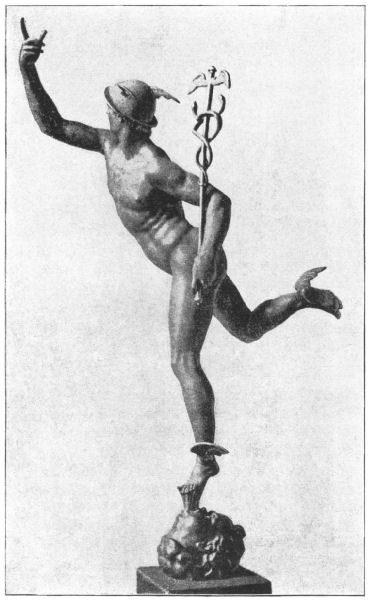
See page 86
サルモネウス(サルモネウス)。エリスの王。ユピテルの雷鳴を模倣しようとしたため、\r\n神によって冥界へと直接送られた。
Winged Mercury
サルース(サルース)。ローマの健康の女神。
Sol. The sun. The worship of the god Sol is [Pg 129] the oldest on record, and though he is sometimes referred to as being the same as the god Apollo, there is no doubt he was worshiped by the Egyptians, Persians, and other nations long before the Apollo of the Greeks was heard of. See Surya.
サッフォー(サッフォー)、レスボス島出身の著名な女流詩人。\r\n紀元前七世紀に活躍した。\r\n当時の女神たちとの唯一の繋がりは、ギリシア人たちが彼女を「第十のムーサ」と呼んだことである。
Somnus (Som′nus). The Roman god of sleep, son of Erebus and Nox (Night). He was one of the infernal deities, and resided in a gloomy cave, void of light and air.
皮肉、モムスを参照。
Sospita (Sos′pita). A name of Juno, as the safeguard of women. She is called the “saving goddess.”
サロン(サロン)、海の神。
Soter (So′ter). A Greek name of Jupiter, meaning Savior or deliverer.
サルペドン(サルペドン)、ユピテルとエウロパの子。\r\nトロイア戦争において、グラウコスがギリシア人に対抗してプリアモスを助けるために出発した際、彼に同行した。\r\nパトロクロスによって討たれた。
Soul, see Psyche.
[Pg 125]\r\nサトゥルヌス(サトゥルヌス)、宇宙の王、\r\nユピテル、ネプトゥヌス、プルートンの父であった。これらの神々は、\r\n父の王国を分割することについて互いに争い、\r\nその結果、ユピテルが天と地を、ネプトゥヌスが\r\n海を、プルートンが冥界を領することとなった。
South Wind, see Auster.
サトゥルナリア(サトゥルナリア)。十二月十六日または十八日頃にサトゥルヌスを称えて催された祭り。\r\n主に、通常それに伴う乱痴気騒ぎで有名であった。
Spear, see Pelias.
サトゥルニウス(サトゥルニウス)。サトゥルヌスの子であるユピテル、ネプトゥヌス、\r\nプルートンに与えられた名。
Sphinx, The. A monster having the head and breast of a woman, the body of a dog, the tail of a serpent, the wings of a bird, the paws of a lion, and a human voice. She lived in the country near Thebes, and proposed to every passer-by the following enigma: “What animal is that which walks on four legs in the morning, two at noon, and three in the evening.” Oedipus solved the riddle thus: Man is the animal; for, when an infant he crawls on his hands and feet, in the [Pg 130] noontide of life he walks erect, and as the evening of his existence sets in, he supports himself with a stick. When the Sphinx found her riddle solved she destroyed herself.
サティヤヴラタ(サティヤヴラタ)。ヒンドゥー教の法の神。\r\nメヌーと同じ。
Spider, see Arachne.
サテュロス(サテュロス)。森の精霊にして、半人半山羊の姿をなし、酒と女を好む者たちなり。彼らはディオニュソスの従者にして、パンに仕えるファウヌスと多くの点で似たり。シレノスを見よ。
Spindle, see Pallas.
スキュラ(スキュラ)。美しきニンフにして、ネプトゥーヌスの妻アンフィトリテの嫉妬を掻き立て、女神により恐ろしき海の怪物へと変えられし者なり。六つの恐ろしき醜い頭と首を持ち、予期せぬまま深きより現れ、船より六人もの船乗りを攫い、彼らを海の底へと運び去りし。渦潮カリュブディスと並び立つ危険にして、全ての船乗りを破滅へと脅かししものなり。
Spinning, see Arachne, Ergatis.
スキュラ(スキュラ)。ニュソスの娘にして、父の髪の魔力ある一房を切り取りしが故に、ヒバリへと変えられし者なり。ニュソスを見よ。
Spring, see Vertumnus.
海、ネプトゥーヌスを見よ。
Stable, see Augaeas.
季節、ウェルトゥムヌスを見よ。
Stars, see Aurora.
海藻、グラウコスを見よ。
Sterentius (Steren′tius). The Roman god who invented the art of manuring lands. See also Picumnus.
セゲティア(セゲティア)。収穫期に穀物を守りし田園の神なり。
Steropes (Ster′opes). One of the Cyclopes.
セム。エジプトのヘラクレスなり。
Stone, see Medusa and Phlegyas.
セメレ(セメレ)。カドモスの娘にして、バッコス(ディオニュソス)の母なり。ユピテルが彼女の特別な願いにより、その恐ろしき輝き全てを纏いて彼女を訪れし後に、奇跡的な方法で生まれし者なり。彼女は死後神格化され、テュオネと名付けられし。
Stone (rolling), see Sisyphus.
セミ・デイは半神なり。
Streets, see Apollo.
セモネス(セモネス)。「不死」と「死すべき者」の中間に位置するローマの神々にして、サテュロスやファウヌスのような者たちなり。
Stymphalides (Stym′phali′des). The carnivorous birds destroyed in the sixth labor of Hercules.
セプテリオン(セプテリオン)。デルフォイにて九年ごとに催されし祭りにして、アポロンを称え、その神がピュトンに勝利せし様が壮大に再現されしものなり。
Styx. A noted river of hell, which was held in such high esteem by the gods that they always swore “By the Styx,” and such an oath was never violated. The river has to be crossed in passing to the regions of the dead. See Achilles and Thetis.
[Pg 127]セラピス(セラピス)。エジプトのユピテルにして、一般にオシリスと同一視されし。アピスを見よ。
[Pg 131] Suada (Sua′da), the goddess of Persuasion. See Pitho.
蛇。ギリシャ人とローマ人は蛇を守護精霊の象徴と見なし、故にしばしば彼らの祭壇に刻まれし。アスクレピオス、アポロン、キマイラ、エウリュディケ、メドゥーサを見よ。
Success, see Bonus Eventus.
セシャナーガ(セシャナーガ)。エジプトのプルートー。
Sun, see Aurora, Belus, Sol, and Surya.
下水、クロアキナを参照。
Sunflower, see Clytie.
鋭い視力、リュンケウスを参照。
Suradevi (Sura′de′vi). The Hindoo goddess of wine.
羊飼い、パンを参照。
Surgeon (Sur′geon), see Podalirius.
盾、アンキリアを参照。
Surya (Su′ry′a). The Hindoo god corresponding to the Roman Sol, the sun.
船、ネプチューンを参照。
Swallow, see Itys.
沈黙、ハルポクラテスとタキタを参照。
Swan, see Cygnus and Leda.
シレノス(シレノス)。バッカス信仰の半神にして、サテュロスたちの長。彼は通常、太り、酔いしれた老人がロバに乗り、花冠を戴いた姿で描かれる。
Swiftness, see Atalanta.
歌唱、ポリュムニア、タミュリスを参照。
Swine, see Circe.
セイレーン(セイレーン)。海のニンフたちで、その音楽によって船乗りたちを破滅へと誘った。彼らの住処に近づく際、その罠を避けるため、ユリシーズは仲間たちの耳を蝋で塞ぎ、自らは船のマストに縛り付けさせた。彼らはかくして無事に通り過ぎたが、セイレーンたちは自らの魅力が力を失ったと思い、身を投げた。
Sylphs. Genii who, according to Plato, lived in the air.
シシュポス(シシュポス)、アイオロスとエナレッタの息子。彼は冥界にて、石を丘の頂上まで転がし上げることを宣告されたが、頂上に達すると石は再び転がり落ちるため、その罰は永遠に続いた。
Sylvester (Sylves′ter). The name of Mars when he was invoked to protect cultivated land from the ravages of war.
シヴァ(シヴァ)。ヒンドゥー神話における「姿を変える者」。彼は通常、「破壊者にして再生者」として語られる。
Syrinx. The name of the nymph who, to escape from the importunities of Pan, was by Diana changed into reeds, out of which he made his celebrated pipes, and named them “The Syrinx.”
殺戮、フューリーズを参照。
Tantalus (Tan′talus). Father of Niobe and Pelops, who, as [Pg 132] a punishment for serving up his son Pelops as meat at a feast given to the gods, was placed in a pool of water in the infernal regions; but the waters receded from him whenever he attempted to quench his burning thirst. Hence the word “tantalizing”.
眠り、カドゥケウス、モルペウス、ソムヌスを参照。
Speaking of this god, Homer’s Ulysses says: “I saw the severe punishment of Tantalus. In a lake, whose waters approached to his lips, he stood burning with thirst, without the power to drink. Whenever he inclined his head to the stream, some deity commanded it to be dry, and the dark earth appeared at his feet. Around him lofty trees spread their fruits to view; the pear, the pomegranate, and the apple, the green olive, and the luscious fig quivered before him, which, whenever he extended his hand to seize them, were snatched by the winds into clouds and obscurity.”
スレイプニル(スレイプニル)。スカンジナビアの神々の長であるオーディンの八本足の馬。
Tartarus (Tar′tarus). An inner region of hell, to which the gods sent the exceptionally depraved.
See page 86
Telchines (Telchi′nes). People of Rhodes, who were envious sorcerers and magicians.
Winged Mercury
[Pg 133] Tellus (Tel′lus). A name of Cybele, wife of Saturn, and the Roman deity of mother-earth.
See page 86
Tempests, see Fro.
Winged Mercury
Temple. An edifice erected to the honor of a god or goddess in which the sacrifices were offered.
86ページを参照。
Tenth Muse. Sappho was so called.
翼あるメルクリウス
Tereus (Ter′eus) was a son of Mars. He married Procne, daughter of the king of Athens, but became enamored of her sister Philomela, who, however, resented his attentions, which so enraged him that he cut out her tongue. When Procne heard of her husband’s unfaithfulness she took a terrible revenge (see Itys). Procne was turned into a swallow, Philomela into a nightingale, Itys into a pheasant, and Tereus into a hoopoe, a kind of vulture, some say an owl.
ソル。太陽。神ソルへの崇拝は、記録に残る中で最も古く、時にアポロン神と同一視されることもあるが、ギリシャのアポロンが知られる遥か以前から、エジプト人、ペルシャ人、その他の民族によって崇拝されていたことは疑いない。スーリヤを参照。
Tergemina (Tergemi′na). A name of Diana, alluding to her triform divinity as goddess of heaven, earth, and hell.
ソムヌス(ソムヌス)。ローマの眠りの神で、エレボスとノックス(夜)の息子。彼は冥界の神々の一柱であり、光も空気もない陰鬱な洞窟に住まっていた。
Terminus (Ter′minus). The Roman god of boundaries.
ソスピタ(ソスピタ)。ユノの別名にして、婦人たちの守護者なり。「救いの女神」と称せらる。
Terpsichore (Terpsich′ore). One of the nine Muses; she presided over dancing.
ソテル(ソテル)。ゼウスのギリシャ名にして、救世主あるいは解放者を意味す。
Terra. The Earth; one of the most ancient of the Grecian goddesses.
魂、プシュケを見よ。
Thalestris (Thales′tris). A queen of the Amazons.
南風、アウステルを見よ。
Thalia (Thali′a). One of the nine Muses; she presided over festivals, pastoral poetry and comedy.
槍、ペリアスを見よ。
Thalia (Thali′a). One of the Graces. (See Charities).
スフィンクス。女の頭と胸、犬の体、蛇の尾、鳥の翼、獅子の足、そして人の声を持つ怪物なり。テーベ近郊の地に住み、通りかかる者すべてに次の謎をかけた。「朝には四本の足で歩み、昼には二本、夕べには三本の足で歩む動物とは何ぞや。」オイディプスはこの謎を解き明かした。曰く、その動物とは人なり。幼子の頃は手足で這い、人生の真昼には直立して歩み、その存在の夕べが訪れれば、杖に身を支えるゆえに。スフィンクスは己の謎が解かれたと知るや、自ら命を絶ちぬ。
[Pg 134] Thamyris (Tham′yris). A skilful singer, who presumed to challenge the Muses to sing, upon condition that if he did not sing best they might inflict any penalty they pleased. He was, of course, defeated, and the Muses made him blind.
蜘蛛、アラクネを見よ。
Theia (The′ia) or Thea. A daughter of Uranus and Terra, wife of Hyperion.
紡錘、パラスを見よ。
Themis (The′mis), a daughter of Coelus and Terra, and wife of Jupiter, was the Roman goddess of laws, ceremonies, and oracles.
紡績、アラクネ、エルガティスを見よ。
Theseus (The′seus). One of the most famous of the Greek heroes. He was a son of Aegeus, king of Athens. He rid Attica of Procrustes and other evil-doers, slew the Minotaur, conquered the Amazons and married their Queen.
春、ウェルトゥムヌスを見よ。
Thesmorphonis (Thesmorpho′nis). A name of Ceres.
厩、アウゲイアスを見よ。
Thetis (The′tis). A sea-goddess, daughter of Nereus and Doris. Her husband was Peleus, king of Thessaly, and she was the mother of the famous Achilles, whom she rendered all but invulnerable by dipping him into the River Styx. See Achilles.
星々、アウロラを見よ。
Thief, see Laverna, Mercury.
ステレンティウス(ステレンティウス)。土地に肥を施す術を発明せしローマの神なり。ピクムヌスもまた見よ。
Thor. The Scandinavian war-god (son of Odin), who had rule over the aerial regions, and, like Jupiter, hurled thunder against his foes.
ステロペス(ステロペス)。キュクロプスの一柱なり。
Thor’s Belt is a girdle which doubles his strength whenever the war-god puts it on.
石、メドゥーサとフレギュアスを見よ。
[Pg 135] Thoth. The Mercury of the Egyptians.
石(転がる)、シシュポスを見よ。
Thread of Life, see Fates.
街路、アポロンを見よ。
Thunderbolts, see Cyclops.
スティムパリデス(スティムパリデス)。ヘラクレスの第六の功業にて滅ぼされし肉食の鳥どもなり。
Thunderer, The, Jupiter. See Tonitrualis.
ステュクス。冥府の著名なる河にして、神々よりかくも尊ばれしゆえ、常に「ステュクスにかけて」と誓いし誓いは、決して破られざりき。死者の国へ赴くには、この河を渡らねばならぬ。アキレウスとテティスを見よ。
Thya (Thy′a), a name of Ops.
[Pg 131]スアーダ(スアーダ)、説得の女神なり。ピートーを見よ。
Thyades (Thya′des). Priestesses of Bacchus, who ran wild in the hills, wearing tiger-skins and carrying torches.
成功、ボヌス・エウェントゥスを見よ。
Thyrsus (Thyr′sus), a kind of javelin or staff carried by Dionysus and his attendants. It was usually wreathed with ivy and topped by a pine-cone. See Bacchus.
太陽、アウロラ、ベルス、ソル、スーリヤを見よ。
Tides, see Narayan.
向日葵、クリュティエを見よ。
Time (or Saturn). The husband of Virtue and father of Truth.
スラデーヴィー(スラデーヴィー)。ヒンドゥー教の葡萄酒の女神。
Tisiphone (Tis-iph′one). One of the Furies, daughter of Nox and Acheron, who was the minister of divine vengeance upon mankind.
外科医(サージョン)、ポダリリウスを見よ。
Titan (Ti′tan). Elder brother of Saturn, who made war [Pg 136] against him, and was ultimately vanquished by Jupiter.
スーリヤ(スーリヤ)。ローマのソル、すなわち太陽に相当するヒンドゥー教の神。
Titans (Ti′tans) were the supporters of Titan in his war against Saturn and Jupiter. They were the sons of Uranus and Gaea, men of gigantic stature and of great strength. Hence our English word Titanic.
ツバメ、イテュスを見よ。
Tithonus (Ti-tho′nus). The husband of Aurora. At the request of his wife the gods granted him immortality, but she forgot at the same time to ask that he should be granted perpetual youth. The consequence was that Tithonus grew old and decrepit, while Aurora remained as fresh as the morning. The gods, however, changed him into a grasshopper, which is supposed to moult as it gets old, and grows young again.
ハクチョウ、キュグヌスとレーダーを見よ。
Tityus (Tit′yus). A son of Jupiter. A giant who was thrown into the innermost hell for insulting Diana. He, like Prometheus, has a vulture constantly feeding on his ever-growing liver, the liver being supposed to be the seat of the passions.
俊足、アタランテを見よ。
Toil, see Atlas.
豚、キルケーを見よ。
Tombs, see Manes.
シルフィ。プラトンによれば、大気中に住まう精霊たち。
Tongue, see Tereus.
シルウェステル(シルウェステル)。マルスが、耕作地を戦禍より守るために呼び求められた際の御名。
Tonitrualis (Tonitrua′lis), or Tonans. The Thunderer; a name of Jupiter.
シュリンクス。パンのしつこい求愛から逃れるため、ディアナによって葦に変えられたニュンペーの名。パンはその葦から彼の名高き笛を作り、「シュリンクス」と名付けた。
Tragedy, see Melpomene.
タンタロス(タンタロス)。ニオベーとペロプスの父。神々への饗宴にて、己が子ペロプスを肉として供した罰として、冥界の水の池に置かれしが、燃えるような渇きを癒さんと水を飲もうとするたび、水は彼より退き去りぬ。ゆえに「タンタロスのような苦しみ」という言葉が生まれたり。
Trees, see Aristaeus.
この神について語るに、ホメロスのオデュッセウスは曰く、「我はタンタロスの厳しき罰を見たり。その唇に水が迫る湖にて、彼は渇きに燃えながらも、飲む力なく立ち尽くせり。彼が頭を水流に傾けるたび、ある神が命じて水を干上がらせ、彼の足元には黒き土が現れぬ。彼の周りには高き木々が実を広げ、梨、ザクロ、林檎、青きオリーブ、そして甘美なるイチジクが彼の前に震えたり。彼が手を伸ばしてそれらを掴もうとするたび、風によって雲の中、そして闇の中へと奪い去られぬ。」
[Pg 137] Tribulation, see Echidna.
タルタロス(タルタロス)。地獄の奥深き領域にして、神々が極めて堕落せし者を送る場所。
Triformis (Trifor′mis), see Tergemina.
テルキネス(テルキネス)。ロドス島の民にして、嫉妬深き魔術師、妖術師たち。
Triptolemus (Triptol′emus). A son of Oceanus and Terra. He was a great favorite of the goddess Ceres, who cured him of a dangerous illness when he was young, and afterwards taught him agriculture. She gave him her chariot, which was drawn by dragons, in which he carried seed-corn to all the inhabitants of the earth, and communicated the knowledge given to him by Ceres. Cicero mentions a Triptolemus as the fourth judge of the dead.
[頁 133] テルス(テルス)。キュベレーの別名にして、サトゥルヌスの妻、そしてローマの母なる大地の神なり。
Triterica (Triteri′ca). Bacchanalian festivals.
嵐、フロを参照。
Tritons (Tri′tons) were sons of Triton, a son of Neptune and Amphitrite. They were the trumpeters of the sea-gods, and were depicted as a sort of mermen—the upper half of the body being like a man, and the lower half like dolphins.
神殿。神々を崇め奉り、生贄を捧げし建造物なり。
Trivia (Tri′via). A surname given to Diana, because she presided over all places where three roads meet.
第十のムーサ。サッフォーはかく呼ばれし。
Trophonius (Tropho′nius). A legendary hero of architecture, and one of Jupiter’s most famous oracles.
テレーウス(テレーウス)はマールスの息子なりき。彼はアテナイの王の娘プロクネーと結婚せしが、その妹ピロメーラーに心を奪われし。されどピロメーラーは彼の求愛を拒みしゆえ、テレーウスは激怒し、彼女の舌を切り取りし。プロクネーは夫の不貞を知るや、恐ろしき復讐を遂げし(イテュスを参照)。プロクネーはツバメに、ピロメーラーはナイチンゲールに、イテュスはキジに、そしてテレーウスはヤツガシラ、ある種のハゲタカ、あるいはフクロウに変えられしと伝わる。
Troy. The classic poets say that the walls of this famous city were built by the magic sound of Apollo’s lyre. See Dardanus, Helen, Hercules, Paris.
テルゲミナ(テルゲミナ)。ディアーナの別名にして、天、地、冥府の女神としての三位一体の神性を暗示するものなり。
Trumpeters, see Tritons.
テルミヌス(テルミヌス)。ローマの境界の神。
[Pg 138] Truth. A daughter of Time, because Truth is discovered in the course of Time. Democritus says that Truth lies hidden at the bottom of a well.
テルプシコラー(テルプシコラー)。九柱のムーサの一柱にして、舞踏を司りし。
Tutelina (Tutel′ina). A rural divinity—the goddess of granaries.
テッラ。大地。ギリシアの女神たちの中で最も古き者の一柱なり。
Two Faces, see Janus.
タレストリス(タレストリス)。アマゾーンの女王。
Typhoeus (Typhoe′us), see Typhon.
タレイア(タレイア)。九柱のムーサの一柱にして、祝祭、牧歌、喜劇を司りし。
Typhon (Ty′phon). A monster with a hundred heads who made war against the gods, but was crushed by Jove’s thunderbolts, and imprisoned under Mount Etna.
タレイア(タレイア)。カリテスの一柱。(カリテスを参照)。
Typhon (Ty′phon). In Egyptian mythology the god who tried to undo all the good work effected by Osiris. According to the Greek writer, Hesiod, Typhon or Typhoeus was a monster giant, son of Terra and Tartarus.
[頁 134] タミュリス(タミュリス)。巧みなる歌い手にして、ムーサたちに歌の勝負を挑みし者なり。その条件とは、もし彼が最も巧みに歌えざれば、ムーサたちは望むいかなる罰をも与えうるというものなりき。彼は当然ながら敗れ、ムーサたちは彼を盲目となしし。
テイア(テイア)あるいはテア。ウーラノスとテッラの娘にして、ヒュペリーオーンの妻。
Ulysses (Ulys′ses). A noted king of Ithaca, whose exploits in connection with the Trojan war, and his adventures on his return therefrom, are the subject of Homer’s Odyssey. His wife’s name was Penelope, and he was so much endeared to her that he feigned madness to get himself excused from going to the Trojan war; but this artifice was discovered, and he [Pg 139] was compelled to go. He was of great help to the Grecians, and forced Achilles from his retreat, and obtained the charmed arrows of Hercules from Philoctetes, and used them against the Trojans. He enabled Paris to shoot one of them at the heel of Achilles, and so kill that charmed warrior. During his wanderings on his homeward voyage he was taken prisoner by the Cyclopes and escaped, after blinding Polyphemus, their chief. At Aeolia he obtained all the winds of heaven, and put them in a bag; but his companions, thinking that the bags contained treasure which they could rob him of when they got to Ithaca, cut the bags, and let out the winds, and the ships were immediately blown back to Aeolia. After Circe had turned his companions into swine on an island where he and they were shipwrecked, he compelled the goddess to restore them to their human shape again. As he passed the islands of the Sirens he escaped their allurements by stopping the ears of his companions with wax, and fastening himself to the mast of his ship. His wife Penelope was a pattern of constancy; for, though Ulysses was reported to be dead, she would not marry any one else, and had the satisfaction of finding her husband return after an absence of about twenty years. The Greek name of Ulysses is Odysseus.
テミス(テミス)、コエルスとテッラの娘にして、ユーピテルの妻なりし彼女は、ローマの法、儀式、そして神託の女神なりき。
[Pg 140] Undine (Un′dine). A water-nymph, or sylph, who, according to fable, might receive a human soul by marrying a mortal.
テセウス (テセウス)。ギリシアの英雄の中でも最も名高き一人なり。彼はアテナイの王アイゲウスの子なりき。アッティカよりプロクルステスをはじめとする悪しき者どもを駆逐し、ミノタウロスを討ち果たし、アマゾン族を征服してその女王を妻としたり。
Unknown God, An. With reference to this God, nothing can be more appropriate than St. Paul’s address to the Athenians, as recorded in the 17th chapter of the Acts of the Apostles:
テスモフォニス (テスモフォニス)。ケレスの別名なり。
“Ye men of Athens, I perceive that in all things ye are too superstitious. For as I passed by, and beheld your devotions, I found an altar with this inscription, TO THE UNKNOWN GOD. Whom therefore ye ignorantly worship, him declare I unto you. God that made the world and all things therein, seeing that he is Lord of heaven and earth, dwelleth not in temples made with hands; neither is worshiped with men’s hands, as though he needed anything, seeing he giveth to all life, and breath, and all things; and hath made of one blood all nations of men for to dwell on all the face of the earth, and hath determined the times before appointed, and the bounds of their habitation; that they should seek the Lord, if haply they might feel after him, and find him, though he be not far from every one of us: for in him we live, and move, and have our being; as certain also of your own poets have said, For we are also his offspring. Forasmuch then as we are the offspring of God, we ought not to think that the Godhead is like unto gold, or silver, or stone, graven by art and man’s device. And the times of this ignorance God winked at; but now commandeth all men everywhere to repent: because he hath appointed a day, in the which he will judge the world in righteousness by that man whom he hath ordained; whereof he hath given assurance unto all men, in that he hath raised him from the dead.”
テティス (テティス)。海の女神にして、ネレウスとドリスの娘なり。その夫はテッサリアの王ペレウスにして、かの名高きアキレウスの母なりき。彼女はアキレウスをステュクス河に浸し、彼をほぼ不死身となしたり。アキレウスの項を見よ。
Unxia (Unx′ia). A name of Juno, relating to her protection of newly married people.
盗賊。ラヴェルナ、メルクリウスの項を見よ。
Urania (Ura′nia). A daughter of Jupiter and Mnemosyne—one [Pg 141] of the Muses who presided over astronomy.
トール。スカンジナビアの軍神(オーディンの子)にして、空の領域を司り、ユピテルが如く、敵に雷を投げつけたり。
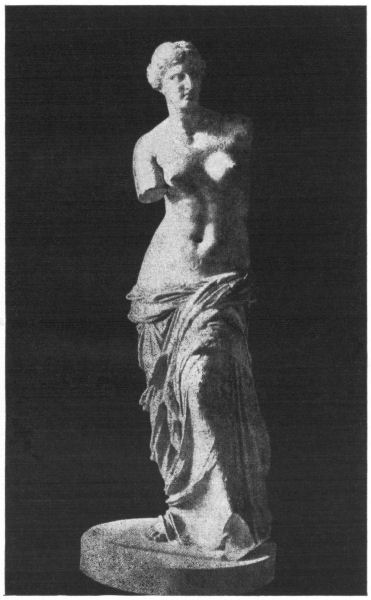
See page 142
トールの帯は、軍神が身につくるたびに、その力を倍加させる帯なり。
Venus de Milo
[Pg 135] トート。エジプトのメルクリウスなり。
Uranus (Ura′nus), literally, heaven. Son and husband of Gaea, the Earth, and father of Chronos (Time) and the Titans. The Greek name of Coelus; his descendants are sometimes called Uranides.
生命の糸。運命の女神たちの項を見よ。
Urgus (Ur′gus). A name of Pluto, signifying the Impeller.
雷霆。キュクロプスの項を見よ。
Ursa Major (Ur′sa Ma′jor), see Calisto.
雷鳴主。ユピテル。トニトルアリスの項を見よ。
Ursa Minor (Ur′sa Mi′nor), see Arcas.
テュア (テュア)。オプスの別名なり。
Usurers, see Jani.
テュアデス (テュアデス)。バッカスに仕えし女祭司たちにして、丘を駆け巡り、虎の皮をまとい、松明を携えたり。
Utgard Loki (Ut′gard Lo′ki). In Scandinavian mythology the king of the giants.
テュルソス (テュルソス)。ディオニュソスとその従者たちが携えし、一種の槍、あるいは杖なり。通常、蔦で飾られ、松かさにて頂を覆われしものなり。バッカスの項を見よ。
Valhalla (Valhal′la). The Scandinavian temple of immortality, inhabited by the souls of heroes slain in battle.
潮汐。ナーラーヤナの項を見よ。
Vali (Va′li). The Scandinavian god of archery.
時(あるいはサトゥルヌス)。徳の夫にして、真実の父なり。
Valleys, see Vallonia.
ティシフォネ (ティシフォネ)。復讐の女神たちの一柱にして、ノクスとアケロンの娘なり。人類に対する神罰を執行する者なりき。
Vallonia (Vallo′nia). The goddess of valleys.
ティタン (ティタン)。サトゥルヌスの兄にして、彼に戦を仕掛けしが、[Pg 136]終にはユピテルに打ち破られし者なり。
Varuna (Varu′na). The Hindoo Neptune—generally represented as a white man riding on a sea-horse, carrying a club in one hand and a rope or noose to bind offenders in the other.
ティタン族 (ティタン族)は、ティタンがサトゥルヌスとユピテルに戦を挑みし際、彼を支持せし者どもなり。彼らはウラノスとガイアの子ら、巨躯にして大いなる力を持つ者どもなりき。故に、我らの言葉にタイタニックという語あり。
Vedius (Ve′dius). The same as Vejovis.
ティートーノス(ティートーヌス)。アウローラの夫。妻の願いにより、神々は彼に不死を与えしが、彼女は同時に永遠の若さを願うことを忘れしなり。その結果、ティートーノスは老い衰えゆき、アウローラは朝露のように瑞々しきままでありし。されど神々は彼を蝉に変えし。蝉は老いれば脱皮し、再び若返るとされるものなり。
Vejovis (Vejo′vis). “Little Jupiter”—a name given to Jupiter when he appeared without his thunder.
ティテュオス(ティテュウス)。ユーピテルの息子。ディアーナを侮辱せしがゆえに、最深の冥府へと投げ込まれし巨人なり。彼はプロメーテウスのごとく、禿鷹に常に再生する肝臓を食い荒らされおり、肝臓は情念の宿る場所とされし。
Vejupiter (Veju′piter), see Vejovis.
労苦、アトラスを見よ。
[Pg 142] Vengeance, see Nemesis.
墓、マーネスを見よ。
Venus (Ve′nus). The goddess of beauty, and mother of love. She is said to have sprung from the foam of the sea, and was immediately carried to the abode of the gods on Olympus, where they were all charmed with her extreme beauty. Vulcan married her, but she permitted the attentions of others of the gods, and notably of Mars, their offspring being Hermione, Cupid, and Anteros. After this she left Olympus and fell in love with Adonis, a beautiful youth, who was killed when hunting a wild boar. Venus indirectly caused the Trojan War, for, when the goddess of discord had thrown among the goddesses the golden apple inscribed “To the fairest,” Paris adjudged the apple to Venus, and she inspired him with love for Helen, wife of Menelaus, king of Sparta. Paris carried off Helen to Troy, and the Greeks pursued and besieged the city (see Helen, Paris, and Troy). Venus is mentioned by the classic poets under the names of Aphrodite, Cypria, Urania, Astarte, Paphia, Cythera, and the laughter-loving goddess. Her favorite residence was at Cyprus. Incense alone was usually offered on her altars, but if there was a victim it was a white goat. Her attendants were Cupids and the Graces.
舌、テレウスを見よ。
Verticordia (Verti′cor′dia). A Roman name of Venus, signifying the power of love to change the [Pg 143] hard-hearted. The corresponding Greek name was Epistrophia.
トニトルアーリス(トニトルアーリス)、あるいはトナンス。雷鳴の主。ユーピテルの別名なり。
Vertumnus (Vertum′nus) (“the Turner,” “Changer”). God of spring, or, as some mythologists say, of the seasons; the husband of Pomona, the goddess of fruits and orchards.
塔、キュベレーを見よ。
Vesta (Ves′ta), daughter of Saturn and Cybele, was the goddess of the hearth and its fire. She had under her special care and protection a famous statue of Minerva, before which the Vestal Virgins kept a fire or lamp constantly burning.
悲劇、メルポメネーを見よ。
Vestal Virgins (Ves′tal Vir′gins) were the priestesses of Vesta, whose chief duty was to see that the sacred fire in the temple of Vesta was not extinguished. They were always selected from the best families, and were under a solemn vow of chastity, and compelled to live perfectly pure lives.
木々、アリスタイオスを見よ。
Vialis (Via′lis). A name of Mercury, because he presided over the making of roads.
[頁 137]苦難、エキドナを見よ。
Victory (Vic′tory). A goddess, the daughter of Styx and Acheron, generally represented as flying in the air holding out a wreath of laurel. Her Greek name is Nike (Nicē). See Nicephorus.
トリフォルミス(トリフォルミス)、テルゲミナを見よ。
Vidor. A Scandinavian god, who could walk on the water and in the air. The god of silence (corresponding with the classic Harpocrates).
トリプトレモス(トリプトレモス)。オケアノスとテラの息子。彼は女神ケレースに深く寵愛されし者なり。ケレースは彼が若かりし頃、危険な病より彼を癒し、その後、農耕を教えし。彼女は彼に竜に引かせし戦車を与え、彼はその戦車にて地上の全ての住民に種蒔き用の穀物を運び、ケレースより授かりし知識を伝えし。キケロはトリプトレモスを死者の第四の審判者として言及せり。
Virtue. A goddess worshiped by most of the ancients under various names. The way to [Pg 144] the temple of honor was through the temple of virtue.
トリテリカ(トリテリカ)。バッカス祭なり。
Virtuous Women, see Juno.
トリトンたち(トリトンたち)は、ネプトゥーヌスとアンフィトリーテーの息子たるトリトンの子らなり。彼らは海神たちのラッパ吹きにして、上半身は人間に似、下半身はイルカのようである、半人半魚の者たちとして描かれし。
Vishnu (Vish′nu). The Preserver, the principal Hindoo goddess.
トリウィア(トリウィア)。ディアーナに与えられし別名なり。彼女が三叉路の全ての場所を司りしがゆえに。
Volupia (Volu′pia), see Angeronia.
トロフォニウス (トロフォニウス)。建築の伝説的な英雄にして、ユピテルの最も名高い神託の一つなり。
Vulcan (Vul′can), the god of fire, was the son of Jupiter and Juno. He offended Jupiter, and was by him thrown out of heaven; he was nine days falling, and at last dropped into Lemnos with such violence that he broke his leg, and was lame forever after. Vulcan was married to Venus. He is supposed to have formed Pandora out of clay. His servants were the Cyclopes. He was the patron deity of blacksmiths, and as the smelter or softener of metal bears also the name of Mulciber.
トロイ。古典の詩人たちは、この名高き都の城壁がアポロンの竪琴の神秘的な音により築かれしと語る。ダルダノス、ヘレン、ヘラクレス、パリスを見よ。
Vulcanalia (Vulcān-al′ia) were Roman festivals in honor of Vulcan, at which the victims (certain fish and animals) were thrown into the fire and burned to death.
ラッパ吹き、トリトンたちを見よ。
[Pg 138] 真理。時の娘なり。真理は時の流れの中で見出されるがゆえに。デモクリトスは、真理は井戸の底に隠されしと語る。
Water, see Canopus.
トゥテリナ (トゥテリナ)。田園の神性、すなわち穀物倉の女神なり。
Water-Nymphs, see Doris.
二つの顔、ヤヌスを見よ。
Wax Tablets, see Calliope.
テューポエウス (テューポエウス)、テューポーンを見よ。
[Pg 145] Wealth, see Cuvera.
テューポーン (テューポーン)。百の頭を持つ怪物にして、神々に戦いを挑みしが、ユピテルの雷霆により打ち砕かれ、エトナ山の下に幽閉されし。
Weaving, see Ergatis.
テューポーン (テューポーン)。エジプト神話においては、オシリスが成し遂げし全ての善き業を覆さんと努めし神なり。ギリシアの著述家ヘシオドスによれば、テューポーン、あるいはテューポエウスは、テラとタルタロスの息子なる巨大な怪物なりき。
Weights and Measures, see Mercury.
ユリシーズ (ユリシーズ)。イタケーの名高き王にして、トロイア戦争におけるその功績と、そこからの帰還における冒険は、ホメロスの『オデュッセイア』の主題なり。彼の妻の名はペネロペといい、彼は彼女を深く愛し、トロイア戦争へ行くことを免れんとして狂気を装いしが、この策略は露見し、彼は[頁 139]行かざるを得ざりき。彼はギリシア人にとって大いなる助けとなり、アキレウスを隠遁の地より引き出し、ピロクテテスよりヘラクレスの魅惑の矢を手に入れ、これをトロイア人に対して用いたり。彼はパリスをしてアキレウスの踵にその矢の一本を射させ、かくしてその魅惑されし戦士を討ち取らせたり。故郷への航海のさなかの放浪において、彼はキュクロプスに捕らえられしが、彼らの首領ポリフェモスを盲目にした後、脱出したり。アイオリアにて彼は天上のあらゆる風を手に入れ、これを袋に封じ込めしが、彼の仲間たちは、袋にイタケーに着けば彼から奪い取れる財宝が入っていると思い込み、袋を切り裂き、風を解き放ちしため、船はたちまちアイオリアへと吹き戻されし。キルケーが、彼らが難破した島にて、彼の仲間たちを豚に変えた後、彼は女神に命じ、彼らを再び人間の姿に戻させたり。セイレーンの島々を通り過ぎる際、彼は仲間たちの耳を蝋で塞ぎ、自らは船のマストに身を縛り付けることで、彼女らの誘惑から逃れたり。彼の妻ペネロペは貞節の鑑なりき。ユリシーズは死んだと報じられたにもかかわらず、彼女は他の誰とも結婚しようとはせず、約二十年の不在の後、夫が帰還するのを見届け、満足を得たり。ユリシーズのギリシア名はオデュッセウスである。
Well, see Truth.
[頁 140] ウンディーネ (ウンディーネ)。水の精、あるいはシルフにして、伝説によれば、定命の者と結婚することにより、人間の魂を得ることができたという。
West Wind, see Favonius.
未知の神。この神に関して、聖パウロがアテネ人に向けて語りし言葉、すなわち使徒行伝第17章に記されしものより、さらに適切なるものはあらざるべし。
Winds, see Aurora, Auster, Boreas, Zephyr.
「アテネの皆さん、私はあなたがたがあらゆる点において、あまりにも信心深いことを認めます。私が通り過ぎ、あなたがたの礼拝の対象を眺めし時、私は『未知の神へ』と刻まれし祭壇を見つけました。ゆえに、あなたがたが知らずして崇拝するその方を、私があなたがたに告げましょう。世界とそこにあるすべてのものを造り給いし神は、天地の主なるがゆえに、人の手で造られし神殿には住み給わず、また、何事をも必要とするかの如く、人の手によりて崇められず。彼はすべての人に命と息と万物を与え給うからです。そして、彼は一つの血より、地の全面に住まわせるために、すべての国の民を造り、あらかじめ定められし時と、その住まいの境界を定め給いました。それは、彼らが主を求め、もしや手探りにて彼を感じ、見出すことあらんことを願うためです。彼は我ら一人一人より遠からず、我らは彼の中に生き、動き、存在す。あなたがた自身の詩人の中にも、『我らもまた彼の裔なり』と語りし者あり。ゆえに、我らが神の裔なるがゆえに、神性が金、銀、石、人の技と工夫によりて彫刻されしものに似たりと考えるべからず。この無知の時代を神は看過し給いしが、今や、いたるところのすべての人に悔い改めを命じ給う。なぜならば、彼は、彼が定め給いしその人によりて、義をもって世界を裁く日を定め給いしからです。その証拠として、彼を死者の中から甦らせ給いしにより、すべての人に確信を与え給えり。」
Wine, see Bacchus, Suradevi.
ウンクシア(ウンクシア)。ユノの別名にして、新婚の人々を保護することに関わるものなり。
Wisdom, see Pollear, Minerva.
ウラニア(ウラニア)。ユピテルとムネモシュネの娘にして、[Pg 141]天文学を司りしムーサたちの一柱なり。
Woden (Wo′den), the Anglo-Saxon form of the Scandinavian god Odin; Wednesday is called after him.
See page 142
Women’s Safeguard, see Sospita.
Venus de Milo
Woodpecker, see Picus.
See page 142
Woods, see Dryads.
Venus de Milo
World, see Chaos.
参照 142ページ
Yama (Ya′ma). The Hindoo devil, generally represented as a terrible monster of a green color, with flaming eyes.
ウラノス(ウラヌス)、文字通り天。ガイア(大地)の息子にして夫、そしてクロノス(時)とティターンたちの父。コエルスのギリシャ名にして、その子孫は時にウラニデスと呼ばれる。
Ygdrasil (Yg′dra′sil). The famous ash-tree of Scandinavian mythology, under which the gods held daily council.
ウルグス(ウルグス)。プルートーの一名にして、駆り立てる者を意味する。
Ymir (Y′mir). The Scandinavian god, corresponding to Chaos of the classics.
おおぐま座(ウルサ・マヨル)、カリスト参照。
Youth (perpetual), see Tithonus.
こぐま座(ウルサ・ミノル)、アルカス参照。
[Pg 146] Zephyr (Zeph′yr) or Zephyrus (Zeph′yrus). The west wind and god of flowers, a son of Astraeus and Aurora (Eos). See Favonius.
高利貸し、ヤーニ参照。
Zetes (Ze′tes), with his brother Calais, drove the Harpies from Thrace.
ウートガルズ・ロキ(ウトガルズ・ロキ)。スカンジナビア神話における巨人たちの王。
Zethus (Ze′thus), twin brother of Amphion. He was the son of Antiope and Zeus. See Amphion.
Zeus (Zūs). The Greek name of Jupiter, the greatest god in Grecian mythology. He was the god of the sky and its phenomena, and as such was worshiped on the highest mountains, on which he was enthroned. From Zeus come all changes in the sky or the winds; he is the gatherer of the clouds which dispense fertilizing rain; and is also the thunderer and hurler of lightning.
ヴァーリ(ヴァーリ)。スカンジナビアの弓術の神。
THE END.
谷、ヴァローニア参照。
Entertainments for Every Occasion. Ideas, games, charades, tricks, plans—for keeping those present entertained, on whatever occasion, whether a party, a festival, a bazaar, an entertainment, or merely “our own folks” or an “entre nous.”
The Humorous Speaker. The choicest, most recent humor that lends itself to recitation. Easily the best collection that has been made. The selections are chosen because they are good literature, and because they are good recitations. Unhackneyed material—most of it from recently copyrighted books, for which special permission has been secured. A hundred and twenty five selections, about 500 pages.
Commencement Parts. “Efforts” for all occasions. Models for every possible occasion in high-school and college career, every one of the “efforts” being what some fellow has stood on his feet and actually delivered on a similar occasion—not what the compiler would say if he should happen to be called on for an ivy song or a response to a toast, or what not; but what the fellow himself, when his turn came, did say! Invaluable, indispensable to those preparing any kind of “effort.” Unique.
Contains models of the salutatory, the valedictory, orations, class poems, class songs, class mottoes, class will, ivy poem and song, Dux’s speech; essays and addresses for flag day, the seasons, national and other holidays; after-dinner speeches and responses to toasts. Also models for occasional addresses—social, educational, political, religious. Also models for superintendents’ and principals’ addresses to graduating class, debating team, educational conference; on dedication of school building, public building, library; for holidays, festival days, and scores of social and other occasions. Also themes for essays, and lists of subjects for orations, essays, toasts.
College Men’s 3-Minute Declamations. Material with vitality in it for prize speaking. 14th edit.
College Maids’ 3-Minute Readings. Up-to-date recitations from living men and women. On the plan of the popular College Men’s 3-Minute Declamations, and on the same high plane. Twelfth edition.
Pieces for Prize Speaking Contests. Volume I. Over one hundred pieces that have actually taken prizes in prize speaking contests. Successful.
Pieces for Prize Speaking Contests. Vol. II.
Pieces for Every Occasion. “Special days.”
Famous Poems Explained. (Barbe).
How to Attract and Hold an Audience. Every student in college or school, every lawyer, every teacher, every clergyman, every man or woman occupying an official position, every citizen and every youth who is likely ever to have occasion in committee, or in public, to enlist the interest, to attract and hold the attention of one or more hearers, and convince them—every person who ever has to, or is likely to have to “speak” to one or more listeners will find in our new book a clear, concise, complete handbook which will enable him to succeed!
Thorough, concise, methodical, replete with common sense, complete. In his logical method, in the crystal-like lucidity of his style, in his forceful, incisive, penetrating mastery of his subject, the author has at one bound placed himself on a plane with the very ablest teacher-authors of his day.
Fenno’s Science and Art of Elocution. Standard. Probably the most successful of its kind.
The Power of Speech, How to Acquire It. A comprehensive system of vocal expression. Thorough and practical instruction in the use of the speaking voice, embracing deep breathing, articulation, modulation, emphasis and delivery; vocal coloring, interpretation of the written word, the conveying of thought by means of vocal expression, and the principles of oratory and dramatic art.
The Psychology of Public Speaking. A scientific treatment of the practical needs of the public speaker. A worth-while book.
How to Use the Voice in Reading and Speaking. By Ed. Amherst Ott, head of the School of Oratory, Drake University. Suitable for class work.
How to Gesture. E. A. Ott. New illus. edit.
Constitution of U. S. In English, German and French.
Constitution of U. S., with Index. (Thorpe’s Pocket Edition).
Brief History of Civilization. (Blackmar).
The Changing Values of English Speech.
The Worth of Words. (Bell).
The Religion of Beauty. (Bell).
Dictionaries: The Classic Series. Half morocco. Especially planned for students and teachers in colleges and high schools. Up to the times in point of contents, authoritative while modern as regards scholarship, instantly accessible in respect to arrangement, in a binding elegant and durable. 8×5½ in.
French-English and Eng.-French,
German-English and Eng.-German,
Latin-English and Eng.-Latin,
Greek-English and Eng.-Greek,
English-Greek Dictionary.Dictionaries: The Handy Series. Pocket Edition. Scholarship modern and accurate; beautiful print.
Spanish-English and Eng.-Spanish,
Italian-English and Eng.-Italian,
New-Testament Lexicon. With a fine presentation of the Synonyms of the Greek Testament.Liddell and Scott’s Abridged Greek Lexicon. With new Appendix of Proper and Geog’l names.
White’s Latin-English Dictionary.
White’s English-Latin Dictionary.
White’s Lat.-Eng. and Eng.-Lat. Diction.
International Pronouncing French-English and Eng.-French Dictionary. Half morocco. The pronunciation is indicated by a full re-spelling of each title-word in the system of the International Phonetic Associ’n, a widely used means of indicating, simply and accurately, the pronunciation of all languages in a single (amplified) Roman alphabet.
Who’s Who in Mythology? A dictionary of mythological characters. Identifies and locates instanter every god and goddess, hero and myth that are likely to be broached either in conversation, sermon, song, drama, painting or statuary.
Who’s Who in History? A dictionary of classical characters and allusions. Locates the places, identifies the persons, describes the things, which are constantly alluded to in literature, in sermons, in paintings, in sculpture and in conversation.
BOOKS BY RALCY HUSTED BELL
The Worth of Words
Third Edition, Revised and Enlarged.
The SOULS of words live after their forms change. This spiritual element of words survives as literature. The living book contains the EGO of the author—the spiritual personality of his mind. This book treats of the right usage of words on this vital basis. It is a living guide. Simple and clear, it aids correct speech and shows how to vitalize words with SOUL.
The Changing Values of English Speech
A mate to THE WORTH OF WORDS. Touches lightly the philosophical side in a practical way: illumines Style, Soul of Words, Early English, Language Change, Poetry, Syntax, Variations in Word-Meanings, Distinctions, Origin of Language, Old Celtic Friends, English Orthography, Words Changed Since Shakespeare, Commonplace Poetry, Aborigines. Reads with the fascination of romance.
The Religion of Beauty
Second Edition, Revised and Enlarged.
This is the autobiography of a Soul glad of life—one who finds riches in the possessions of others and, above all, a golden wealth in man’s Impersonal Estate—in SKY and STAR, SUN and CITY, the SEA and the OPEN WORLD—one who finds the Religion of Beauty in all things, and reveals the secret whereby all who will may dig up “real wealth” while having a good time.
Taormina
Illustrated. New Historic Matter.
History is told here with Maeterlinck’s charm of style; scenes are painted with the power and beauty of Hearn; philosophy is unconsciously brought forth from events. Greek legend weaves a necklace of imagery which holds ETNA in its clasp. Martial echoes mingle with the voices of ancient poets, the murmur of the Ionian Sea and of olive leaves in sunny Sicily.
English and American Literature
A One Year Course
FROM CHAUCER TO MARK TWAINBy B. A. HEYDRICK, A. B.
DEPARTMENT OF ENGLISH, HIGH SCHOOL OF COMMERCE
NEW YORK CITYInterestingly written, illustrated with portraits and enlivened by pictures of scenes described, facsimiles of manuscripts, etc.
In the space of three hundred pages the author has managed to give a clear account of English literature from Chaucer to Mark Twain and James Whitcomb Riley. It is not a mere outline, but a continuous narrative, and really the most engaging book on the subject that has appeared. It is written on a different plan from most brief text-books. The author has wisely not attempted to treat every author in English literature. By omitting the names which have no meaning for us to-day the author has gained space to treat the really significant writers quite fully enough for the needs of young students. An excellent feature of the book is the profusion of illustrations. Throughout the work emphasis is placed upon books that still live. The nineteenth century in particular is treated fully; the writers may be no greater than those of the eighteenth, but they have more to say to us.
Each chapter is followed by a list of recommended reading in the chief authors, with references to volumes where these may be found. By means of this recommended reading the course covered by this book may readily be extended to cover two years’ work, or more. Under each chief author is mentioned a standard library edition of his works and inexpensive editions of single volumes.
The Speaker Series
The Speaker Series (32 vols) paper.
No. 1 Popular Short Stories No. 2 Selections Chosen for Declamation Contest No. 3 Selections for Children to Recite No. 4 Cuttings from Stories No. 5 Cuttings from Stories No. 6 Ten Short Plays No. 7 Readings, and Four Plays No. 8 Briefs of Debates, and Readings No. 9 Cuttings of Popular Stories No. 10 Modern American Oratory No. 11 Dramatic and Humorous Readings No. 12 Centennial Number No. 13 New Platform Selections No. 14 Selections for Religious Occasions No. 15 Encores: Nearly 200 Fresh, Bright Hits No. 16 Popular Platform Readings No. 17 Humorous and Dramatic Readings No. 18 Monologues No. 19 On Temperance No. 20 For Declamation Contests No. 21 After-dinner Speaking No. 22 School and College Readings No. 23 Selections for Entertainments No. 24 Dramatic Selections No. 25 Popular Prose and Poetry No. 26 Readings from Great Authors No. 27 Readings and Debates Not Found Elsewhere No. 28 Classic Masterpieces No. 29 Best Fiction for the Platform No. 30 Humorous and Pathetic Readings No. 31 Patriotic Selections No. 32 Scenes from Plays for Platform Readings THE ABOVE NUMBERS IN EIGHT BOUND VOLUMES,
indexed by authors and titles:
Vol. I. Including Nos. 1, 2, 3 and 4, Vol. II. Including Nos. 5, 6, 7 and 8, Vol. III. Including Nos. 9, 10, 11 and 12, Vol. IV. Including Nos. 13, 14, 15 and 16, Vol. V. Including Nos. 17, 18, 19, 20, Vol. VI. Including Nos. 21, 22, 23, 24, Vol. VII. Including Nos. 25, 26, 27, 28, Vol. VIII. Including Nos. 29, 30, 31, 32.
ヴァローニア(ヴァローニア)。谷の女神。
Transcriber's Note
ヴァルナ(ヴァルナ)。ヒンドゥーのネプチューンにして、通常、白き男が海馬に乗りて描かれ、片手には棍棒を、もう一方の手には罪人を縛る縄か投げ縄を携える。
As referred to in the Transcriber's Note at the beginning of this ebook, proper nouns have been amended for ease of searching as follows:
ウェディウス(ウェディウス)。ウェヨーウィスと同じ。
Page 13—Deianeira amended to Deianira—... in his love for Deianira.
ウェヨーウィス(ウェヨーウィス)。「小なるユーピテル」—雷を伴わず現れしユーピテルに与えられし名。
Page 18—Podalirus amended to Podalirius—... Machaon and Podalirius, both famous physicians, ...
ウェユーピテル(ウェユーピテル)、ウェヨーウィス参照。
Page 32—Thanyris amended to Thamyris—Blind, see Thamyris.
ウェヌス(ウェーヌス)。美の女神にして、愛の母なり。彼女は海の泡より生まれ出でしと伝えられ、直ちにオリュンポスの神々の住まう処へと運ばれしが、かの地にては皆、その極上の美しさに魅せられしという。ウルカヌスは彼女を妻とせしが、彼女は他の神々、とりわけマールスの求愛をも許し、その子らとしてヘルミオネ、クピド、アンテロスをもうけたり。その後、彼女はオリュンポスを去り、美しき若者アドニスに恋せしが、彼は猪狩りの最中に命を落とせり。ウェヌスは間接的にトロイア戦争を引き起こせり。不和の女神が女神たちの間に「最も美しき者へ」と刻まれし黄金の林檎を投げ入れし時、パリスはその林檎をウェヌスに与え、ウェヌスは彼にスパルタ王メネラオスの妻ヘレネへの愛を吹き込みしなり。パリスはヘレネをトロイアへと連れ去り、ギリシア人たちはかの都を追撃し包囲せり(ヘレネ、パリス、トロイアの項を参照せよ)。ウェヌスは古典詩人たちにより、アフロディテ、キュプリア、ウラニア、アスタルテ、パフィア、キュテラ、そして「笑いを愛する女神」の名にて言及されし。彼女の好む住まいはキュプロスにありき。彼女の祭壇には通常、香のみが捧げられしが、もし生贄あらば、それは白き山羊なりき。彼女の従者はクピドたちとカリテスなりき。
Page 49—Antaeas amended to Antaeus—Earth, see Antaeus.
ウェルティコルディア(ウェルティコルディア)。ウェヌスのローマ名にして、愛の力が頑ななる心を改めしむる力を意味せり。[Pg 143]これに対応するギリシア名はエピストロフィアなりき。
Page 55—Plato amended to Pluto—Februus (Feb′ruus). A name of Pluto, ...
ウェルトゥムヌス(ウェルトゥムヌス)(「転じる者」「変える者」の意)。春の神、あるいは一部の神話学者によれば季節の神なりき。果実と果樹園の女神ポモナの夫なり。
Page 56—Chimera amended to Chimaera—She was the reputed mother of Chimaera, ...
ウェスタ(ウェスタ)は、サトゥルヌスとキュベレの娘にして、炉と炉火の女神なりき。彼女はミネルウァの有名な像を特別に保護し、その前ではウェスタの巫女たちが火または灯を絶えず燃やし続けたり。
Page 61—Segestia amended to Segetia—Harvest, see Segetia.
ウェスタの巫女はウェスタの女神官であり、その主な務めはウェスタの神殿の聖火が消えぬよう見守ることであった。彼女たちは常に最良の家柄から選ばれ、純潔の厳粛な誓いを立て、完全に清らかな生活を送ることを強いられた。
Page 70—Venns amended to Venus—... in which there is a grove sacred to Venus.
ウィアリス。メルクリウスの別名。彼が道路の造成を司ったためである。
Page 72—Argus amended to Argos—... and a priestess of Juno at Argos.
ウィクトーリア。女神であり、ステュクスとアケローンの娘。一般に、月桂樹の冠を差し出しながら空を飛ぶ姿で表される。彼女のギリシャ名はニケである。ニケポロスを参照。
Page 79—Romas amended to Romans—The Romans used to swear by Jupiter Lapis.
ヴィドル。スカンジナビアの神で、水上と空中を歩くことができた。沈黙の神(古典神話のハルポクラテスに相当する)。
Page 84—Diomede amended to Diomedes—... but was defeated by Diomedes.
ウィルトゥース。ほとんどの古代人によって様々な名の下に崇拝された女神。[ページ 144]名誉の神殿への道は、美徳の神殿を通っていた。
Page 87—Thot amended to Thoth—There was also an Egyptian Mercury under the name of Thoth, ...
貞淑な女性たち、ユノを参照。
Page 89—Glaucopis amended to Glaukopis—... Pallas, Parthenos, Tritonia, and Glaukopis.
ヴィシュヌ。維持神、ヒンドゥー教の主要な女神。
Page 117—Japetes amended to Japetus—... the son of Japetus ...
ウォルピア、アンゲローナを参照。
Page 122—Runcia amended to Runcina—Runcina (Runcina). The goddess of weeding ...
ウルカヌスは火の神であり、ユピテルとユノの息子であった。彼はユピテルの怒りを買い、天から投げ落とされた。九日間落下し続け、ついにレムノス島にあまりの勢いで落ちたため脚を折り、それ以来ずっと足が不自由であった。ウルカヌスはウェヌスと結婚した。彼は粘土からパンドラを創ったとされる。彼の従者はキュクロプスであった。彼は鍛冶屋の守護神であり、金属を溶かし和らげる者としてムルキベルの名も持つ。
Page 127—Chimera amended to Chimaera—See Aesculapius, Apollo, Chimaera, ...
ウルカナリアはウルカヌスを讃えるローマの祭りで、その祭りでは生贄(特定の魚や動物)が火の中に投げ込まれ、焼き殺された。
Page 127—Thanyris amended to Thamyris—Singing, see Polyhymnia, Thamyris.
Page 130—Ergotis amended to Ergatis—Spinning, see Arachne, Ergatis.
水、カノープスを参照。
Page 134—Thesmorphonius amended to Thesmorphonis—Thesmorphonis (Thesmorphonis). A name of Ceres.
水のニンフ、ドリスを参照。
Page 135—Naryanan amended to Narayan—Tides, see Narayan.
蝋板、カリオペを参照。
Page 145—Ergatos amended to Ergatis—Weaving, see Ergatis.
機織り、エルガティスを参照。
The book notes Vishnu as a goddess, and Laksmi as one of Vishnu's husbands. This is preserved as printed.
草取り、ルンキナを見よ。
Minor punctuation errors have been repaired. Hyphenation has been made consistent.
度量衡、メルクリウスを見よ。
The following printer errors have been repaired:
井戸、真実を見よ。
Page 102—anxiiety amended to anxiety—Orpheus, however, in his anxiety ...
西風、ファヴォニウスを見よ。
Page 124—spirites amended to sprites—The sprites of fiery termagants in flame, ...
風、アウロラ、アウステル、ボレアス、ゼピュロスを見よ。
Page 140—preceive amended to perceive—... I perceive that in all things ye are too superstitious.
酒、バッカス、スラデーヴィーを見よ。
With regard to quoted material, all attributions (or lack thereof) are preserved as in the original.
知恵、ポッレアル、ミネルヴァを見よ。
The transcriber notes that, on page 16, two couplets are attributed to Pope, although the second is actually from Dryden. However, this is preserved as printed.
ウォーデン、スカンジナビアの神オーディンのアングロサクソン語形なり。水曜日は彼にちなんで名付けられたる。
The transcriber has added alphabetic links at the beginning of the book and at the beginning of the dictionary for ease of navigation.
女性の守護者、ソスピタを見よ。
The frontispiece illustration has been moved to follow the title page. Other illustrations have been moved where necessary so that they are not in the middle of a paragraph.
キツツキ、ピークスを見よ。
森、ドリュアスを見よ。
世界、カオスを見よ。
ユグドラシル。スカンジナビア神話に名高きトネリコの木にして、その下にて神々が日々の評議を開きし。
ユミル。スカンジナビアの神にして、古典におけるカオスに相当する。
青春(永遠の)、ティートーノスを見よ。
[頁 146]ゼファーあるいはゼピュロス。西風にして花の神、アストラエウスとアウロラ(エオス)の子なり。ファヴォニウスを見よ。
ゼテス、彼の兄弟カライスと共に、トラキアよりハルピュイアを追い払いし。
ゼートス、アンフィオンの双子の兄弟なり。彼はアンティオペとゼウスの子なり。アンフィオンを見よ。
ゼウス。ユピテルのギリシャ名にして、ギリシャ神話における最も偉大なる神なり。彼は空とその現象の神にして、ゆえに最も高き山々にて崇められ、そこに玉座を据えられし。ゼウスより空や風の全ての変化は来たり、彼は肥沃なる雨を降らす雲を集めし者なり。また雷鳴を轟かせ、稲妻を投げる者なり。
終。
あらゆる機会のための娯楽。着想、遊戯、なぞなぞ、手品、計画—集いし人々を、いかなる機会においても楽しませるためのもの。宴会、祭典、バザー、催し物、あるいはただ「身内の者たち」や「entre nous」であろうとも。
ユーモラスな演説者。朗読に適した、最も選び抜かれし、最新のユーモア。これまでに編纂されしものの中で、最も優れたる集成なり。選ばれし作品は、良き文学であり、また良き朗読であるゆえに選ばれしもの。陳腐ならぬ素材—その多くは、近年に著作権を得たる書物より、特別の許諾を得て採られしものなり。百二十五の作品、約五百頁。
卒業式演説集。あらゆる機会のための「努力」。高校や大学の経歴におけるあらゆる可能な機会のための模範。これらの「努力」は、編纂者がアイビーの歌や祝杯への返答を求められた場合に言うであろうことではなく、ある者が立ち上がり、実際に同様の機会に述べたこと—その者自身が、その番が来たときに実際に述べたことである!いかなる種類の「努力」を準備する者にとっても、計り知れぬほど貴重にして不可欠なり。比類なきもの。
総代の挨拶、卒業生代表の挨拶、演説、クラスの詩、クラスの歌、クラスの標語、クラスの遺言、アイビーの詩と歌、首席の演説の模範を収む。また、国旗掲揚の日、季節、国民の祝日その他の祝日のための随筆と演説。食後のスピーチと祝杯への返答。また、社交的、教育的、政治的、宗教的な臨時の演説のための模範。また、監督官および校長が卒業生、討論チーム、教育会議に対して行う演説の模範。学校の建物、公共の建物、図書館の献堂式のため。祝日、祭りの日、その他多くの社交的機会のためのもの。また、随筆の主題、演説、随筆、祝杯のための主題の目録も収む。
大学生男子のための三分間朗読。弁論大会にて賞を得るに足る、活気ある素材。第十四版。
大学生女子のための三分間朗読。現代の男女による最新の朗読。人気を博した「大学生男子のための三分間朗読」の構想に基づき、同じく高き水準にて。第十二版。
弁論大会のための作品集。第一巻。弁論大会にて実際に賞を得たる百篇を超える作品を収む。成功を収めしもの。
弁論大会のための作品集。第二巻。
あらゆる機会のための作品集。「特別な日」。
名詩解説。(バルブ著)。
聴衆を惹きつけ、引き留める方法。大学や学校のあらゆる学生、あらゆる弁護士、あらゆる教師、あらゆる聖職者、公職に就くあらゆる男女、あらゆる市民、そして委員会や公の場で、一人または複数の聴衆の関心を引き、注意を惹きつけ、引き留め、そして彼らを納得させる機会を持つであろうあらゆる若者—一人または複数の聞き手に「語る」必要のある、あるいはその可能性のあるあらゆる者は、我らの新刊書に、彼が成功することを可能にする、明瞭、簡潔、かつ完全な手引書を見出すであろう!
徹底的、簡潔、系統的、常識に満ち、完全なり。その論理的な手法、水晶のごとき明晰なる文体、力強く、鋭利にして、主題を深く究める熟達ぶりにおいて、著者は一躍にして、同時代の最も優れたる教師兼著述家たちと肩を並べる境地に至りしなり。
フェンノの朗読術の科学と芸術。標準版。おそらくこの種のものとしては最も成功を収めしもの。
話す力、いかにしてそれを習得するか。音声表現の包括的な体系。深呼吸、発音、抑揚、強調、発声法を含む、話す声の使用における徹底的かつ実践的な指導。声の色彩、書かれた言葉の解釈、音声表現による思想の伝達、そして雄弁術と演劇芸術の原理を網羅す。
公開演説の心理学。公衆の面前で話す者の実践的な必要性に対する科学的な考察。価値ある一冊なり。
朗読と演説における声の使い方。ドレイク大学弁論術学校長、エド・アムハースト・オット著。授業での使用に適す。
身振りの仕方。E. A. オット著。新図解版。
合衆国憲法。英語、ドイツ語、フランス語にて。
合衆国憲法、索引付き。(ソープ著 ポケット版)。
文明の簡潔なる歴史。(ブラックマー著)。
英語表現の変遷する価値。
言葉の価値。(ベル著)。
美の宗教。(ベル著)。
辞書:古典叢書。半革装。大学および高校の学生と教師のために特別に企画されしもの。内容においては時代に即し、学術的には現代的でありながら権威を保ち、配列においては即座に参照可能、装丁は優雅にして耐久性あり。八×五半インチ。
仏英・英仏、
独英・英独、
羅英・英羅、
希英・英希、
英希辞典。辞書:ハンディ叢書。ポケット版。学術的見地より現代的かつ正確。美しき活字。
西英・英西、
伊英・英伊、
新約聖書語彙集。ギリシャ語新約聖書の類義語を精緻に提示す。リデル・アンド・スコット縮約ギリシャ語辞典。新しき固有名詞および地名付録を付す。
ホワイトの羅英辞典。
ホワイトの英羅辞典。
ホワイトの羅英・英羅辞典。
国際発音仏英・英仏辞典。半革装。発音は、各見出し語を国際音声学会の体系にて完全に再綴りすることで示され、これは全ての言語の発音を単一の(拡張された)ローマ字で簡潔かつ正確に示す広く用いられし手段なり。
神話の人物名鑑?神話上の登場人物の辞典。会話、説教、歌、演劇、絵画、彫刻において語られるであろうあらゆる神々、女神、英雄、神話を即座に特定し、その所在を示す。
歴史の人物名鑑?古典的な登場人物と典故の辞典。文学、説教、絵画、彫刻、会話において常に言及される場所を特定し、人物を識別し、事物を記述す。
ラルシー・ハステッド・ベル著書
言葉の価値
第三版、改訂増補。
言葉の魂は、その形が変わりし後も生き続ける。この言葉の精神的要素は文学として存続す。生きたる書物には、著者の自我—その精神の霊的なる人格—が宿る。本書は、この生命の根源に基づき、言葉の正しき用法を論ず。これぞ生きたる導きなり。簡明にして明瞭、正しき言葉遣いを助け、言葉に魂を吹き込む術を示す。
英語表現の変遷する価値
言葉の価値の伴侶。哲学的な側面を実践的な方法で軽く触れ、文体、言葉の魂、初期英語、言語の変化、詩、構文、語義の変遷、区別、言語の起源、古きケルトの友、英語の正書法、シェイクスピア以降に変化した言葉、平凡な詩、アボリジニを照らし出す。ロマンスの魅力をもって読まれる。
美の宗教
第二版、改訂増補。
これぞ、生を喜びし魂の自叙伝なり—他者の所有物の中に富を見出し、何よりも、人の非個人的な財産—空と星、太陽と都市、海と開かれた世界—の中に黄金の富を見出す者。あらゆるものの中に美の宗教を見出し、楽しき時を過ごしながら「真の富」を掘り起こす術を、志ある者すべてに明かすなり。
タオルミーナ
挿絵入り。新史料。
歴史はメーテルリンクの優雅なる文体にて語られ、情景はハーンの力と美をもって描かれ、哲学は出来事より無意識のうちに引き出さる。ギリシャの伝説は、エトナをその留め金に抱く、比喩の首飾りを織りなす。武の響きは、古の詩人たちの声、イオニア海の囁き、そして陽光降り注ぐシチリアのオリーブの葉のざわめきと混じり合う。
イギリス文学とアメリカ文学
一年間の講座
チョーサーからマーク・トウェインまでB. A. ヘイドリック、文学士著
商業高等学校英語科
ニューヨーク市興味深く書かれ、肖像画にて挿絵を施され、描写されし情景の絵画、手稿の複製などにより活気を与えられしもの。
三百頁の紙幅にて、著者はチョーサーよりマーク・トウェイン、ジェームズ・ホイットコム・ライリーに至るイギリス文学の明確なる記述を成し遂げたり。これぞ単なる概略にあらず、連続せる物語にして、実にこの主題に関する最も魅惑的なる書物なり。多くの簡潔なる教科書とは異なる構想にて書かれしもの。著者は賢明にも、イギリス文学のあらゆる著述家を扱うことを試みず。今日我らに意味を持たぬ名を省略することで、著者は若き学生の必要に十分応えるべく、真に重要な著述家を詳述する余地を得たり。本書の優れたる特徴は、挿絵の豊富さなり。全編を通じて、今なお生きる書物に重点が置かれし。特に十九世紀は詳細に扱われ、その著述家たちは十八世紀の者たちに劣らぬとも、我らに語りかけること多し。
各章の後に、主要な著述家たちの推奨読書リストが続き、それらが見出される巻への参照が記されし。この推奨読書により、本書が扱う講座は容易に二年間の学習、あるいはそれ以上に拡張され得る。各主要著述家の下には、その著作の標準的な図書館版と、単巻の廉価版が記されし。
弁論家叢書
弁論家叢書(三十二巻)紙装。
番号 1 人気短編小説 番号 2 弁論大会のために選ばれし作品 番号 3 子供たちのための朗読作品 番号 4 物語からの抜粋 番号 5 物語からの抜粋 番号 6 十篇の短編劇 番号 7 朗読、および四篇の劇 番号 8 討論の要約、および朗読 番号 9 人気物語の抜粋 番号 10 現代アメリカの雄弁術 番号 11 劇的かつユーモラスな朗読 番号 12 百周年記念号 番号 13 新演壇作品集 番号 14 宗教的機会のための作品 番号 15 アンコール:約二百の新鮮で輝かしきヒット作 番号 16 人気演壇朗読 番号 17 ユーモラスかつ劇的な朗読 番号 18 モノローグ 番号 19 節制について 番号 20 弁論大会のために 番号 21 食後のスピーチ 番号 22 学校および大学の朗読 番号 23 娯楽のための作品 番号 24 劇的選集 番号 25 人気散文と詩 番号 26 偉大なる著述家からの朗読 番号 27 他所には見出されぬ朗読と討論 番号 28 古典的名作 番号 29 演壇のための最良のフィクション 番号 30 ユーモラスかつ哀愁を帯びた朗読 番号 31 愛国的作品 番号 32 演壇朗読のための劇からの情景 上記の番号は八巻の製本された書物に収められ、
著者と題名により索引付けられし:
第一巻。 番号一、二、三、四を含む、 第二巻。 番号五、六、七、八を含む、 第三巻。 番号九、十、十一、十二を含む、 第四巻。 番号十三、十四、十五、十六を含む、 第五巻。 番号十七、十八、十九、二十を含む、 第六巻。 番号二十一、二十二、二十三、二十四を含む、 第七巻。 番号二十五、二十六、二十七、二十八を含む、 第八巻。 番号二十九、三十、三十一、三十二を含む。
転記者注
この電子書籍の冒頭に記されし転記者注の通り、固有名詞は検索の便を図り、以下のように修正されしなり:
頁 13—デイアネイラをデイアニラに修正—...デイアニラへの愛において。
頁 18—ポダリルスをポダリリウスに修正—...マカオンとポダリリウス、ともに名高き医者にて、...
頁 31—ルミナをルミアに修正—幼児、ルミア・デアを参照せよ。
頁 32—タニリスをタミュリスに修正—盲目、タミュリスを参照せよ。
頁 49—アンタエアスをアンタイオスに修正—大地、アンタイオスを参照せよ。
頁 55—プラトンをプルートーに修正—フェブルウス(フェブルウス)。プルートーの別名なり、...
頁 56—キメラをキマイラに修正—彼女はキマイラの母と伝えられし、...
頁 61—セゲスティアをセゲティアに修正—収穫、セゲティアを参照せよ。
頁 70—ヴェンズをウェヌスに修正—...そこにはウェヌスに聖なる木立あり。
頁 72—アルグスをアルゴスに修正—...そしてアルゴスにてユーノーの巫女あり。
頁 79—ローマスをローマ人に修正—ローマ人はユピテル・ラピスに誓いしものなり。
頁 84—ディオメーデーをディオメーデスに修正—...されどディオメーデスに敗れし。
頁 87—トトをトートに修正—また、トートの名にてエジプトのメルクリウスありき、...
頁 89—グラウコピスをグラウコピスに修正—...パラス、パルテノス、トリトニア、そしてグラウコピス。
頁 117—ヤペテスをヤペトゥスに修正—...ヤペトゥスの息子...
頁 122—ルンキアをルンキナに修正—ルンキナ(ルンキナ)。除草の女神...
頁 127—キメラをキマイラに修正—アスクレピオス、アポロン、キマイラを参照せよ、...
頁 127—タニリスをタミュリスに修正—歌唱、ポリヒュムニア、タミュリスを参照せよ。
頁 130—エルゴティスをエルガティスに修正—紡績、アラクネ、エルガティスを参照。
頁 134—テスモルフォニウスをテスモルフォニスに修正—テスモルフォニス (テスモルフォニス)。ケレスの別名なり。
頁 135—ナリヤナンをナラヤンに修正—潮汐、ナラヤンを参照。
頁 141—カリストロをカリストに修正—おおぐま座(ウルサ・マヨル)、 カリストを参照。
頁 145—エルガトスをエルガティスに修正—織物、エルガティスを参照。
本書にはヴィシュヌは女神として、そしてラクシュミーはヴィシュヌの夫の一人として記されており、 これは印刷されたままに保持されております。
軽微な句読点の誤りは修正され、ハイフン付けは 一貫性を持たせられました。
以下の印刷上の誤りは修正されました。
頁 102—「不安」の綴りが修正され—しかしながら、オルフェウスは彼の 不安のうちに...
頁 124—「精霊」の綴りが修正され—炎の中の激しい 女傑の精霊たち、...
頁 140—「知覚する」の綴りが修正され—...私は、汝らがあらゆることにおいてあまりにも 迷信深いことを知覚する。
引用された資料に関して、全ての帰属表示(あるいはその欠如)は 原文のまま保持されております。
転写者は記すに、頁16において、二つの対句がポープに帰せられており、 第二のものは実際にはドライデンによるものなれど、しかしながら、これは 印刷されたままに保持されております。
転写者は、本書の冒頭および辞書の冒頭に、閲覧の便宜のため アルファベット順のリンクを追加せり。
口絵の挿絵は表紙の後に続くよう移動されました。 他の挿絵も必要に応じて移動され、段落の途中に来ぬよう配慮されました。